
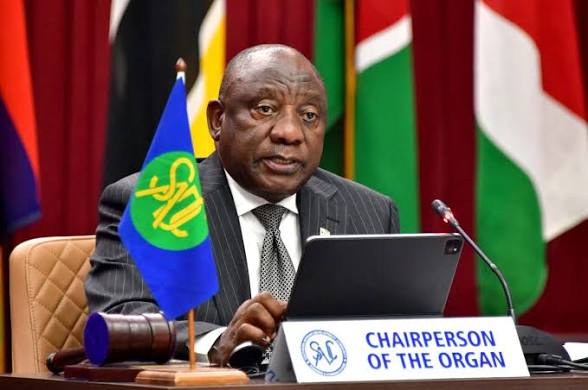
Regional – In a historic and unanimous decision, the Southern African Development Community (SADC) has appointed President Cyril Ramaphosa, President of the Republic of South Africa, as the new Chairman of SADC, marking a significant transition in the regional bloc’s leadership.
The announcement, made during the extraordinary SADC Summit, follows procedural provisions laid out in Articles 9A(2)(b) and 10(4) of the SADC Treaty, allowing the incoming deputy chairperson to assume interim leadership in the event the sitting chairperson is unable to continue their duties.
With this development, South Africa assumes the Chairmanship of SADC on an interim basis, steering the regional organization until August 2026, when a new Chair is expected to be formally inaugurated at the next annual Summit.
The Secretariat confirmed that Member States will engage through established consultative mechanisms to identify a new Incoming Chairperson (Deputy Chairperson) by 30 November 2025, in line with the principle of rotational leadership.
The handover represents a smooth and constitutionally guided transition within SADC, demonstrating the bloc’s maturity, stability, and adherence to democratic norms.
President Ramaphosa, who previously served as SADC Chair in 2018 during a period marked by institutional reform and economic recalibration, now returns to lead the regional body at a crucial juncture.
In his acceptance remarks, President Ramaphosa reaffirmed South Africa’s commitment to regional solidarity, economic integration, and sustainable development, noting that SADC’s strength lies in its unity and shared purpose.
“Southern Africa stands as a beacon of cooperation and resilience,” said President Ramaphosa.
“Our mandate is to deepen regional integration, strengthen peace and security, and ensure that the people of SADC continue to benefit from inclusive and sustainable development.” He added.
He further emphasized that his leadership would focus on accelerating intra-regional trade, advancing industrialization, and enhancing peacebuilding efforts in areas affected by instability, while consolidating SADC’s collective influence in continental and global affairs.
The SADC Treaty provides a clear framework for institutional continuity. Article 9A(2)(b) mandates that the incoming Chairperson shall assume interim leadership in the absence or incapacity of the sitting Chair.
Similarly, Article 10(4) reinforces the principle of leadership rotation and the importance of ensuring uninterrupted governance of the regional body.
In its official communiqué, the SADC Secretariat noted that the decision to appoint South Africa as the Interim Chair was made “in the spirit of unity and adherence to the Treaty,” ensuring that the region’s work continues seamlessly.
The Secretariat also reaffirmed its commitment to engaging Member States in the process of nominating a new Incoming Chairperson before the November 2025 deadline.
This procedural clarity and transparent leadership handover are seen as a testament to the institutional strength and political maturity of SADC, which continues to serve as a model of regional governance in Africa.
South Africa’s leadership within SADC has historically been marked by a balance of diplomatic prudence and economic influence.
As one of the region’s largest economies, the country plays a pivotal role in advancing the bloc’s key objectives — including the implementation of the SADC Industrialisation Strategy and Roadmap (2015–2063) and the Regional Indicative Strategic Development Plan (RISDP) 2020–2030.
Under President Ramaphosa’s renewed chairmanship, analysts anticipate a focus on Strengthening economic integration through harmonized trade policies and improved regional value chains.
The Region also anticipates member states to seek to accelerate infrastructure connectivity, especially in energy, transport, and digital networks.
Enhancing peace and security cooperation, particularly in regions affected by insurgency and political tensions will be an imperative for the Region too.
SADC under President Ramaphosa’s charge will be advancing youth empowerment, innovation, and climate resilience, aligning with the African Union’s Agenda 2063 and the UN Sustainable Development Goals (SDGs).
Dr. Elias Magosi, the Executive Secretary of SADC, welcomed the appointment, saying,
“President Ramaphosa brings continuity, experience, and a deep understanding of the SADC integration agenda. His leadership will ensure that ongoing programs remain on course while the region navigates emerging challenges.”
The appointment of President Ramaphosa was met with widespread approval from across the region.
Leaders from Zimbabwe, Botswana, Mozambique, Namibia, and Tanzania congratulated South Africa on assuming the Chair, pledging full cooperation in advancing the regional agenda.
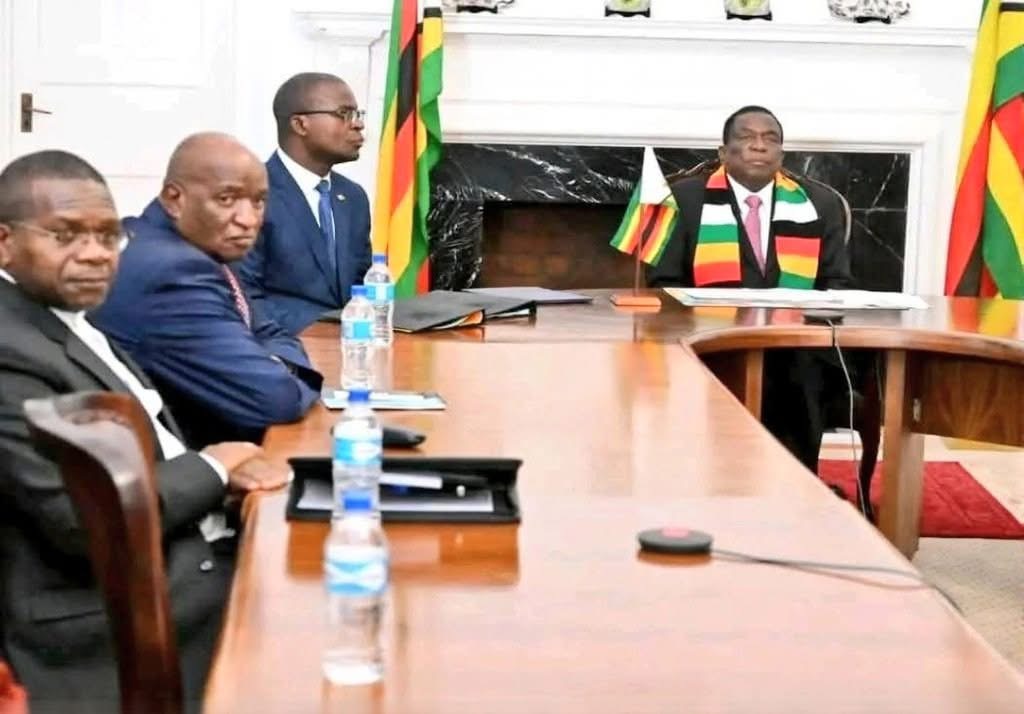
Zimbabwean President Dr. Emmerson Mnangagwa described President Ramaphosa’s leadership as “a reaffirmation of the spirit of Pan-Africanism and collective progress,” adding that the decision reflects the region’s shared vision for prosperity and stability.
In Mozambique, President Filipe Nyusi noted that South Africa’s experience in mediation and conflict resolution would be vital in supporting ongoing peacebuilding initiatives in parts of the region affected by instability.
Similarly, Botswana’s President Boko expressed confidence that SADC’s economic integration agenda would gain new momentum under South Africa’s stewardship.
At the continental level, the African Union Commission Chairperson, Moussa Faki Mahamat, extended congratulations, emphasizing that SADC remains a “pillar of Africa’s unity and a critical player in the realization of continental priorities under Agenda 2063.”
President Ramaphosa’s tenure is expected to prioritize several strategic areas among them, Economic Recovery and Industrialisation. Here, the focus will be on deepening the implementation of the SADC Industrialisation Strategy to promote value addition and regional supply chains, while also supporting post-pandemic economic recovery.
The bloc will also promote Peace, Security, and Governance. The new Chair is likely to strengthen SADC’s early warning and conflict prevention mechanisms, while advancing democratic governance, rule of law, and human rights across the region.
Climate Action and Energy Transition will also be prioritized. With climate change posing growing threats to Southern Africa, Ramaphosa has advocated for a regional shift toward renewable energy and climate adaptation financing.
Youth, Innovation, and Skills Development are key cogs that the region will seek to build. South Africa plans to lead initiatives that equip young people with the digital and technical skills needed to thrive in a rapidly changing global economy.
Regional Infrastructure Development and Investment in cross-border transport, logistics, and communication networks will be prioritized to enhance connectivity and trade efficiency.
As South Africa assumes the Chairmanship, the next nine months will be critical for shaping the trajectory of regional cooperation.
The SADC Secretariat will continue to work closely with Member States to ensure alignment of national priorities with the bloc’s strategic objectives.
By 30 November 2025, Member States are expected to nominate the Incoming Chairperson (Deputy Chairperson), maintaining the principle of equitable rotation that has underpinned SADC’s unity since its formation in 1980.
In many ways, this moment marks both a continuity and a renewal — continuity in SADC’s collective commitment to integration, and renewal in the fresh leadership energy that South Africa brings to the fore.
As President Ramaphosa takes the mantle, expectations are high that his leadership will further consolidate SADC’s position as a regional powerhouse, driving shared prosperity, peace, and progress for the people of Southern Africa.