
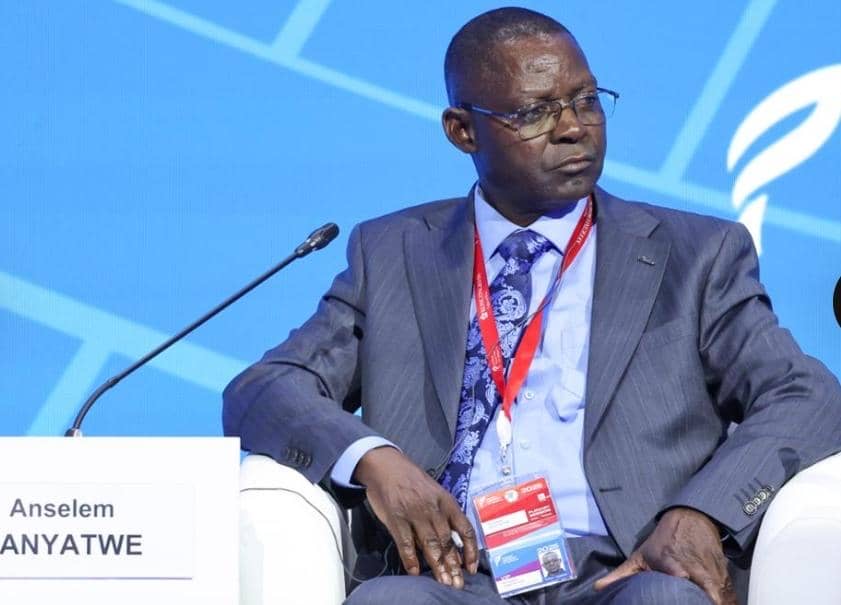
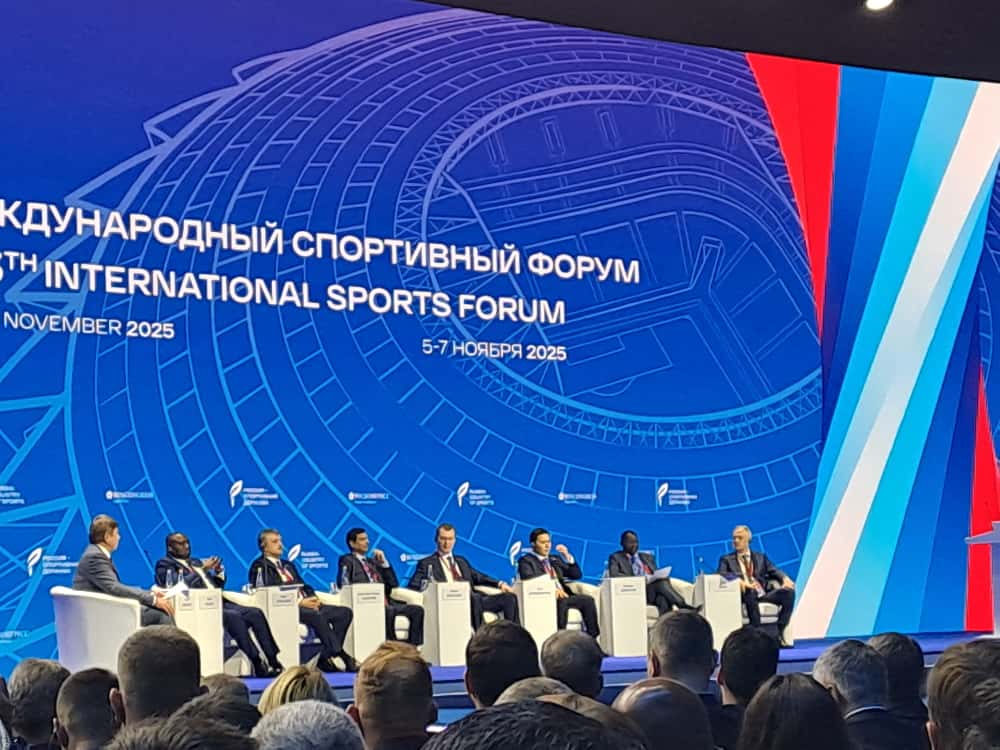
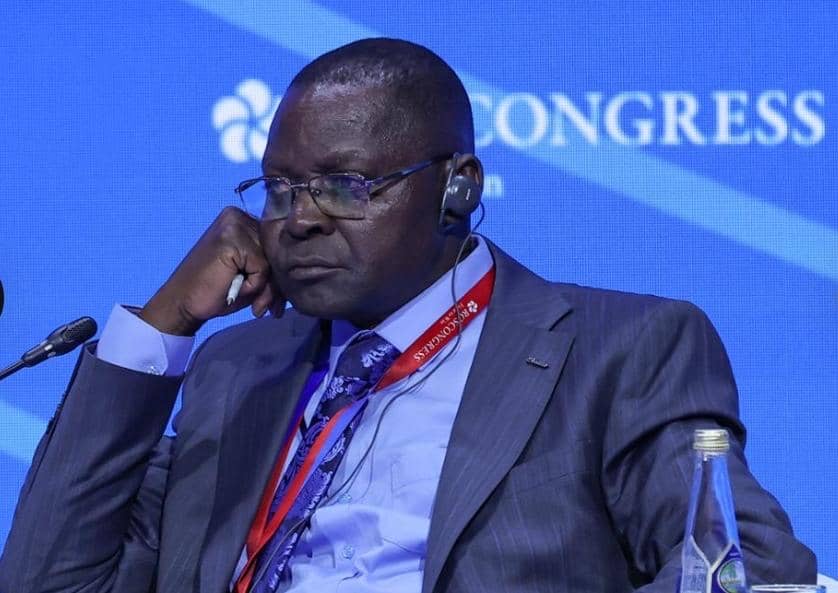
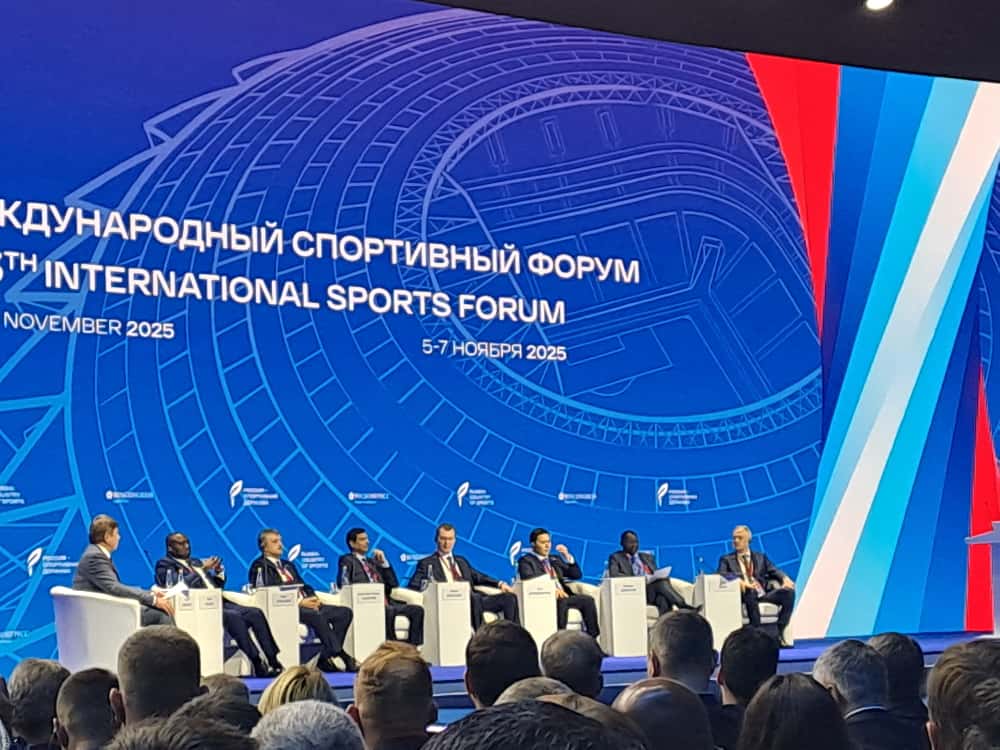
Samara, Russia — Zimbabwe proudly stood tall on the global sporting stage this week as the Honourable Minister of Sport, Recreation, Arts and Culture, Lt. Gen. (Rtd.) Ambassador Anselem Nhamo Sanyatwe, represented the nation at the 13th International Sports Forum Plenary Session held in Samara, Russian Federation.
The prestigious event, attended by over 51 nations, brought together ministers, global sports administrators, and policymakers from countries including Russia, Belarus, Kazakhstan, and Serbia, among others.
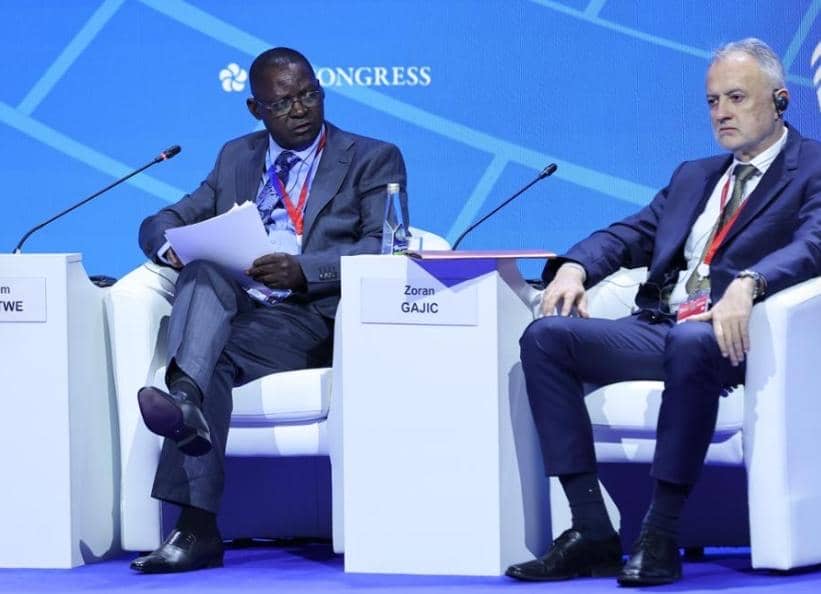
The plenary session, which featured the participation of the President of the Russian Federation, H.E. Vladimir Putin, underscored the importance of sport as a unifying force in today’s multipolar world.
In his address, Lt. Gen. (Rtd.) Sanyatwe reaffirmed Zimbabwe’s historic and enduring friendship with Russia and expressed the nation’s readiness to deepen cooperation in sport, recreation, and cultural exchange.
He emphasized that sport remains one of the most effective tools for promoting peace, inclusion, and international solidarity.
“Zimbabwe stands firm in its belief that sport is not only about competition but also about connection, cooperation, and cultural understanding,” said Lt. Gen. (Rtd.) Sanyatwe.
“Through sport diplomacy, nations can bridge divides, build trust, and strengthen friendships that go beyond politics and geography.”
In his remarks, Lt. Gen. (Rtd.) Sanyatwe highlighted Zimbabwe’s continued transformation in the sports sector under the visionary leadership of His Excellency President Dr. Emmerson Dambudzo Mnangagwa. He noted that the Second Republic has made significant investments in athlete development, sports science, and infrastructure, all aimed at achieving global competitiveness and inclusivity.
Zimbabwe’s achievements on the continental and international stages were proudly showcased — from Olympic podium performances to rising success in athletics, football, cricket, swimming, and other disciplines.
The minister underscored the importance of the National Sports and Recreation Strategy 2025, a comprehensive policy framework that focuses on talent identification, infrastructure development, and administrative capacity building.
“The success of our athletes reflects the deliberate policies of our Government to nurture and empower talent across all provinces,” he said. “We are building a system where every child, regardless of background, can access opportunities to excel and represent Zimbabwe with pride.”
The International Sports Forum serves as a platform for countries to share experiences and create synergies for mutual growth in sports development.
Ministers from participating nations discussed the role of sport in strengthening communities, promoting cultural diplomacy, and fostering international friendship.
In his keynote address, President Vladimir Putin lauded the participating nations for recognizing the importance of sport as a foundation for human development and peacebuilding.
“Sport teaches us to respect one another, to play fair, and to strive for excellence — these are universal values that transcend borders,” President Putin stated.
“Through collaboration and mutual respect, sport can help us create a more harmonious world.” The Russian President added.
Representing Zimbabwe, Lt. Gen. (Rtd.) Sanyatwe reiterated the country’s commitment to global sporting partnerships, emphasizing that the sharing of expertise and technology among nations is vital to advancing both athletic performance and community development.
Zimbabwe and Russia share a long-standing friendship rooted in solidarity and mutual respect dating back to the liberation struggle.
Today, that relationship continues to flourish across various sectors — from defense and education to culture and sport.
Lt. Gen. (Rtd.) Sanyatwe highlighted that the recent Memorandum of Understanding (MoU) on Sports Cooperation between Zimbabwe and Russia represents a new chapter in the two countries’ bilateral relations.
The MoU seeks to enhance collaboration in areas such as athlete exchange programs, sports science research, and capacity development for coaches and administrators.
“Russia has been a steadfast friend of Zimbabwe for decades,” the Minister said. “Through this partnership, our athletes and sports officials can benefit from advanced training facilities, expert mentorship, and exposure to international competition.”
He further expressed gratitude to the Russian Government for its continued commitment to supporting developing nations in expanding their sporting capacities.
During his intervention, Lt. Gen. (Rtd.) Sanyatwe emphasized Zimbabwe’s commitment to using sport as a catalyst for inclusion and social transformation.
The Government’s inclusive sports policy seeks to empower marginalized groups, including women, youth, and persons with disabilities, ensuring that all citizens can participate and benefit from sports and recreation.
Initiatives such as the Community Sport and Recreation Programme, National Youth Games, and Paralympic Development Programme have been instrumental in identifying talent and promoting participation across all communities.
These programs also contribute to national unity by fostering teamwork, discipline, and patriotism among young people.
“Sport remains a mirror of our national identity and values,” said the Minister. “When a young boy or girl in a rural area gets an opportunity to train and compete, we are investing in their dreams and in the future of our nation.”
The 13th International Sports Forum concluded with a renewed commitment among nations to strengthen sport diplomacy and cooperation.
For Zimbabwe, the event reaffirmed its strategic vision to leverage sport as a tool for economic empowerment, cultural exchange, and international visibility.
Lt. Gen. (Rtd.) Sanyatwe held several bilateral engagements with ministers from other countries, discussing potential partnerships in sports infrastructure development, youth training academies, and talent scouting programs.
These engagements are expected to yield tangible results that will benefit athletes and sports administrators back home.
In his closing remarks, the Minister expressed Zimbabwe’s gratitude to the Government of the Russian Federation for hosting such a successful and inclusive forum, and to all participating nations for their commitment to promoting global sporting unity.
“Zimbabwe stands ready to continue engaging with global partners in advancing sport for peace, development, and friendship,” he said. “Our participation in this forum reflects our belief that sport diplomacy is the new frontier for international cooperation.”
As the Samara forum drew to a close, Zimbabwe’s presence under the leadership of Lt. Gen. (Rtd.) Ambassador Anselem Nhamo Sanyatwe served as a strong reminder of the country’s growing role in global sport diplomacy.
The message was clear: sport is not just about medals — it is about building bridges, nurturing humanity, and shaping a better future for generations to come.
With strengthened partnerships, renewed commitment, and an inclusive vision, Zimbabwe continues its steady march towards becoming a regional hub for sporting excellence and innovation.
“The world may compete on the field,” said Lt. Gen. (Rtd.) Sanyatwe, “but off the field, we must all work together — as one family united by the universal spirit of sport.”