

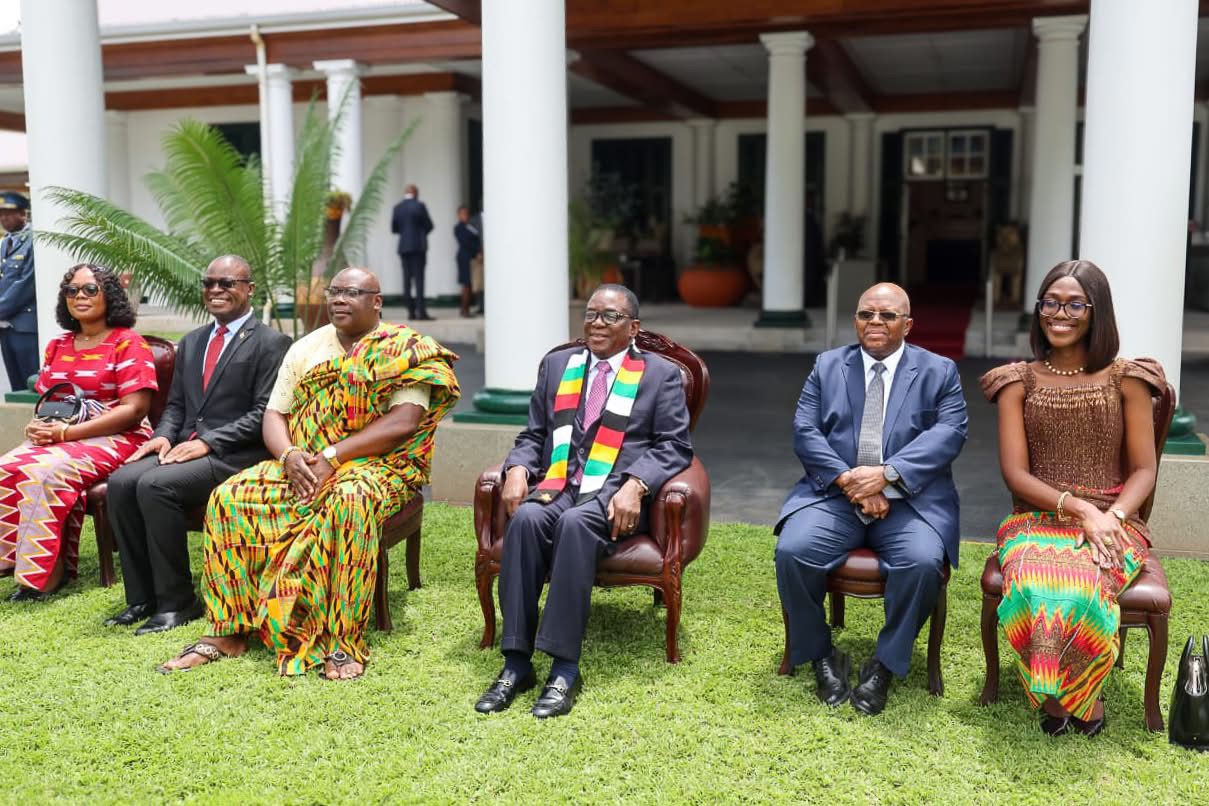
Harare – In a clear display of Zimbabwe’s ongoing commitment to strengthen its diplomatic footprint across the globe, President Emmerson Mnangagwa on Monday received Letters of Credence from three new Ambassadors-designate representing the Islamic Republic of Iran, the Republic of Ghana, and the Republic of Zambia.
The formal ceremony took place at State House in Harare, underscoring Zimbabwe’s growing engagement with both regional and international partners.
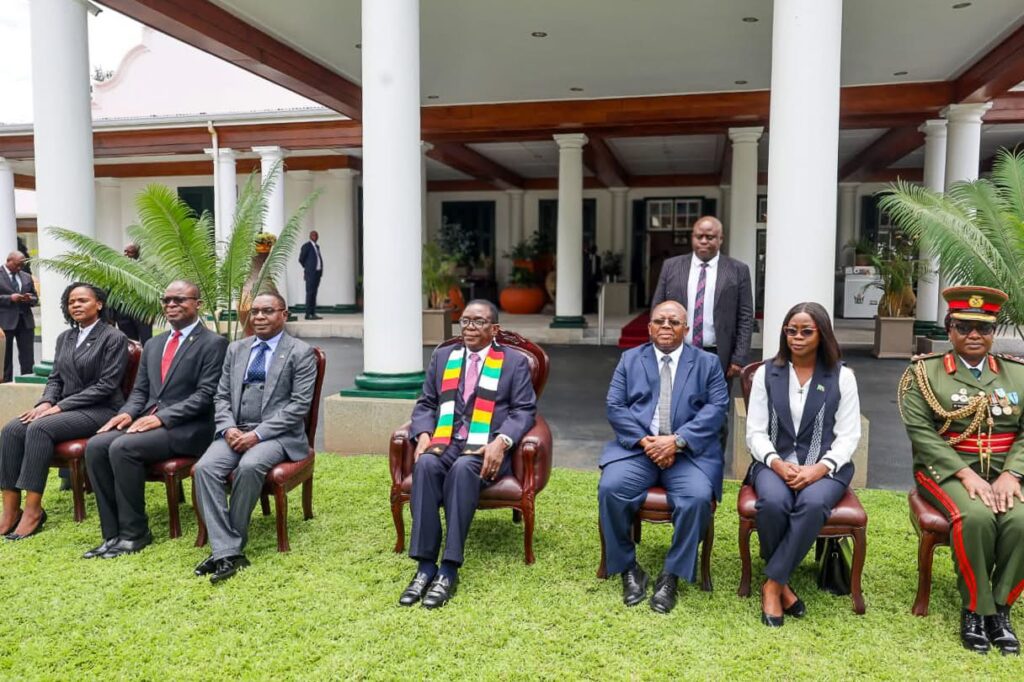
The new envoys, His Excellency Mr Amir Hossein Hosseini of Iran, His Excellency Mr Bonaventure Adjavor of Ghana, and His Excellency Brigadier General Wilson C. Tembo of Zambia, presented their credentials to President Mnangagwa in separate meetings.
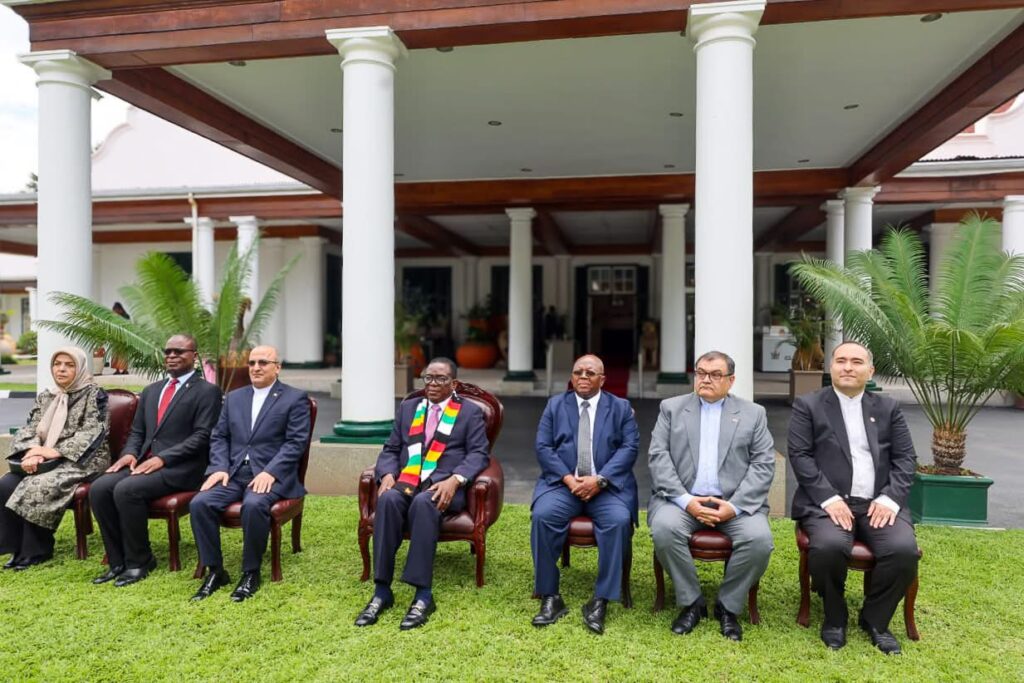
Each presentation marked the beginning of their official diplomatic tenure in Zimbabwe.
Following the ceremony, President Mnangagwa expressed optimism about deepening cooperation with the three nations, describing the moment as an opportunity to “continue strengthening Zimbabwe’s diplomatic relations and partnerships.”
“I received Letters of Credence from the Ambassadors-designate of the Islamic Republic of Iran, the Republic of Ghana, and the Republic of Zambia at State House,” President Mnangagwa said. “I look forward to working with these Ambassadors to continue strengthening Zimbabwe’s diplomatic relations and partnerships.” The President added.
The President’s remarks come at a time when Zimbabwe is pursuing an ambitious foreign policy agenda anchored on the “Engagement and Re-engagement” strategy.
The policy seeks to restore and deepen diplomatic, political, and economic relations with countries across the world, following years of strained ties with some international partners.
The appointment of His Excellency Amir Hossein Hosseini as Iran’s new Ambassador to Zimbabwe signals Tehran’s desire to solidify its relations with Harare. Zimbabwe and Iran share a long history of cooperation, particularly in the fields of energy, education, and agriculture.
Over the years, both countries have maintained a relationship rooted in mutual respect and shared aspirations for economic independence in the face of Western sanctions.
Iran has consistently expressed support for Zimbabwe’s sovereignty, while Zimbabwe has equally backed Iran’s right to pursue its developmental goals without external interference.
Observers say the new Iranian envoy’s arrival may pave the way for fresh bilateral initiatives, especially in energy development and trade.
With Zimbabwe’s ongoing drive toward industrialisation and renewable energy adoption, Iran’s advanced experience in energy technology could open new doors for collaboration.
Economic analysts believe that reviving trade between the two countries could also benefit Zimbabwe’s manufacturing and agricultural sectors, both of which stand to gain from technical cooperation and technology transfer.
His Excellency Bonaventure Adjavor of Ghana joins the diplomatic corps in Harare at a time when relations between the two nations are grounded in shared history and common values.
Both countries are members of the African Union and the Non-Aligned Movement, and they share a deep Pan-African bond dating back to the early years of independence.
Ghana, the first sub-Saharan African nation to gain independence, has long been an example of African solidarity and self-determination, principles that resonate strongly with Zimbabwe’s own liberation history.
The two nations have collaborated in various areas, including education, trade, and cultural exchange.
Ambassador Adjavor’s appointment is expected to enhance cooperation in agriculture, mining, and innovation.
Ghana’s experience with digitalisation and economic diversification could inspire similar approaches within Zimbabwe’s reform agenda.
Furthermore, the two countries are exploring new pathways in intra-African trade under the African Continental Free Trade Area (AfCFTA), which aims to foster greater economic integration across the continent.
Strengthened bilateral engagement between Ghana and Zimbabwe could play a vital role in expanding this continental initiative.
The presence of His Excellency Brigadier General Wilson C. Tembo as Zambia’s new Ambassador to Zimbabwe carries deep symbolic significance.
Zambia and Zimbabwe share not just borders, but a long history of brotherhood, cooperation, and shared struggle.
The two nations were once part of the Federation of Rhodesia and Nyasaland and have maintained close ties since independence.
President Mnangagwa and Zambian President Hakainde Hichilema have on several occasions reaffirmed their mutual commitment to maintaining peace, stability, and progress in the region.
Brigadier General Tembo’s diplomatic posting comes at a time when Zimbabwe and Zambia are jointly advancing several cross-border projects, including energy cooperation through the Zambezi River Authority, trade facilitation under the Southern African Development Community (SADC), and tourism collaboration around the world-renowned Victoria Falls.
Analysts note that the continued collaboration between the two neighbours is critical for fostering regional stability and advancing the vision of economic integration under SADC.
The ceremony at State House reflected more than the formalities of diplomatic exchange. It highlighted Zimbabwe’s strategic intent to remain an active participant in global affairs.
Over the past few years, Harare has steadily expanded its diplomatic presence through partnerships in Asia, Africa, the Middle East, and Eastern Europe.
The government’s foreign policy has been centered on economic diplomacy — using international relations as a bridge to attract investment, promote trade, and advance national development goals.
Political analysts say the reception of new ambassadors underscores Zimbabwe’s renewed focus on strengthening bilateral and multilateral cooperation, particularly with nations that share similar visions of mutual respect, sovereignty, and equitable development.
Zimbabwe continues to seek new partnerships in critical areas such as agriculture, infrastructure, mining, health, and technology transfer.
The engagement with Iran, Ghana, and Zambia is expected to yield practical outcomes aligned with the country’s National Development Strategy 1 (NDS1), which prioritises sustainable economic growth and international cooperation.
The introduction of the three new ambassadors comes at a moment when Zimbabwe’s foreign policy agenda is shifting toward inclusivity and global re-engagement.
President Mnangagwa’s administration has consistently reiterated that “Zimbabwe is open for business,” a statement that continues to serve as the cornerstone of the country’s diplomatic and economic outreach.
The President’s message of optimism reflects confidence in the potential of these partnerships to deliver tangible benefits for Zimbabweans.
Through strengthened diplomatic cooperation, the nation aims to unlock new trade opportunities, boost investment flows, and enhance cultural and educational exchanges.
In many ways, Monday’s ceremony represented the blending of Zimbabwe’s past, present, and future, a continuation of old friendships and the forging of new ones.
As the envoys of Iran, Ghana, and Zambia settle into their diplomatic duties, the shared hope is that their tenure will usher in a new chapter of collaboration marked by mutual understanding, economic progress, and cultural exchange.
For Zimbabwe, diplomacy remains not just about formal engagements, but about building lasting bridges of trust, solidarity, and shared prosperity.