
Why This G20 Summit Feels Different For The Continent
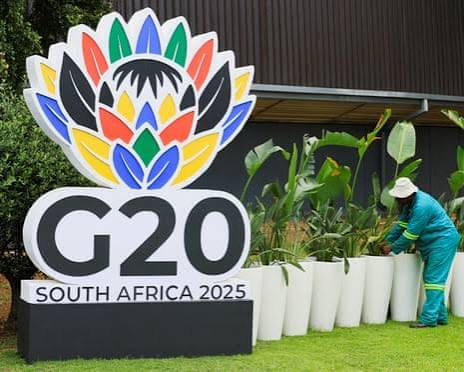
Johanesburg, South Africa- For the first time in the long and winding history of global economic gatherings, the G20 has sat on African soil. Not symbolically. Not as invited guests or observers on the periphery. This time, Africa positioned itself at the center of the discussion, and you could feel the shift from the moment presidents, ministers and global heavyweights landed in Johannesburg.
There has always been a quiet ache across the continent whenever global decisions are made without us, decisions that will shape our currencies, our exports, our livelihoods, our bargaining power. This summit carried a different emotional weight. You could sense the pride, the expectation, and the soft but persistent question hanging in the air: will the world finally listen.
African leaders spoke with a clearer, sharper voice than in previous global gatherings. They pushed debt reform forward not from a place of desperation, but from a place of reason and fairness. They reminded the G20 that a continent bearing the brunt of climate change should not be the one drowning in interest payments while trying to rebuild roads washed away by brutal storms or villages consumed by drought.
For once, the conversation about Africa wasn’t framed around charity. It was framed around opportunity. Potential. Agency. That alone is a profound shift.
Many here at home have been yearning for a moment when the global narrative stops painting Africa as a place of perpetual struggle and starts acknowledging the innovations brewing in Lagos, Kigali, Nairobi and Johannesburg. The summit’s focus on digital transformation, AI capacity building and green energy access strikes at the heart of where Africa wants to go, not where the world assumes it is stuck.
But even with the new tone, there is a protective caution among African observers. We have been here before. Promises of climate finance that never materialized, commitments to reform global financial institutions that faded quietly after the media flash, declarations on debt that stalled in negotiation corridors. Over the years, hope has mixed with disappointment so many times that African policymakers have grown both resilient and skeptical at once.
This time though, the stakes are higher, and something about the collective stance of African leaders is firmer.
The creation of a dedicated seat for Sub-Saharan Africa on the IMF board has stirred a sense of validation. Not because a seat in a faraway boardroom automatically fixes decades of imbalance, but because representation is the first step toward rewriting rules that have long ignored our realities. Debt restructuring frameworks that treat African countries like a risk to be managed rather than partners to be empowered are slowly being challenged.
The Africa Engagement Framework, launched at this summit, gives the continent a roadmap that aligns global resources with Africa’s own development priorities. At least on paper, this is a move away from the old models where African governments had to redesign their national agendas just to qualify for external financing.
And then there is energy.
The truth is, you cannot talk about Africa’s future without talking about electricity. Hundreds of millions of our people still live in the dark — literally. The G20’s Mission 300 plan to accelerate energy access across the continent is meaningful if it moves from commitments to grounded action. Every additional household connected to clean, affordable power unlocks small businesses, improves education, strengthens health systems and fuels dreams that have been dormant for too long.
But the emotional pulse of this summit wasn’t just in the official speeches or the signed declarations. It was in the way African youth watched this moment. It was in the way local entrepreneurs started imagining how global AI partnerships might change the trajectory of their ideas. It was in the way village farmers wondered whether climate resilience pledges would finally protect their land from aggressive storms.
For many Africans, this summit wasn’t about geopolitics. It was about dignity.
It was about being seen and heard in a world that often talks over the continent. It was about stepping into global conversations not as a silent junior partner but as a confident player whose future holds weight. It was about shaking off the old stereotypes and sitting at the table with a new kind of certainty.
Still, emotion alone is not enough to carry Africa forward. The continent will need to hold its partners accountable with a firmness that matches its optimism. Global commitments are fragile things; they wilt quickly when political winds shift elsewhere. African voices will need to stay consistent, informed and united. Our technocrats will need to track every pledge. Our civil society will need to keep pushing for transparency. And our leaders will need to guard against signing deals that shine on paper but hurt in practice.
The G20 Summit on African soil has carved its place in history. Whether it becomes a turning point or merely a beautifully photographed moment depends on what happens next. But something has changed. Africa entered this summit with a quieter confidence, and it walked out with the world acknowledging that confidence.
This is not the end of Africa’s long journey to global equality. Not even close. But it feels like a new chapter. And sometimes, a chapter is all a continent needs to start turning hope into reality.