

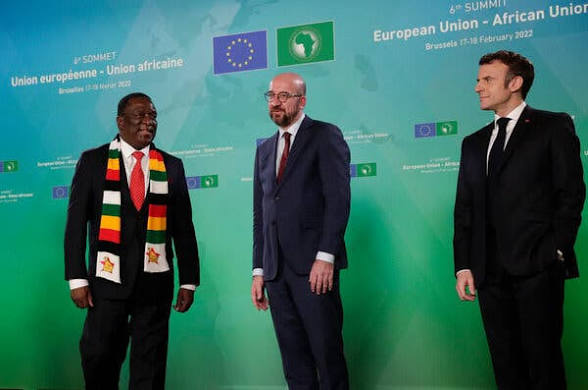
Regional Perspectives – His Excellency the President, Dr. Emmerson Dambudzo Mnangagwa, stepped into the 7th African Union–European Union Summit fully aware of the weight of expectation resting on the shoulders of African leadership.
The two-day summit, held under the theme promoting peace and prosperity through effective multilateralism, provided a rare and powerful moment for Africa and Europe to collectively reflect on their partnership and their shared role in a world increasingly defined by complex geopolitical storms.
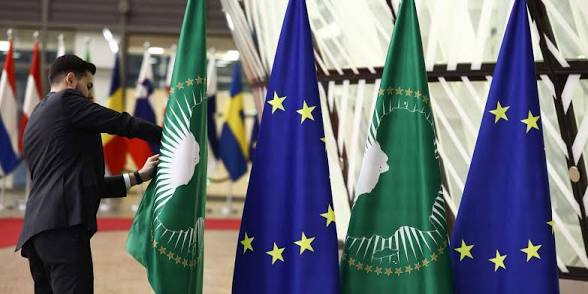
For Zimbabwe, this was more than a routine engagement. It was a reaffirmation of a foreign policy anchored in re-engagement, mutual respect and international cooperation. President Mnangagwa’s presence in Luanda signalled Zimbabwe’s steady return to global diplomacy with confidence, intent and clarity of purpose. At a time when global power dynamics are shifting and nations are rethinking old alliances, Zimbabwe walked into the summit with a clear message that it seeks to be part of the collective solutions shaping the world.
As he joined fellow Heads of State and Government, President Mnangagwa immersed himself in high-level deliberations that touched on the most pressing issues confronting both continents. The summit’s theme resonated strongly with Zimbabwe’s own national agenda. The call for promoting peace and prosperity through effective multilateralism echoed the Second Republic’s conviction that development cannot be pursued in isolation and that shared challenges demand shared action.
The discussions on peace and security occupied a central space in Luanda. African leaders made it clear that while the continent continues to bear the heavy cost of conflict and instability, it also carries the determination to shape durable solutions. President Mnangagwa reiterated Zimbabwe’s commitment to African-led conflict resolution mechanisms, underscoring that sustainable peace is built through inclusive dialogue, strong institutions and respect for sovereignty. In the same spirit, he noted that global peace is under threat from rising geopolitical tensions and economic uncertainty, making multilateral forums like the AU–EU Summit even more vital.
Economic cooperation formed the backbone of the summit’s agenda. Europe remains one of Africa’s largest trading partners, yet the structure of that relationship has long required recalibration. The discussions in Luanda centred on strengthening sustainable development through investments that support industrialisation, value addition, climate resilience and digital transformation. President Mnangagwa actively pushed the argument that Africa’s future growth must be built on fair partnerships that create jobs, empower local industries and expand technology transfer.
He also used the summit as an opportunity to articulate Zimbabwe’s ongoing economic reforms and the government’s vision of achieving an upper middle-income society by 2030. By engaging European leaders at this level, the President signalled that Zimbabwe is ready to explore new investment corridors, deepen trade and expand cooperation in critical sectors such as renewable energy, infrastructure development, agriculture and mining.
His engagements further reflected Zimbabwe’s belief that strategic partnerships are indispensable in addressing global economic shocks, building resilient supply chains and unlocking new markets.
Climate change, the global headache that refuses to be ignored, also dominated the Luanda discussions. African leaders stressed that the continent, despite being the least contributor to global emissions, bears disproportionate climate burdens. In various sessions, Zimbabwe supported the urgent call for Europe to honour its climate financing pledgements and work with Africa in developing adaptation strategies that safeguard lives and livelihoods. President Mnangagwa underscored that Zimbabwe, already implementing major climate resilience projects, remains committed to global climate agreements and is ready to partner with the EU on sustainable environmental programmes.
The summit also ventured into the sensitive yet increasingly critical territory of migration and human mobility. Leaders agreed that migration must be approached not as a crisis but as a shared human reality that requires humane and coordinated policies. Zimbabwe echoed the sentiment that development is the most effective long-term solution to irregular migration and that cooperation must focus on investment in youth, innovation and opportunities at home.
Above all, President Mnangagwa’s participation in the AU–EU Summit reinforced the image of a nation stepping assertively into the global arena. His engagements reflected a matured foreign policy approach that values solidarity, dialogue and partnership. For Zimbabwe, which continues to reposition itself after years of isolationist narratives, these diplomatic platforms are essential. They offer visibility, they demonstrate commitment and they open doors for new alliances that can translate into tangible development.
Throughout the summit, the President maintained a consistent message that Zimbabwe’s foreign policy is guided by mutual benefit. The nation does not seek charity, nor does it pursue partnerships rooted in dependency. Instead, Zimbabwe wants cooperation that respects its sovereignty, strengthens its national development trajectory and supports the aspirations of its people. In Luanda, that message landed in a room of leaders who themselves recognise that Africa’s rise is inseparable from Europe’s stability and global progress.
As the curtains came down on the summit, it became clear that the AU–EU relationship is evolving. Historic ties are being reshaped by new economic realities, new global responsibilities and new generations demanding fairness, innovation and shared prosperity. And within this changing landscape, Zimbabwe stands ready to play its part.
President Mnangagwa’s presence in Luanda was not just symbolic. It was a statement that Zimbabwe is determined to take its place in global dialogue, championing peace, prosperity and principled engagement. It affirmed that the country’s voice matters and that its future will be shaped not in isolation but through collaboration rooted in dignity and respect.
In the end, the summit offered something more profound than just speeches and communiqués. It reminded both Africa and Europe that their destinies are intertwined and that only through genuine partnership can the world navigate the storms of the present and shape a more stable future. For Zimbabwe, that message resonated deeply, and the President carried it forward with conviction.