

Zimbabwe is changing rapidly, but some business opportunities are built around needs that will never disappear.
Technology is transforming the way people live and work. Artificial intelligence is changing industries, businesses are becoming increasingly digital, and new technologies are creating entirely new markets.
Yet beneath all these changes are basic human needs that remain constant.
Zimbabweans will always need food. They will always need healthcare, electricity, homes and education.
That creates an important opportunity for entrepreneurs: instead of chasing every new trend, businesses can build around permanent needs while using modern technology to deliver better solutions.
Zimbabwe’s National Development Strategy 2 (NDS2), covering 2026–2030, places emphasis on agricultural productivity and agro-processing, infrastructure, energy, human capital, health and entrepreneurship. (Zimbabwe Government)
Here are five industries that could remain relevant for generations — and the opportunities Zimbabwean entrepreneurs should be watching.
1. Agriculture and Food
If there is one industry Zimbabwe can never afford to ignore, it is agriculture.
People have to eat regardless of whether the economy is booming or struggling. This makes food production one of the most fundamental businesses in any economy.
But the opportunity goes far beyond simply growing maize or keeping cattle.
Zimbabwean entrepreneurs can participate in the entire agricultural value chain.
A farmer can produce vegetables, poultry, beef, fruit, potatoes or grain. Another entrepreneur can process that produce. Another can package it, transport it, store it and sell it.
This creates opportunities for businesses of different sizes.
Opportunities for Zimbabwean entrepreneurs
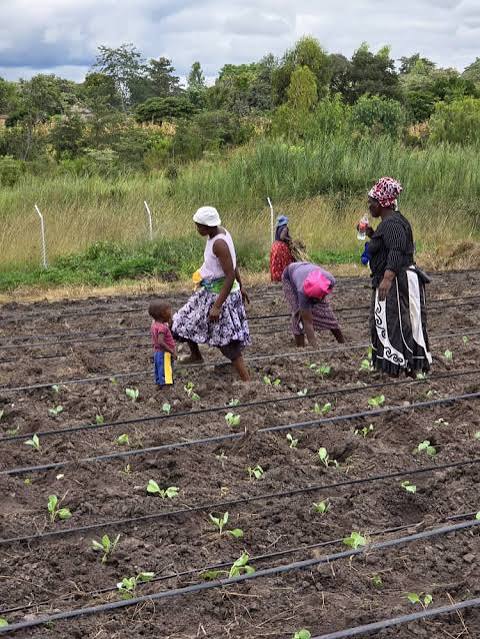
Irrigation farming is one of the biggest opportunities. Climate variability makes dependence on rainfall increasingly risky, creating demand for irrigation systems and reliable water-management solutions.
Entrepreneurs can develop horticulture projects, greenhouse farms and irrigated vegetable production for urban markets.
Food processing is another major opportunity.
Instead of selling tomatoes, farmers could produce tomato paste. Instead of selling peanuts, businesses could produce peanut butter. Instead of selling milk, entrepreneurs can develop yoghurt, cheese and other dairy products.
The same principle applies to fruits, livestock, grains and other agricultural products.
Zimbabwe’s development strategy explicitly highlights agricultural productivity, food security and sustainable agro-processing value chains. (Zimbabwe Government)
The opportunity is therefore not simply to farm Zimbabwe but to build businesses around everything that happens after farming.
2. Construction, Housing and Infrastructure
Zimbabwe will continue to need houses, schools, hospitals, shops, warehouses, factories, roads and other infrastructure.
Population growth, urbanisation and economic development all require physical infrastructure.
That makes construction one of the industries with long-term potential.
Importantly, an entrepreneur does not need millions of dollars to enter construction.
There are opportunities in specialised services and supplying materials.
Opportunities for Zimbabwean entrepreneurs
Businesses can specialise in:
- Brick manufacturing
- Concrete products
- Roofing materials
- Plumbing
- Electrical installation
- Tiling
- Painting
- Aluminium and glass
- Carpentry
- Steel fabrication
- Borehole services
- Solar installation
- Property maintenance
There is also an opportunity for entrepreneurs to develop affordable housing models.
Zimbabwe needs housing solutions that ordinary families can afford. Entrepreneurs who can reduce construction costs through better designs, locally produced materials, modular construction or efficient building techniques could find a significant market.
The opportunity extends beyond houses.
Small shopping centres, warehouses, student accommodation, offices, lodges and agricultural infrastructure can all create investment opportunities.
Zimbabwe’s NDS2 identifies infrastructure — including energy, transport, ICT, water and sanitation — as important enabling infrastructure for economic development. (Zimbabwe Government)
3. Energy and Solar Power
Electricity is no longer a luxury.
Businesses need it. Farmers need it. Hospitals need it. Schools need it. Homes need it.
As Zimbabwe’s economy becomes increasingly digital, reliable electricity becomes even more important.
This creates opportunities for entrepreneurs in both conventional energy services and renewable energy.
Solar power is particularly interesting because businesses and households can use it to reduce dependence on the national grid.
Opportunities for Zimbabwean entrepreneurs
Entrepreneurs can build businesses around:
- Solar installation
- Solar-powered boreholes
- Solar irrigation
- Battery storage
- Solar water heating
- Commercial solar systems
- Solar street lighting
- Energy-efficient appliances
- Backup power systems
- Energy audits and consultancy
One particularly interesting opportunity is combining solar energy with agriculture.
Imagine an agricultural project using solar-powered boreholes to irrigate crops, solar-powered cold rooms to preserve produce and solar electricity to run processing equipment.
That is no longer simply a farming business.
It becomes an integrated agriculture and energy business.
Zimbabwe’s national development planning recognises energy infrastructure as one of the foundations required to support economic productivity. (Zimbabwe Government)
4. Healthcare
Healthcare is another industry that will always have demand.
People get sick. Children need medical care. Pregnant women need maternity services. Older people require healthcare and families need access to medicines, diagnostics and specialised treatment.
The opportunity for private entrepreneurs is not necessarily to build a huge hospital.
There are many smaller opportunities across the healthcare ecosystem.
Opportunities for Zimbabwean entrepreneurs
These include:
- Private clinics
- Pharmacies
- Diagnostic laboratories
- Dental practices
- Physiotherapy centres
- Optical services
- Medical equipment supply
- Home-care services
- Elderly care
- Ambulance services
- Health technology
- Medical training
Technology can also create new possibilities.
Telemedicine, digital appointment systems, electronic medical records and remote consultations could make healthcare more accessible, particularly where specialist services are concentrated in major cities.
Entrepreneurs who combine healthcare expertise with technology could therefore create scalable businesses.
The government’s development priorities include expanding access to quality health and social services, reinforcing the long-term importance of the sector. (Zimbabwe Government)
5. Education and Skills Development
Zimbabwe has a long-standing reputation for valuing education.
But education itself is changing.
Artificial intelligence, online learning and digital platforms are transforming how knowledge is delivered.
That does not mean education is becoming less important.
It could mean the opposite.
As technology changes the workplace, people will constantly need new skills.
Opportunities for Zimbabwean entrepreneurs
Entrepreneurs can explore:
- Private schools
- Vocational training centres
- Computer training
- Coding academies
- Online education
- Professional courses
- Agricultural training
- Entrepreneurship programmes
- Artificial intelligence training
- Technical skills development
- Corporate training
One particularly promising area is skills-based education.
Instead of simply teaching academic subjects, entrepreneurs can develop training centres that prepare young Zimbabweans for practical employment and entrepreneurship.
For example, a training centre could teach solar installation, welding, plumbing, construction, agricultural technology, computer programming or digital marketing.
Zimbabwe’s NDS2 places emphasis on science, technology, innovation and human-capital development as part of building a knowledge-driven and digitally enabled economy. (Zimbabwe Government)
The Bigger Opportunity: Connecting the Five Industries
The most exciting opportunities may emerge when entrepreneurs combine these industries.
Consider a Zimbabwean entrepreneur developing a rural agricultural project.
The project could include:
Agriculture — producing vegetables and livestock.
Energy — using solar power for irrigation and refrigeration.
Construction — building affordable farm infrastructure and accommodation.
Healthcare — providing basic health services to workers and surrounding communities.
Education — training young people in modern agricultural and technical skills.
Suddenly, five supposedly separate industries become one economic ecosystem.
That is where entrepreneurs should start thinking differently.
Don’t Chase Trends — Solve Permanent Problems
One of the biggest mistakes entrepreneurs can make is believing that every successful business must be based on the latest technology.
Technology matters, but technology is a tool.
The stronger question is:
What problem will Zimbabweans still have 20, 30 or 50 years from now?
The answer is likely to include food, housing, energy, healthcare and education.
The businesses serving those needs may look completely different in the future.
A farm may use autonomous machinery and artificial intelligence.
A school may use AI tutors.
A clinic may use advanced digital diagnostics.
A house may generate its own electricity.
A construction company may use robotics and prefabricated components.
But the underlying needs remain.
Final Thoughts
There is no business that can literally be guaranteed to exist forever. Companies fail, technologies become obsolete and markets change.
However, entrepreneurs who build around fundamental human needs have a powerful long-term advantage.
For Zimbabwe, agriculture, construction, energy, healthcare and education represent more than simply traditional industries. They are foundations upon which the country’s future economy can be built.
The opportunity is to identify the gaps, introduce better technology, improve efficiency and create businesses that solve real problems.
The entrepreneurs who succeed may not necessarily be those who discover the next big trend.
They may be the ones who take old problems, apply new ideas and build scalable Zimbabwean solutions.