
Afrocentricism as a Reset Button
5 min read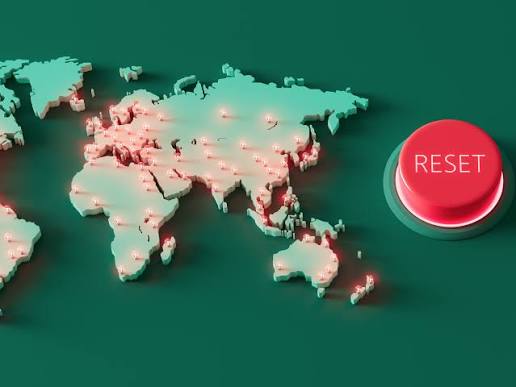
OPINION – There comes a time in the life of every civilisation when it must pause, look in the mirror and confront the uncomfortable truth about who it has become. Africa stands at such a crossroads. Across the continent, in universities, music studios, parliament buildings, fashion runways and even street corners, a growing movement is calling for a return to something deeper than political independence. That movement, broadly recognised as Afrocentricism, has become a reset button for a people long forced to interpret themselves through foreign eyes.
To understand why this reset is urgent, one must first acknowledge the long shadow cast by colonialism. For centuries Africa was not simply controlled; it was studied, categorised and explained by those who did not speak its languages, did not share its worldview and, in many cases, did not respect its humanity. This produced a continent that inherited the worst of two worlds: the trauma of having its identity rewritten and the burden of carrying someone else’s definition of civilisation.
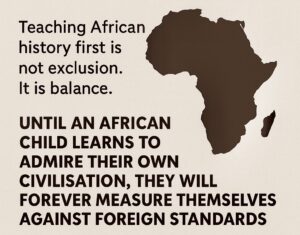
Afrocentricism challenges that inheritance at its roots. At its core, it argues that Africa must reposition itself at the centre of its own narrative. It is not a call for isolation. It is a call for balance. If a people spend too long seeing themselves through the lens of another, they eventually begin to doubt their own worth. Afrocentric thought pushes back by insisting that Africa’s memories, philosophies, heroes and systems are not inferior substitutes for Western ideas but pillars in their own right.
The idea of a cultural reset may sound abstract, but its implications are deeply practical. When a nation teaches its children more about European monarchs than African civilisations, it shapes how they think about power. When its schools praise explorers for “discovering” lands already inhabited by Africans, it teaches children that history only matters when outsiders write it. And when governments adopt development models imported wholesale from foreign capitals, they often create policies that do not fit local realities. Afrocentricism demands that Africa begins its thinking at home, that solutions must grow from African soil before being fertilised by global knowledge.
This is not about romanticising the past. True Afrocentricism does not ask Africa to return to a mythical golden age. Rather, it urges the continent to recognise that the future can only be built by respecting its own foundations. The architectural brilliance of Great Zimbabwe, the spiritual depth of Ethiopian philosophies, the legal systems of the Ashanti, the mathematics of the Dogon and the political ingenuity of the Shona state are not relics. They are proof that Africa has always possessed the capacity to build advanced societies.
Yet Africa has struggled to translate these historical strengths into modern confidence. The psychological residue of colonisation remains one of the continent’s biggest obstacles. Afrocentricism identifies this “mental colonisation” as a real and crippling force. When African leaders praise everything foreign as superior, when African youth proudly imitate imported accents, when African beauty is measured against European standards, the result is a continent constantly running from its own reflection.
This is why Afrocentricism is necessary. It is an invitation to step back and re-evaluate the internalised assumptions that govern African life. How many African education systems still rely on colonial syllabuses? How many African cities are built to mimic European capitals, ignoring local climate, culture and community needs? How often does an African solution get dismissed simply because it is African?
A reset does not require rejecting global modernity. It simply requires inserting African identity into the blueprint. It means valuing African languages not as decorations but as intellectual tools. It means promoting African cultural industries as serious avenues for economic growth. It means allowing African spirituality and philosophy to be studied with the same seriousness granted to Western thinkers. It means building governance systems that blend indigenous democratic traditions with contemporary political frameworks.
This reset is already visible in unexpected places. In music, the world is dancing to African rhythms with a confidence not seen in decades. In fashion, African designers are redefining global standards. In academia, scholars are challenging Eurocentric interpretations of history and demanding that African knowledge systems be acknowledged. Even in technology, African innovators are building solutions that reflect local realities rather than imported assumptions.
These shifts may seem small, but they represent a growing desire for cultural sovereignty. A continent that knows itself is difficult to manipulate. A continent that values its identity becomes less vulnerable to external exploitation. Afrocentricism is not merely a cultural preference; it is a strategic necessity for a continent seeking both development and dignity.
Critics often misunderstand Afrocentricism, portraying it as anti-Western or overly idealistic. But the movement does not advocate for rejection. It advocates for recalibration. Africa can embrace global knowledge while still valuing its own. It can adopt technology without abandoning tradition. It can study the world without forgetting where it stands.
The reset button is not a command to erase the past two centuries. It is a command to correct the imbalance they created. It is a recognition that Africa’s challenges are not simply economic or political. They are psychological, cultural and historical.
A society that does not know itself cannot fully develop. A people who doubt themselves cannot fully lead. Afrocentricism restores confidence by reminding Africa that it was not born yesterday. Before colonisation, Africa had its own systems of knowledge, governance, architecture, art and diplomacy. Those systems were disrupted, but they were never erased.
As Africa pushes forward into the 21st century, facing global competition, technological upheaval and socio-economic pressure, it cannot afford to build its future on borrowed identity. The world respects nations that first respect themselves. And self-respect begins with self-recognition.
Afrocentricism offers that recognition. It is not a step backward. It is a return to equilibrium. It is the rediscovery of voice, memory and dignity. It is an admission that Africa cannot rise by pretending to be someone else. It can only rise by becoming more of itself.
In that sense, Afrocentricism is not just a reset button. It is a lifeline. A reminder that identity is power, that memory is strength, and that a continent that reclaims its story reclaims its future.
About The Author



Beautiful piece. A must read for all…