Miss Universe 2025 – Born of the Baobab, Forged in Flame…
5 min read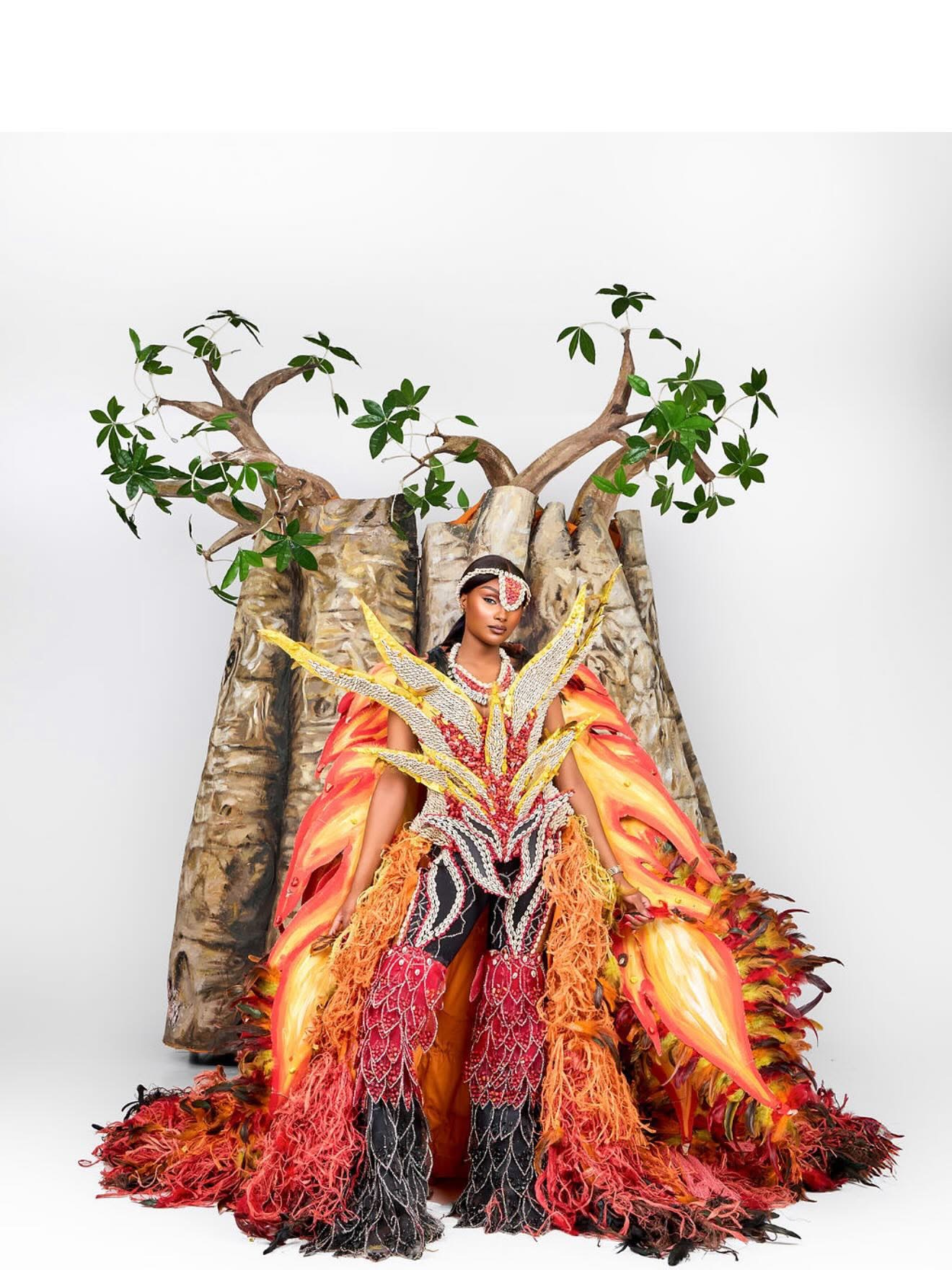
…Zimbabwe Unveils a National Costume Rooted in Ancestral Memory for Miss Universe 2025
Bangkok, Thailand – Zimbabwe’s national pride swelled today, as the Miss Universe Zimbabwe Organisation unveiled the official national costume to be showcased on the global stage in Thailand.
More than a garment, it is an artistic declaration of identity, a cultural archive, and a spiritual symbol stitched into life.
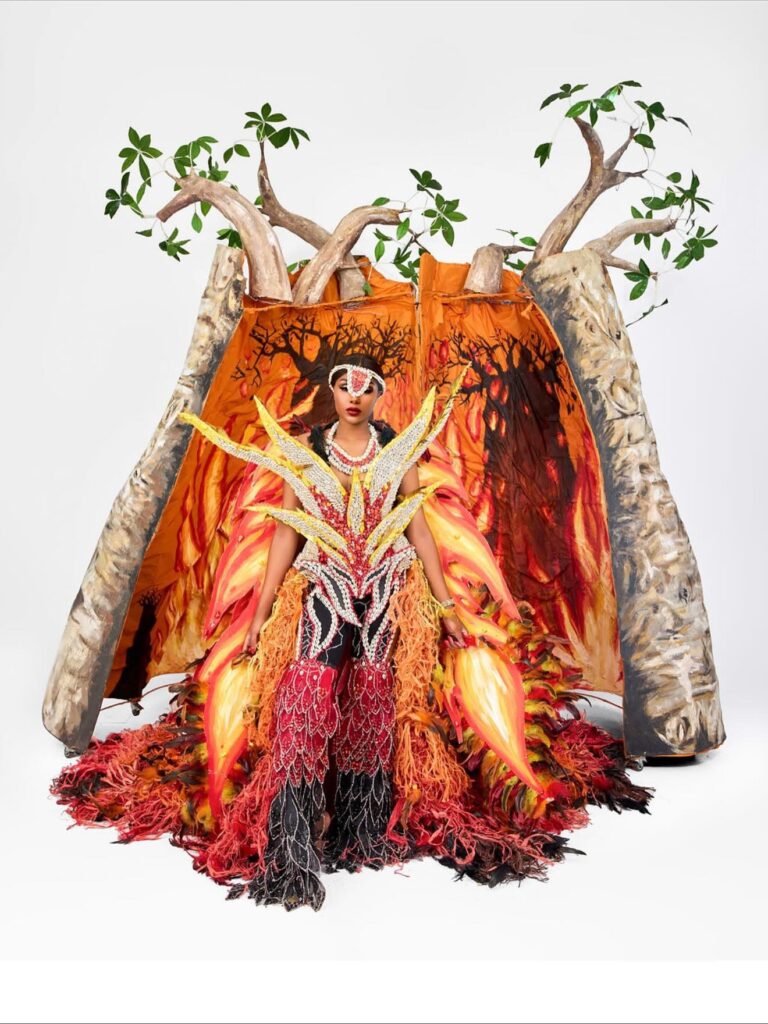
Titled “Born of the Baobab, Forged in Flame,” the costume draws its strength, shape and spirit from the iconic Baobab tree, one of the oldest living witnesses of African history.
In a year where the Miss Universe pageant is placing enormous emphasis on authenticity, cultural depth and storytelling, Zimbabwe’s entry stands out as a work of art that goes beyond aesthetics.
This masterpiece takes the Baobab tree not as simple inspiration but as the living ancestor it has always been to communities across the country. It is a tribute to heritage, to resilience, to memory and to the deep-rooted relationship Zimbabweans share with their land.
To understand this costume, one must understand the Baobab. Towering, ancient, and patient, the Baobab has long been regarded as Africa’s silent elder.
Some trees are believed to be over a thousand years old, storing generations of history within their massive trunks.
They have provided shelter, shade, water storage, nourishment and healing for entire communities.
They have watched over villages through droughts, storms and the turning of centuries. In times of plenty and hardship alike, the Baobab has remained a steadfast companion of the people
.
It is no surprise, then, that Zimbabwe’s designers turned to this monumental tree when crafting a costume meant to express the soul of a nation.
According to the creative team behind the design, every line, every color and every material in this costume carries meaning.
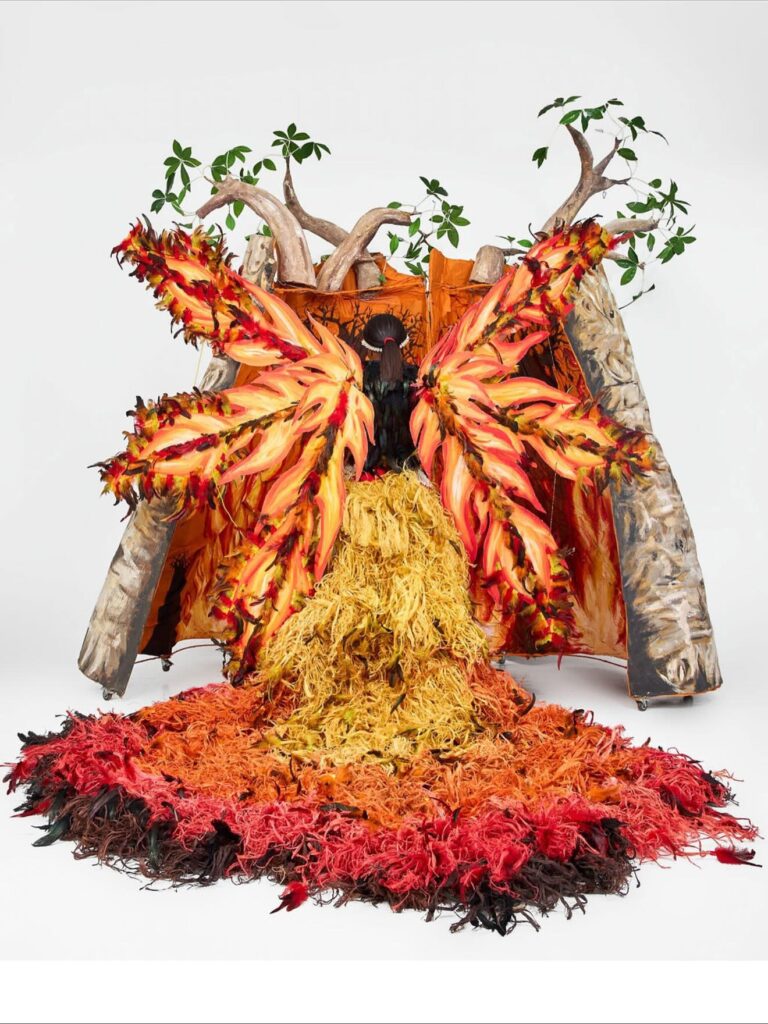
The most striking feature is the long, textured tail crafted entirely from baobab fiber.
The fiber is harvested from the bark of the tree in a way that causes no harm, reflecting the respectful relationship between people and nature.
Traditionally, baobab bark has been used for centuries to make rope, baskets and cloth because of its incredible durability.
Incorporating it into the costume makes this creation not only symbolic but authentically Zimbabwean.
The fiber is dyed in deep, earthy fire tones using natural dyes drawn from the soil.
The color palette is powerful and intentional. Black represents the black majority of Zimbabwe, the heart of the nation and the foundation of its cultural identity.
Red symbolizes the bloodline of the people, the courage, sacrifice and endurance that have defined Zimbabwe’s long history.
Orange stands for transformation, the flames that refine and strengthen rather than destroy. When woven together, these colors tell a story of struggle, survival and renewal.
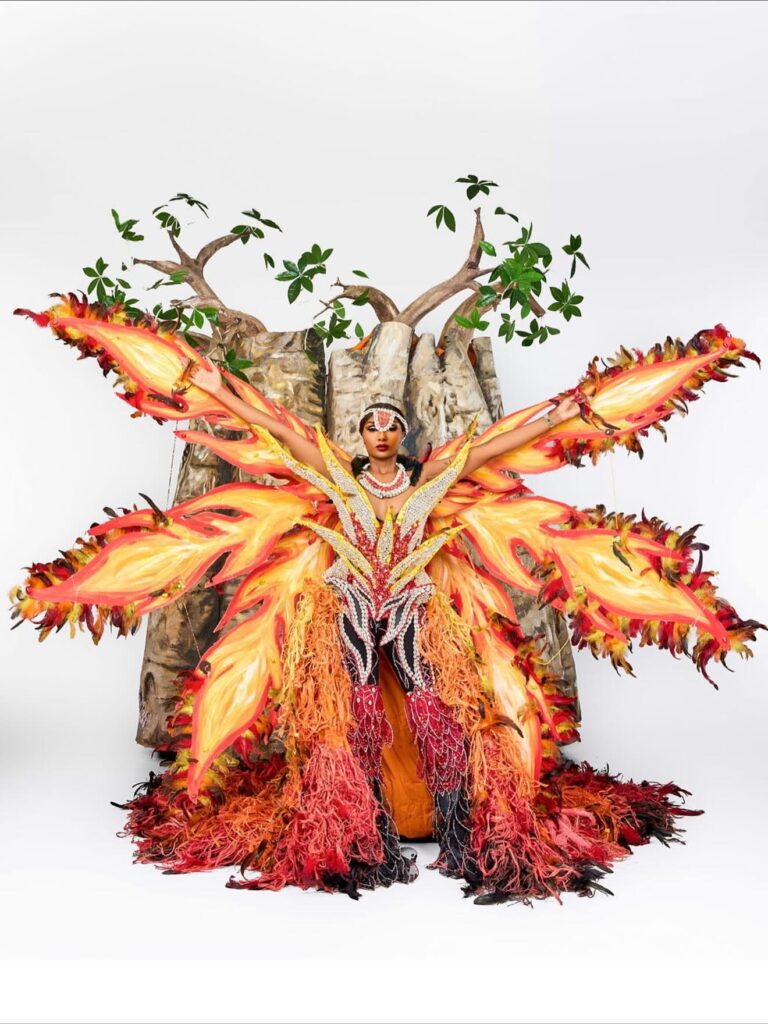
This use of fire-inspired colors is what gives the costume its title, “Forged in Flame.”
For many African traditions, fire represents life, truth and purification. It is at the fire where stories are told, ancestors are honored and communities gather.
It is also the flame that tempers metal, strengthens clay, and turns raw material into something unbreakable.
The designers say this flame symbolizes the inner strength of Zimbabwean women, and by extension, the nation itself.
Beyond the fiber and color, the silhouette of the costume is a bold interpretation of the Baobab’s shape.
The lower part of the garment is wide and grounded, evoking the tree’s mighty base and its deep, unwavering roots.
This imagery aligns with the idea of a woman planted firmly in her identity, standing grounded no matter what storms come her way.
The waist narrows sharply, resembling the strong trunk that holds up the Baobab’s weight, a metaphor for women as carriers of generations, protectors of lineage and custodians of wisdom.
The upper part of the costume rises into fullness, echoing the tree’s broad canopy. This is meant to symbolize generosity, abundance and shelter.
For centuries, communities have gathered beneath the shade of the Baobab, and entire families have depended on its fruit, bark and leaves.
By wearing this form, Zimbabwe’s representative steps forward as both a symbol of strength and a figure of nurturance.
The Baobab is a tree that does not grow in haste. It grows slowly, thoughtfully, storing water during rainy seasons to survive the harsh droughts that follow.
It is a tree that remembers, endures and adapts. In many ways, these qualities mirror the character of the Zimbabwean people.
Through political eras, economic shifts and cultural transitions, the nation has held tight to its roots and carried forward its sense of identity.
This costume captures that essence. It is not merely decorative; it is declarative. It speaks without words.
The Miss Universe Zimbabwe Organisation emphasized that this year’s costume is meant to carry a message beyond fashion.
It is a reminder of the importance of honoring nature, respecting heritage and understanding where one comes from.
It celebrates Indigenous material, Indigenous stories and Indigenous methods of creation.
At a time when global fashion often favors synthetic material and generic designs, this costume boldly stands apart by embracing the raw authenticity of the land.
For Zimbabwe, the unveiling of this piece marks a significant moment. The country has been steadily re-emerging on the pageant scene, not only presenting beauty but showcasing cultural sophistication and artistic depth.
The national costume segment is one of the most anticipated portions of the Miss Universe pageant, and Zimbabwe’s entry promises to leave a lasting impression.
As the world prepares to watch Miss Universe 2025, Zimbabwe sends forth not just a contestant but a story wrapped in memory.
It A story of a tree that has stood through centuries. A story of a people who draw strength from the earth beneath their feet. A story of a nation that chooses to define itself through authenticity, wisdom and flame.
In “Born of the Baobab, Forged in Flame,” Zimbabwe presents a living narrative, stitched together with history, pride and spirit.
And when the lights rose on that international stage, the world witnessed not just a costume but the heartbeat of a nation.
About The Author