If the Post Colonial State Is to Survive, Tribe Must Die
5 min read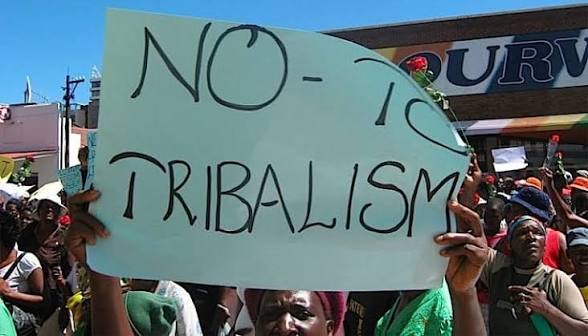
OPINION – In many parts of Africa, including Zimbabwe and much of the Global South, the post-colonial state stands at a crossroads. It has been more than six decades since most African nations lowered the Union Jack and hoisted their own flags, yet the continent continues to wrestle with an uncomfortable truth: political unity remains fragile, and national cohesion is often undermined by an old force far older than the state itself. That force is tribe.
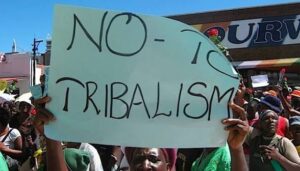
The assertion that “if the post-colonial state is to survive, tribe must die” is not a call to erase culture, language or identity. Rather, it is a stark warning that the political use of tribal identity, when weaponised, threatens the very foundations of the modern African nation.
The future of African governance hinges not on the destruction of heritage, but on the end of tribalism as a political organising tool.
The post-colonial state did not emerge from organic nation-building. Its borders were drawn in European capitals with straight rulers and little regard for the lives bound within.
Villages were cut in two. Ethnic groups were split across artificial boundaries. In some cases, historical rivals were thrust into one political pot and told to behave as a single nation overnight.
The colonial state relied on divide-and-rule tactics, exploiting ethnic cleavages to maintain power.
When independence came, that legacy did not vanish. Instead, many early leaders inherited a fragile structure infused with mistrust.
Over the years, tribal identity became a quick route to political loyalty. Instead of building institutions strong enough to command national allegiance, some leaders built systems centred on ethnic favouritism.
Where meritocracy should have been the compass, patronage took over. Where national unity should have been the guiding philosophy, political tribalism hardened.
The cost of this has been immense. It has seeded conflict, stalled development, and corroded the legitimacy of state institutions.
In moments when African states have faced deep political crises, tribal divisions have often flared into violence. Kenya’s 2007 post-election violence was fuelled by ethnic mobilisation.
South Sudan, Africa’s youngest nation, descended into civil war in 2013 along ethnic lines. Rwanda’s tragic genocide remains one of the most painful examples of what happens when identity is manipulated for political ends.
Even in countries that have avoided open conflict, the impact of tribal politics is visible through unequal development, contested national narratives and perpetual suspicion between communities.
Yet tribe, in its cultural sense, is not the problem. African ethnic cultures are rich, diverse and foundational to the continent’s identity. What must “die” is the political weaponisation of tribe.
The survival of the post-colonial state requires a shift from ethnic politics to civic politics, from patronage to performance, and from narrow loyalties to national citizenship.
One of the clearest pathways to achieving this lies in strengthening state institutions.
When institutions are weak, people retreat into the familiarity of their ethnic group for safety, belonging and opportunity.
But when institutions are strong, fair and predictable, people begin to trust the state beyond their clan. A judiciary that protects all citizens equally can reduce the desperation that drives ethnic voting.
A public service that hires based on competence rather than surname weakens patronage networks. A parliament that reflects broad national interests instead of ethnic blocs can stabilise political debate.
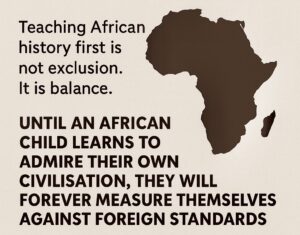
Education also plays a critical role. Many African children grow up learning the geography of their tribe before the geography of their nation.
Curricula often fail to cultivate a shared national consciousness. If the next generation is to see itself as custodians of the nation rather than defenders of a tribe, education must teach a collective story of belonging.
Economic inclusion may be the most powerful antidote of all. Tribal politics thrive in environments where resources are scarce and inequality is stark.
When communities feel excluded from national wealth, they cling to ethnic leaders who promise to fight for their share.
A fairer distribution of resources, transparent economic governance and inclusive national development can defuse the emotional appeal of tribal mobilisation.
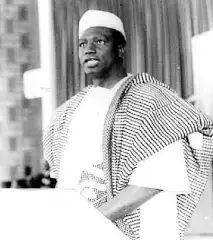
There are also examples of African nations that have succeeded in curbing tribal politics. Tanzania, under President Julius Nyerere, pursued an aggressive policy of national unity that placed patriotism above ethnic identity.
While not perfect, it remains one of Africa’s least tribalised political systems. Botswana, with its strong institutions and stable governance, has shown how institutional trust can override distinctions rooted in ethnic identity. These examples prove that change is possible when the political will exists.
The idea that “tribe must die” is also a call directed at citizens. Many Africans vote “with the village,” not with their conscience.
If national unity is to thrive, citizens must embrace the idea that leadership is about capacity, integrity and vision, not ancestral origin.
The democratic strength of any nation increases when citizens evaluate leaders based on performance rather than bloodline.
Still, the phrase itself can be provocative. Some worry that such rhetoric risks erasing valuable cultural heritage.
But the true essence of the argument is not anti-culture. It is anti-tribalism. Cultures, languages and traditional practices can flourish without determining political power.
Switzerland, a prosperous nation with four languages and multiple ethnic communities, has mastered this balance. India, despite its immense diversity, survives because national identity ultimately supersedes ethnic loyalties.
The challenge for the African post-colonial state is to cultivate a nationalism that does not flatten identity, but harmonises it. Unity does not require uniformity. Diversity is not the enemy of nationhood. What must fall away is the belief that political power belongs to tribes instead of citizens.
As Africa moves deeper into the twenty-first century, the pressures on the post-colonial state will intensify. Youth populations are growing rapidly. Economies are shifting. Geopolitics is changing. These new realities demand cohesive states capable of acting with national purpose, not fragmented political units trapped in the trenches of ethnic rivalry.
If the post-colonial state is to survive, it must transform. And for it to transform, tribalism must lose its grip on political identity. Tribe, as a political tool, must die. Only then can culture live, unity flourish and the modern African nation realise the full promise of its independence.
About The Author