
Special – From the stone walls of Great Zimbabwe to the struggle for independence, and from the memories of our grandparents to the Zimbabwe we are building today, Munhumutapa Day invites us to look backwards before we march forward.
There are days when a nation simply turns a page on the calendar.
And then there are days when a nation pauses, looks into the mirror of its history and remembers who it is.
15 September is becoming one of those days for Zimbabwe.
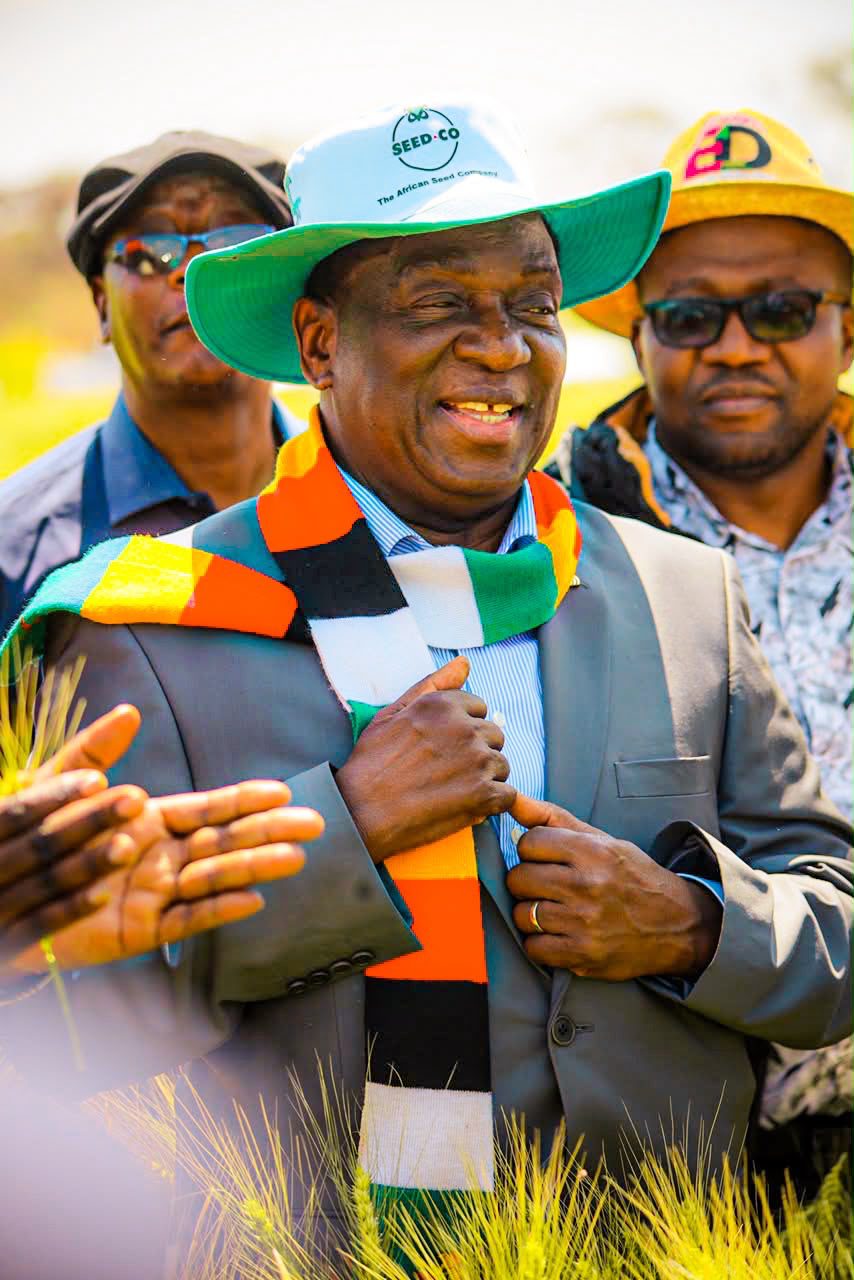
Yesterday, Zimbabwe celebrated the birthday of His Excellency President Dr Emmerson Dambudzo Mnangagwa, while the country observes Munhumutapa Day, a new annual public holiday dedicated to Zimbabwe’s ancient heritage.
The day was formally gazetted through Statutory Instrument 148 of 2026, declaring 15 September every year a public holiday to be known as Munhumutapa Day.
But beyond the Government Gazette, beyond the speeches and the celebrations, there is something much deeper about this day.
It takes us back.
Back to the stories our grandparents told us.
Back to the names we learnt in history lessons.
Back to Dzimbahwe.
Back to the great stone walls of Great Zimbabwe.
Back to the Munhumutapa — the powerful African rulers whose name travelled across the region and whose kingdom became part of the history of the Zimbabwean plateau.
And perhaps, most importantly, back to the simple question:
Who are we?
For generations, Zimbabweans have grown up surrounded by reminders of a civilisation that existed long before colonialism.
Some of us first encountered that history through the pages of a school textbook.
Others heard it from a teacher standing in front of a blackboard, chalk in hand.
Others heard it from grandparents sitting beside a fire in the evening.
There were names that seemed almost magical to a child:
Great Zimbabwe.
Munhumutapa.
Rozvi.
Dzimbahwe.
Mambo.
Names that connected the present generation to a past that was bigger than the village, bigger than the district and bigger even than the modern borders drawn on maps.
Today, Munhumutapa Day gives Zimbabweans another opportunity to revisit that history.
The Mutapa state emerged in the 14th century and became one of the significant pre-colonial political and economic powers in the region. Its rulers were associated with extensive territories and networks of trade, agriculture and mining.
That history matters.
Because sometimes Africans were taught — directly or indirectly — to see their history as beginning with the arrival of Europeans.
It did not.
Zimbabwe had a story before colonialism.
It had kings.
It had farmers.
It had miners.
It had traders.
It had builders.
It had communities.
It had systems of governance.
It had culture.
It had ambition.
It had civilisation.
And those stories belong to us.
Travel to Great Zimbabwe today and stand before those ancient walls.
Look carefully at the stones.
There is no concrete holding them together.
There is no modern crane standing beside the monument.
There is no architect’s office nearby explaining how it was done.
Yet generation after generation has inherited the magnificent structure.
Those stones have survived kingdoms, colonialism, independence and modernity.
They have watched Zimbabwe change.
They have watched children become parents and parents become grandparents.
They have watched the Zimbabwean flag rise over an independent country.
And they remain.
Silent, but never without a story.
That is why Munhumutapa Day should never become merely another public holiday where Zimbabweans sleep late, attend celebrations and return home.
It should become a day when a father takes his children to a museum.
When a teacher tells pupils about Great Zimbabwe.
When young people visit heritage sites.
When grandparents tell stories.
When historians debate.
When artists create.
When musicians sing.
When filmmakers tell African stories from an African perspective.
And when Zimbabweans look at their own history with pride.
Zimbabwe’s history did not end with the Mutapa state.
The centuries that followed brought other kingdoms, communities and leaders.
The Rozvi rose.
The Ndebele kingdom under King Mzilikazi became an important part of the country’s history.
Different communities established themselves across the land.
Different languages, traditions and cultures developed.
Eventually came colonialism.
Then came resistance.
Then the liberation struggle.
Then independence on 18 April 1980.
And suddenly, the country that had been called Rhodesia became Zimbabwe.
That name itself was a declaration.
It drew from the ancient stone city whose ruins had stood for centuries.
Zimbabwe was not an accidental name.
It was a reclaiming of identity.
The flag was raised.
The national anthem was sung.
The green, yellow, red and black became symbols recognised across the world.
A new generation was born into freedom.
And the stories of those who fought for that freedom became part of the national memory.
That is why Zimbabwe’s history is not one single chapter.
It is a long book.
Munhumutapa is one chapter.
Great Zimbabwe is another.
The kingdoms that followed are others.
The liberation struggle is another.
Independence is another.
And the present generation is now writing its own chapter.
On this same date in 1942, a boy named Dambudzo Mnangagwa was born in what was then Southern Rhodesia.
Today, 84 years later, that boy is the President of the Republic of Zimbabwe.
President Mnangagwa’s life has therefore travelled through several of the defining chapters of Zimbabwe’s modern history — from the colonial era and liberation struggle to independence and the leadership of the post-independence state.
His official biography records his involvement in nationalist politics and the liberation struggle before independence, followed by decades of service in Government and ultimately his assumption of the presidency in November 2017.
His birthday now falls on the same date Zimbabwe officially observes Munhumutapa Day. The significance of that coincidence will naturally be debated by Zimbabweans for generations.
But whatever one’s political persuasion, the historical symbolism of 15 September is now part of Zimbabwe’s national conversation.
And that conversation should be bigger than one individual.
It should be about a country.
There is something deeply African about remembering.
Our elders did not always write everything down.
History travelled through voices.
A grandmother could remember a family genealogy stretching back generations.
A grandfather could tell you the name of a village headman who lived before independence.
A parent could tell you where they were when the national flag was raised in 1980.
A former freedom fighter could tell you about the long road to independence.
A teacher could explain the meaning of the name Zimbabwe.
These memories become part of the invisible architecture of a nation.
And perhaps that is what Munhumutapa Day can become.
A day of remembering.
Not remembering only politicians.
Not remembering only governments.
But remembering ourselves.
For those who grew up in Zimbabwe in earlier decades, there are memories that require no explanation.
The sound of the national anthem at school assemblies.
The morning flag-raising ceremony.
The green and yellow school uniforms.
The smell of dust after the first rains.
The sound of the radio in the kitchen.
The Sunday journey to the rural home.
Grandmother’s cooking.
Grandfather’s stories.
The excitement of Christmas holidays.
The long bus journey from town to the village.
The first television in the neighbourhood.
The old ZBC programmes.
Football discussions in the streets.
The sound of cattle bells in the distance.
The excitement when relatives returned from Harare, Bulawayo or overseas.
The belief that tomorrow would be better than today.
These are not merely personal memories.
They are part of the emotional history of a country.
And Zimbabwe’s national identity has always been built from millions of such ordinary memories.
Perhaps the most important people on Munhumutapa Day are not those who remember the past.
They are those who do not.
Zimbabwe’s young people have grown up in an entirely different world.
They live on smartphones.
They consume global entertainment.
They speak to people thousands of kilometres away with a few taps.
Artificial intelligence is changing education and business.
The global economy is changing rapidly.
Yet beneath all this modernity lies a country with an extraordinary history.
The young Zimbabwean should be able to look at Great Zimbabwe and say:
“This is mine.”
Not because it belongs exclusively to one tribe.
Not because it belongs to one political party.
But because it is part of the heritage of the country called Zimbabwe.
The young Zimbabwean should know that Africans were not merely spectators in history.
We made history.
There is also a powerful bridge between the past and the future.
The ancient Mutapa state represents an era of African organisation, production, trade and political authority.
Modern Zimbabwe faces a completely different world.
Our challenges are different.
Our opportunities are different.
But the fundamental question remains familiar:
What kind of country are we going to build?
Zimbabwe’s current national development agenda looks towards industrialisation, infrastructure, agriculture, investment and the achievement of a prosperous and modern society under Vision 2030.
The language may be modern.
The technologies may be different.
The economic systems may be different.
But the responsibility remains the same:
Build.
Build the roads.
Build the schools.
Build the hospitals.
Build the industries.
Build the farms.
Build the businesses.
Build the technology.
Build the communities.
Build the nation.
That is why the familiar national philosophy rings particularly loudly today:
NYIKA INOVAKWA NEVENE VAYO.
The nation is built by its owners.
Zimbabwe should be careful not to allow Munhumutapa Day to become simply another date marked on calendars.
Let it become a national classroom.
Let museums open their doors wider.
Let schools organise heritage programmes.
Let traditional leaders tell their histories.
Let universities conduct more research.
Let filmmakers produce historical documentaries.
Let musicians celebrate Zimbabwean culture.
Let tourism operators showcase heritage sites.
Let young innovators reinterpret history through technology.
Let families tell their children where they came from.
Because a nation that forgets its history risks losing its sense of direction.
But a nation that remembers its past can walk confidently into the future.
So yesterday, we celebrated.
We celebrated the birthday of His Excellency President Dr Emmerson Dambudzo Mnangagwa.
We celebrated Munhumutapa Day.
But above all, we celebrated Zimbabwe.
The Zimbabwe of the ancient stone walls.
The Zimbabwe of the great kingdoms.
The Zimbabwe of the liberation struggle.
The Zimbabwe of Independence.
The Zimbabwe of our parents and grandparents.
The Zimbabwe of our children.
And the Zimbabwe that is still being built.
History has brought us here.
Our choices will determine where we go next.
From Great Zimbabwe to the modern Zimbabwean state, the story continues.
The stones remain.
The memories remain.
The spirit remains.
And now, another generation has taken up the responsibility of writing the next chapter.
Happy Birthday, Your Excellency President Dr E.D. Mnangagwa.
Happy Munhumutapa Day, Zimbabwe.
May we remember where we came from.
May we honour those who came before us.
May we build for those who will come after us.
NYIKA INOVAKWA NEVENE VAYO.
Zimbabwe — Our Home. Our Heritage. Our Future.