President Mnangagwa In Mozambique For Zimbabwe Mozambique Bi National Commission
6 min read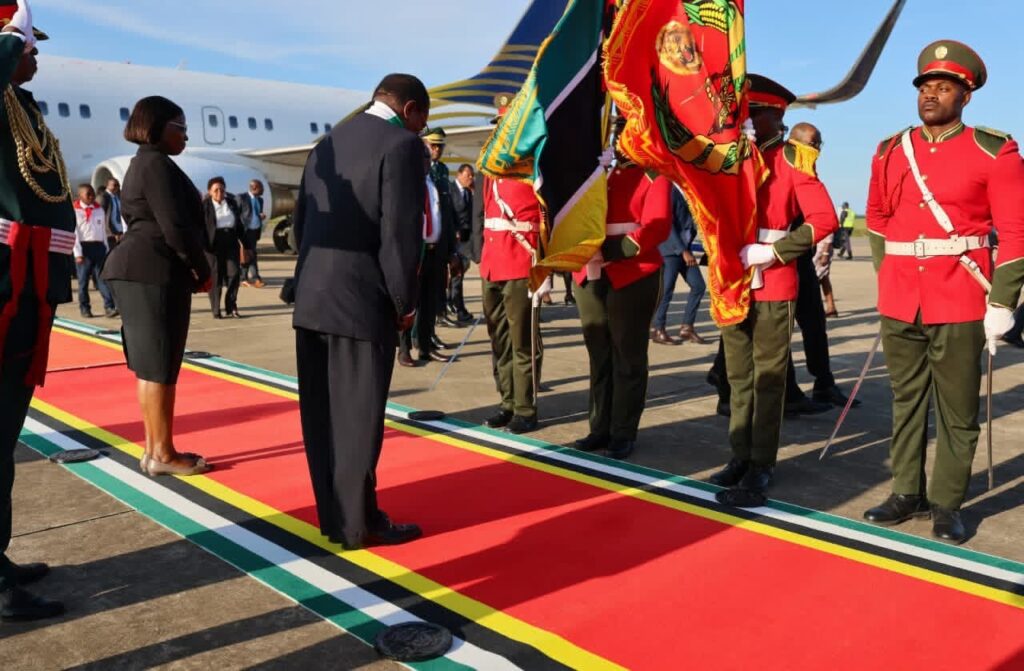
Maputo, Mozambique – The President, His Excellency Dr. Emmerson Dambudzo Mnangagwa, arrived in Maputo, Mozambique for the inaugural Bi National Commission, a landmark engagement set to run from 21 to 23 November 2025.
His arrival marks an important moment in the long and deeply rooted relationship between the two countries, a partnership strengthened by shared history, shared sacrifice and a shared vision for a more stable and prosperous region.
The President touched down at Maputo International Airport in the late afternoon, stepping out into the warm coastal air that carried a sense of ceremony and anticipation. He was welcomed by Mozambique’s Minister of Foreign Affairs and Cooperation, Maria Manuela Lucas, who led the receiving delegation with clear warmth and respect. Their brief exchange on the tarmac set the tone for what is expected to be a highly productive session between the two nations.
For many observers, the significance of this Bi National Commission reaches far beyond formalities. It represents an evolution of long standing ties that date back to the liberation struggles of both countries. Zimbabwe and Mozambique have always found strength in one another, and this gathering is meant to convert that history into practical collaboration that responds to today’s challenges. As the President made his way from the airport to his accommodation, the mood across Maputo hinted at a country eager to usher in a new chapter of cooperation with its neighbour.
The programme leading into the Commission has been structured with careful detail. Senior officials from both countries have been meeting ahead of the presidential engagements to iron out technical issues, assess existing agreements and prepare new frameworks that can be presented for adoption or enhancement. These include areas of trade, energy cooperation, security collaboration, transport infrastructure, agriculture, tourism and cultural exchange. Early indications from these preparatory meetings have been positive, with delegates speaking about progress made in aligning priorities and identifying areas with the highest potential impact.
What adds emotion to this moment is the shared understanding that both nations have endured periods of hardship, but both have remained committed to building durable partnerships. The President’s presence in Maputo is therefore not only symbolic but deeply strategic. It signals Zimbabwe’s determination to strengthen regional bonds and actively contribute to southern Africa’s stability, economic integration and collective advancement.
Later this evening, a State banquet will be held at the Mozambique State House, drawing officials from across government, business, diplomacy and regional bodies. The banquet is expected to celebrate the opening of the Bi National Commission and to offer a moment of reflection on the relationship between the two nations. Such gatherings often carry a spirit of gratitude and mutual respect, and tonight’s event is likely to carry echoes of the long road the two countries have travelled together.
In speeches anticipated at the banquet, leaders are expected to acknowledge the sacrifices made during the liberation years when Mozambique offered Zimbabwean freedom fighters sanctuary and operational support. It is a memory that continues to anchor the friendship between the two states. At the same time, the speeches will look forward, focusing on the responsibilities of the present. This includes deepening economic cooperation at a time when both countries are pushing vigorously for growth, modernisation and greater participation in regional value chains.
The banquet will come at the end of a busy day of discussions, but it will also serve as a soft opening for the more intensive work expected over the next two days. Delegations from Zimbabwe and Mozambique will meet in expanded formats on Friday and Saturday, examining agreements line by line and presenting new proposals for cooperation. By the end of the Commission, both sides hope to sign or reaffirm several deals aimed at accelerating development and improving the lives of citizens on both sides of the border.
There is particular excitement around discussions related to transport corridors linking the two countries. With Zimbabwe being landlocked and Mozambique hosting key ports along the Indian Ocean, the improvement of these routes is seen as critical to trade efficiency and regional integration. Better rail and road connectivity would unlock opportunities for exporters and importers, lower costs for industry and allow for faster movement of goods. The Commission is expected to give this area strong attention.
Energy cooperation is also on the table in a serious way. The region has faced well documented power constraints, and both countries recognise that enhancing cooperation could help stabilise supply. Mozambique’s vast energy potential, particularly in hydro and natural gas, remains an area of interest for Zimbabwe, while Zimbabwe’s technical expertise and industrial capacity create opportunities for joint ventures that benefit both sides. Officials have indicated that this Commission presents a chance to fast track earlier conversations and move from planning into execution.
Security collaboration will also take centre stage, as both nations continue to face threats that know no borders. From cross border crime to the presence of extremist elements in parts of northern Mozambique, the need for coordinated intelligence sharing, training support and joint operations cannot be understated. The Commission provides a platform to reinforce commitments and strengthen strategies for keeping communities safe.
Agriculture will also feature prominently, especially given the shared climatic challenges affecting both countries. Leaders are expected to explore ways to partner in research, seed development, climate resilience and cross border trade in agricultural goods. Food security remains a priority for the region, and both Zimbabwe and Mozambique see value in working together to confront shifting weather patterns and their impact on farming.
Tourism, long an underexploited area of cooperation, is also high on the agenda. With Mozambique’s coastline and Zimbabwe’s natural wonders offering a powerful combined product, the two countries have the potential to develop joint tourism packages, marketing campaigns and investment zones that invite international travellers to experience both destinations as one interconnected journey. Early remarks from officials suggest that both countries are eager to unlock this potential.
As the first day draws to a close, there is an unmistakable feeling that this inaugural Bi National Commission is the beginning of something larger. It carries the weight of history, but also the promise of new possibilities. For President Mnangagwa, this trip is part of a broader diplomatic mission to anchor Zimbabwe firmly within the region’s economic and political networks. For Mozambique, it is an opportunity to reaffirm its position as a key regional player and dependable neighbour.
Looking ahead to the next two days, expectations remain high. The groundwork has been laid. The political will is clearly present. What remains is the careful work of turning goodwill into action and action into lasting transformation.
Zimbabwe and Mozambique stand on familiar ground, but with renewed hope. Their friendship has endured the trials of time, and as the curtains rise on this inaugural Commission, the two nations appear ready to shape a new era together.
About The Author