President Mnangagwa Leads the Call for Global Equality at Doha Summit
5 min read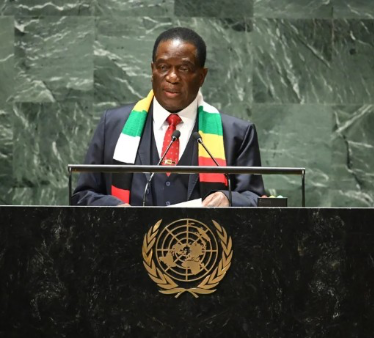
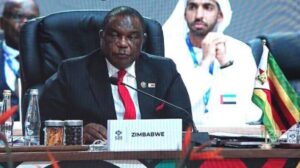
Doha, Qatar — The spirit of Pan-Africanism echoed powerfully through the halls of the World Summit for Social Development in Doha as His Excellency President Dr. Emmerson Dambudzo Mnangagwa, delivered an impassioned speech.
His was a call for a new world order built on fairness, equality, and shared prosperity. Speaking with conviction and clarity, the Zimbabwean leader urged global powers to dismantle systems of inequality that continue to sideline the voices of developing nations — particularly those from Africa.
The summit, convened under the theme “Building a Just and Sustainable Future for All,” gathered world leaders, policymakers, and development experts to chart a course toward inclusive growth and global solidarity.
It was Zimbabwe’s message — grounded in Africa’s lived experience and the continent’s rising confidence — that resonated most strongly across the global forum.
President Mnangagwa’s address was more than a policy statement; it was a declaration of Africa’s readiness to take its rightful place in shaping global destiny.
“The structures that govern our world today were built in a different era — one that excluded the majority of humanity,” he declared.
“For the world to move forward, the voices of the Global South, and of Africa in particular, must be heard, respected, and acted upon.” The President emphasized.
He called for urgent reform of international institutions such as the United Nations, the International Monetary Fund (IMF), and the World Bank — institutions which, he argued, still reflect the inequalities of the post-colonial order.
“Africa cannot remain a spectator in a system designed without its consent,” the President said. “We demand a world that is fair, inclusive, and accountable to all its peoples.”
His words carried the tone of a continent awakening — a continent determined to define its narrative and destiny, rather than having it written for it.
Amid his call for global justice, President Mnangagwa highlighted Zimbabwe’s own journey of transformation and resilience.
Despite years of economic sanctions, droughts, and external pressures, Zimbabwe has recorded one of the most significant reductions in poverty across Africa — cutting its poverty rate by nearly half since 1995.
“This achievement is a testament to the unyielding spirit of our people,” he said. “We have walked through storms, yet we continue to rise — because our vision is guided by unity, self-reliance, and faith in our collective capacity.”
Under Zimbabwe’s National Development Strategy 1 (NDS1), the government has prioritized rural industrialization, women and youth empowerment, health and education expansion, and agricultural transformation. President Mnangagwa emphasized that these programs reflect Zimbabwe’s home-grown approach to development — one that values community participation and cultural rootedness.
“We are building an economy that reflects who we are as Africans,” he noted. “Development must speak our language, honor our traditions, and empower our people.”
Turning his attention to the global economic landscape, President Mnangagwa condemned the deepening inequalities that continue to trap African nations in cycles of debt and dependency.
He called for the restructuring of international financial systems to ensure that developing nations can thrive on equitable terms.
“The economic order imposed upon us has favored the rich and powerful while stifling the aspirations of the poor,” he said. “We cannot talk of global development when the scales remain so unjustly tipped.”
He further challenged developed nations to fulfill their promises on climate financing and technology transfer, noting that Africa — though least responsible for climate change — suffers the gravest consequences.
“The struggle for climate justice is also a struggle for economic sovereignty,” he asserted.
In a landmark declaration, President Mnangagwa announced Zimbabwe’s intention to seek a non-permanent seat on the United Nations Security Council (UNSC) for the 2027–2028 term.
The announcement drew attention across diplomatic circles, signaling Zimbabwe’s growing commitment to contributing to international peace and multilateralism.
“Zimbabwe stands ready to be a voice of peace, balance, and justice in the Security Council,” President Mnangagwa declared.
“Our history teaches us the value of dialogue over domination, and cooperation over conflict. We are prepared to serve with integrity and with Africa’s interests at heart.” He said.
This bold step aligns with Africa’s long-standing demand for greater representation in global decision-making bodies — a demand that reflects both the continent’s demographic weight and its strategic importance to global stability and growth.
President Mnangagwa’s message was deeply Afrocentric, rooted in the philosophy of Ubuntu — the idea that “I am because we are.”
He reminded the world that Africa’s development journey is not separate from the global struggle for justice.
“When one region of the world remains shackled by poverty and exploitation, the entire human family suffers,” he said.
“The progress of Africa is the progress of humanity.” The President added.
Zimbabwe’s delegation at the summit, which included senior government officials and technocrats, used the opportunity to showcase the country’s social development achievements and its role in regional cooperation within the Southern African Development Community (SADC) and the African Union (AU).
The President’s remarks were widely applauded, with many observers noting that Zimbabwe’s stance reflects a broader continental awakening — a demand for partnership, not pity; for equality, not charity.
As the summit drew to a close, President Mnangagwa reaffirmed Zimbabwe’s commitment to Vision 2030 — the country’s blueprint for becoming an upper middle-income economy within the next five years.
Central to this vision is a belief in African capacity, self-determination, and the reassertion of control over natural resources.
“Our destiny will not be dictated from outside our borders,” he declared. “We will build the Africa we want — strong, united, and prosperous — through our own sweat, ingenuity, and solidarity.”
He also reminded global partners that true cooperation must be based on mutual respect and fairness.
“We do not ask for handouts. We ask for fairness — for a seat at the table where decisions about our future are made,” President Mnangagwa emphasized.
The Doha summit concluded with renewed calls for global reform and shared prosperity.
Yet, it was Zimbabwe’s voice — echoing the aspirations of millions across Africa — that captured the spirit of a changing world order.
In many ways, President Mnangagwa’s message symbolized a broader continental vision: Africa no longer speaking from the margins, but from the center — assertive, hopeful, and united.
His speech carried the wisdom of liberation and the urgency of modern transformation, a bridge between Africa’s storied past and its unfolding future.
As the President concluded his remarks, his words lingered as a challenge and an inspiration.
“Let us build a world that reflects the dreams of all humanity — not just the privileged few. For in the unity of nations and the equality of peoples lies the true promise of our shared tomorrow.”
About The Author