VP Chiwenga Challenges G20 on Critical Minerals, Green Transition and AI Governance as Global South Demands Fair Share
5 min read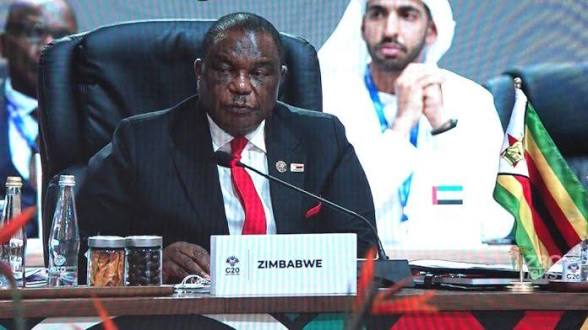
Johannesburg, South Africa – The global economy is undergoing one of the most consequential transitions in modern history, shifting toward a green and digital future powered by critical minerals such as lithium, cobalt, and rare earth elements. Yet, amid the excitement over electric vehicles, smart technologies, and clean energy, Zimbabwe’s Vice President Dr Constantino Chiwenga has delivered a pointed warning to the world: the transition will fail if the Global South continues to be excluded from the real value created by these minerals.
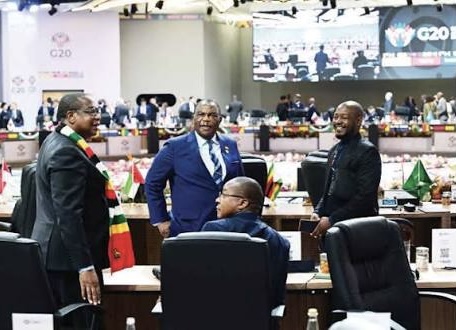
Addressing world leaders at the G20 Leaders’ Summit, where he is representing President Emmerson Mnangagwa, the Vice President spoke with a measured firmness that cut through the diplomatic gloss often characterising international gatherings. He reminded the assembled presidents, prime ministers, and global institutions that while Africa supplies a significant portion of the very minerals driving the next industrial revolution, it remains trapped in a painful paradox: rich beneath the soil, yet poor above it.
At this year’s summit, member states committed themselves to creating the G20 Critical Minerals Framework, a new global standard meant to guide how critical minerals are leveraged for sustainable development, inclusive growth, and economic resilience. The framework is intended to ensure that mineral-producing countries, especially in the Global South, gain substantial and fair benefits from their natural resources. But for VP Chiwenga, pledges alone are not enough. He stressed that the world must move beyond lofty declarations and embrace real structural change.
“As the world navigates the twin transitions towards a green and digital economy, our collective mandate is not merely to accelerate progress, but to ensure that this transformation is fundamentally inclusive, equitable, and leaves no one behind,” he said, his voice carrying the weight of a continent tired of extraction models that have enriched others at its expense.
Vice President Chiwenga made it clear that the clean-energy boom is already reshaping global power dynamics. Critical minerals have become the lifeblood of electric cars, wind turbines, smartphones, and artificial intelligence systems. And Africa, home to some of the world’s richest deposits, stands once again at the centre of global industrial ambition. But the Vice President lamented a familiar and uncomfortable reality: for generations, African nations have exported raw materials at low prices, only to spend heavily importing finished products manufactured elsewhere.
“The global drive toward clean energy has correctly positioned critical minerals such as lithium, cobalt, and rare earths at the core of the next industrial revolution. Many of these resources are found in the Global South, particularly Africa,” he said. “Yet a regrettable structural imbalance persists as mineral-rich African nations are often reduced to the extraction of raw materials. The essential value, jobs, and technology accrue elsewhere. It is unacceptable that the Global South bears the environmental and social burdens while the Global North captures the greater value through processing and advanced technology.”
He called for an iron-clad commitment to local beneficiation and value addition. The era of exporting raw ore must end, he said, replaced by one where African nations process, refine, and manufacture products from their own resources. VP Chiwenga argued that Africa must not be a silent participant in the clean-energy revolution, but an active manufacturer and innovator.
He emphasised technology transfer as a cornerstone of this new order. Without access to modern processing technologies, robotics, and new-generation manufacturing systems, African nations will remain stuck at the bottom of the global value chain.
Equally important, he said, is the creation of transparent and equitable value chains to ensure responsible sourcing, fair pricing, and compensation that reflects the true worth of mineral-rich territories. Sustainability, in his view, must be measured not only by environmental preservation but also by economic justice.
“As we transform global industries, we must decisively place people at the centre of sustainable development,” he said, turning the conversation toward the human element often forgotten in high-level economic debates.
Vice President Chiwenga then shifted to another frontier shaping the future: Artificial Intelligence. He acknowledged AI’s tremendous potential to boost productivity, expand innovation, and revolutionise service delivery. But he warned that without governance, AI threatens to deepen inequality and displace millions of workers, particularly in developing nations.
“Artificial Intelligence must be a tool for human development, not for exclusion,” he said. He called for global standards that ensure ethical, transparent, and fair use of AI technologies, along with mechanisms that protect data privacy in the Global South.
He urged the G20 to take the lead by promoting fair data practices and making technology transfer a central pillar of international cooperation. For Vice President Chiwenga, a future defined by justice, innovation, and equal opportunity will not happen by accident. It requires deliberate policies that link critical minerals to decent work, inclusive digital growth, and social justice.
“Zimbabwe stands ready to collaborate with all partners to ensure that the green and digital transitions become true engines of inclusive growth,” he said. “Let us build a future where prosperity is shared, technology is humane, and development is sustainable.”
The message chimed with calls from several other leaders at the summit. South African President Cyril Ramaphosa echoed the importance of building a fairer global system, noting that the Leaders’ Declaration adopted at the event reflects a renewed belief in multilateral cooperation and shared responsibility.
“We have discussed how we can make the world a place where the aspirations of all people for a decent life, lived in peace and dignity, may be realised,” President Ramaphosa said. He described the declaration as a profound statement affirming dialogue, cooperation, and the collective efforts needed to build a more equal and sustainable world.
Across the summit’s many discussions, there was a growing recognition that the future of global industry runs through the mineral fields of Africa. Dr Ngozi Okonjo-Iweala, the Director General of the World Trade Organisation, challenged African governments to seize control of their mineral destiny and ensure that they do not remain mere suppliers in a global economy built on their resources.
In many ways, the G20 gathering exposed the stark truth that while minerals fuel the world’s ambitions, the people living on the land where those minerals lie have too often been left behind. Honourable Vice President Chiwenga’s urgent appeal carried the emotional force of history and the clarity of a man determined to see a different future.
The world, he seemed to say, must decide whether the next industrial revolution will uplift all nations or repeat the injustices of the past.
About The Author