

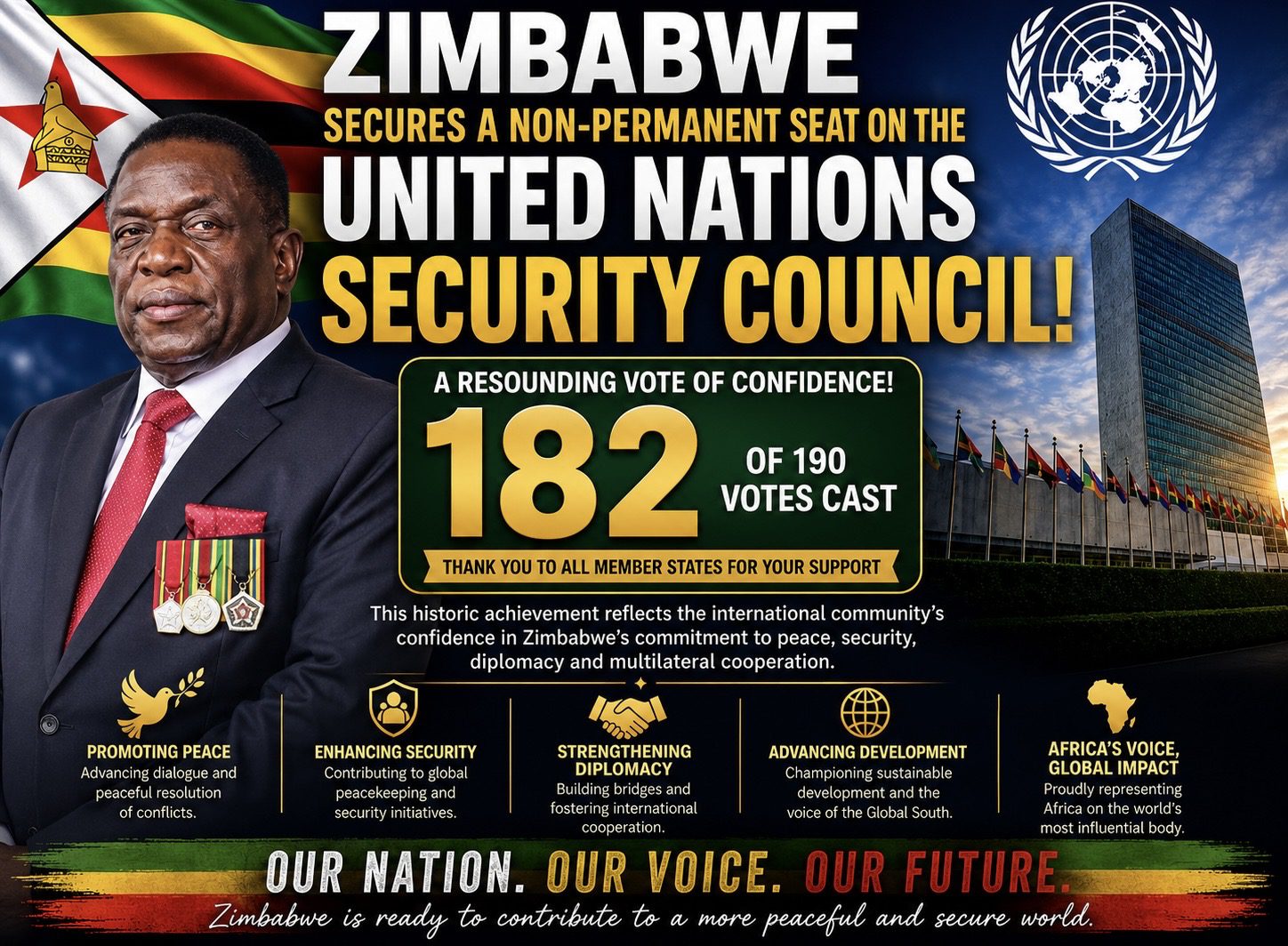
HARARE – Zimbabwe has achieved a significant diplomatic milestone after securing a non-permanent seat on the United Nations Security Council (UNSC), garnering an impressive 182 of the 190 votes cast during elections held at the United Nations General Assembly.
The overwhelming endorsement by UN member states marks one of Zimbabwe’s most notable international diplomatic successes in recent years and signals growing confidence in the country’s role in global affairs. The election places Zimbabwe among a select group of nations entrusted with helping shape decisions on international peace and security, conflict resolution, and global stability.
The United Nations Security Council is widely regarded as the most powerful organ within the United Nations system. It bears primary responsibility for maintaining international peace and security and is empowered to authorize peacekeeping missions, impose sanctions, and make decisions that affect the global community. Zimbabwe’s election to the council therefore represents not only a diplomatic achievement but also an opportunity for the country to contribute meaningfully to international decision-making.
The result reflects strong support from countries across different regions of the world. Receiving 182 votes out of 190 cast demonstrates a broad consensus among member states and highlights Zimbabwe’s successful diplomatic engagement over the years.
Political analysts have described the election outcome as a major vote of confidence in Zimbabwe’s foreign policy approach and its commitment to multilateralism. The achievement is also being viewed as recognition of the country’s efforts to strengthen international cooperation, promote peaceful dialogue, and participate actively in regional and global initiatives.
Zimbabwe’s election comes at a time when the world faces numerous complex challenges, including armed conflicts, humanitarian crises, terrorism, climate-related security concerns, and economic instability. As a member of the Security Council, Zimbabwe will be expected to contribute to discussions and decisions aimed at addressing these pressing issues.
Observers believe that Zimbabwe’s presence on the council will provide an important platform for Africa’s voice on matters of international peace and security. The country joins a long tradition of African nations serving on the council and advocating for issues affecting the continent.
For many African countries, reform of global governance institutions remains a key priority. African leaders have consistently called for greater representation on the Security Council, arguing that the continent’s interests are not adequately reflected in the current structure of the body. Zimbabwe’s election is therefore likely to strengthen advocacy for reforms that seek to make international institutions more inclusive and representative.
The country’s participation on the council is also expected to enhance its international profile and diplomatic influence. Membership of the Security Council offers nations a unique opportunity to engage directly with major global powers and contribute to decisions that shape international relations.
Diplomatic experts note that serving on the Security Council requires a delicate balance of national interests, regional priorities, and global responsibilities. Zimbabwe will be called upon to work collaboratively with other council members while maintaining its commitment to principles such as sovereignty, peaceful coexistence, and respect for international law.
The election result has been welcomed by many Zimbabweans who view it as a source of national pride. Across social media platforms and public forums, citizens have expressed satisfaction at seeing their country earn recognition on the international stage.
For Zimbabwe’s diplomatic corps, the victory represents the culmination of years of engagement with countries across the world. Diplomats have worked extensively through bilateral and multilateral channels to strengthen relationships and promote Zimbabwe’s interests within international institutions.
Analysts argue that the strong support received during the election demonstrates the effectiveness of these efforts. The vote suggests that many countries recognize Zimbabwe as a constructive partner capable of contributing positively to international peace and security discussions.
Beyond its symbolic significance, Security Council membership presents practical opportunities for Zimbabwe to advance issues of importance to developing nations. These include sustainable development, climate resilience, economic cooperation, peacebuilding, and support for countries emerging from conflict.
Zimbabwe’s experience within regional organizations such as the African Union and the Southern African Development Community is expected to inform its contributions during council deliberations. The country has often emphasized dialogue, negotiation, and regional cooperation as essential tools for addressing security challenges.
International relations scholars have also pointed out that Zimbabwe’s election reflects broader shifts in global diplomacy, where developing nations are increasingly seeking a greater role in shaping international agendas. Membership on the Security Council provides an opportunity to ensure that perspectives from Africa and the Global South are more prominently represented in global discussions.
As Zimbabwe prepares to take up its responsibilities on the council, attention will focus on how it navigates complex international issues while advancing both regional and global priorities. Expectations are high that the country will use its position to promote peace, stability, and constructive engagement among nations.
The overwhelming support secured during the election sends a clear message that Zimbabwe enjoys considerable goodwill within the international community. It is a diplomatic achievement that underscores the country’s growing engagement with the world and its readiness to contribute to solving global challenges.
For Zimbabwe, the election to the United Nations Security Council is more than a political victory. It is a historic moment that places the nation at the heart of international decision-making and offers an opportunity to help shape a more peaceful, secure, and cooperative world.
As the country assumes its seat at one of the most influential tables in global governance, many will be watching to see how Zimbabwe translates this mandate into meaningful contributions that benefit not only its own citizens but also the wider international community.