

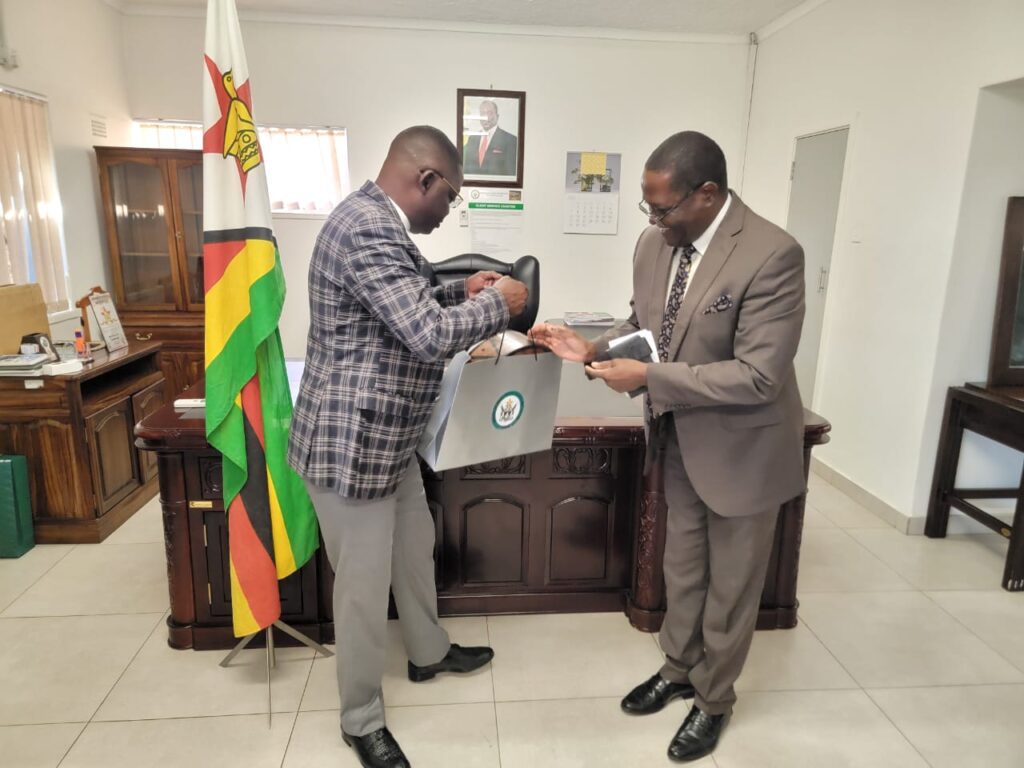
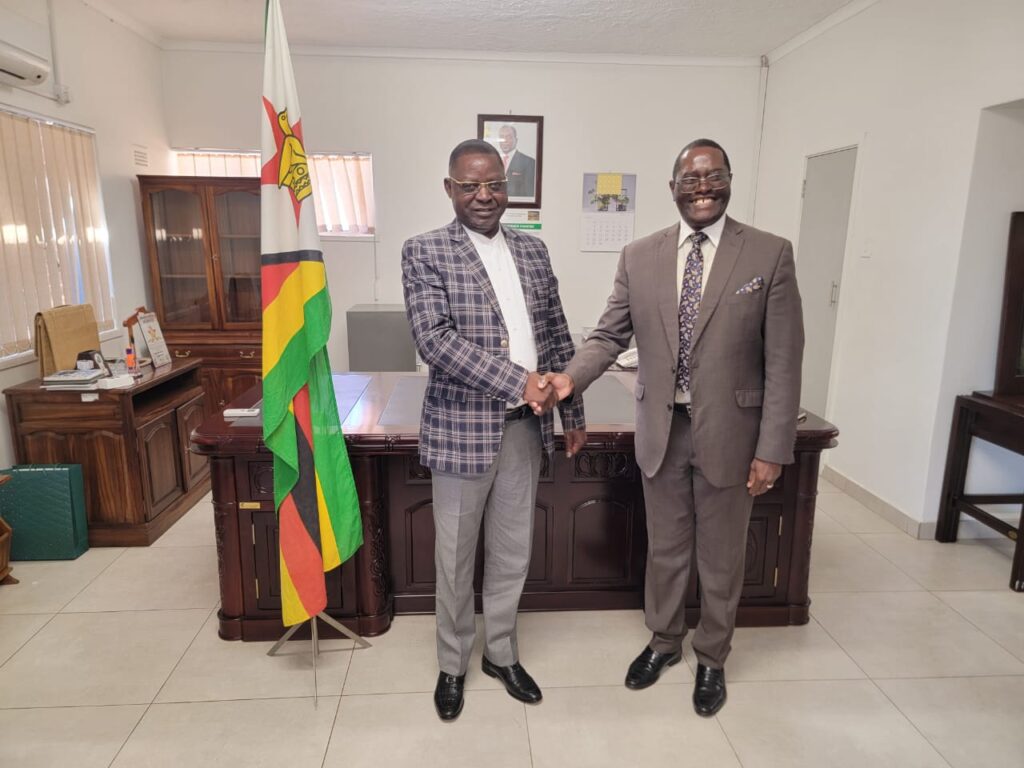
Sports Buzz – Zimbabwe Namibia sports cultural cooperation took centre stage yesterday as the Minister of Sport, Recreation, Arts and Culture, Hon. Lt. Gen. (Rtd.) Amb. AN. Sanyatwe, welcomed His Excellency David A. Thomas, the newly appointed Namibian Ambassador to Zimbabwe, on a courtesy call that underscored growing diplomatic warmth between the two nations.
AN Sanyatwe received the Ambassador in a meeting that reflected shared aspirations to deepen cooperation beyond traditional diplomacy, focusing instead on the powerful unifying force of sport, recreation, arts, and culture.
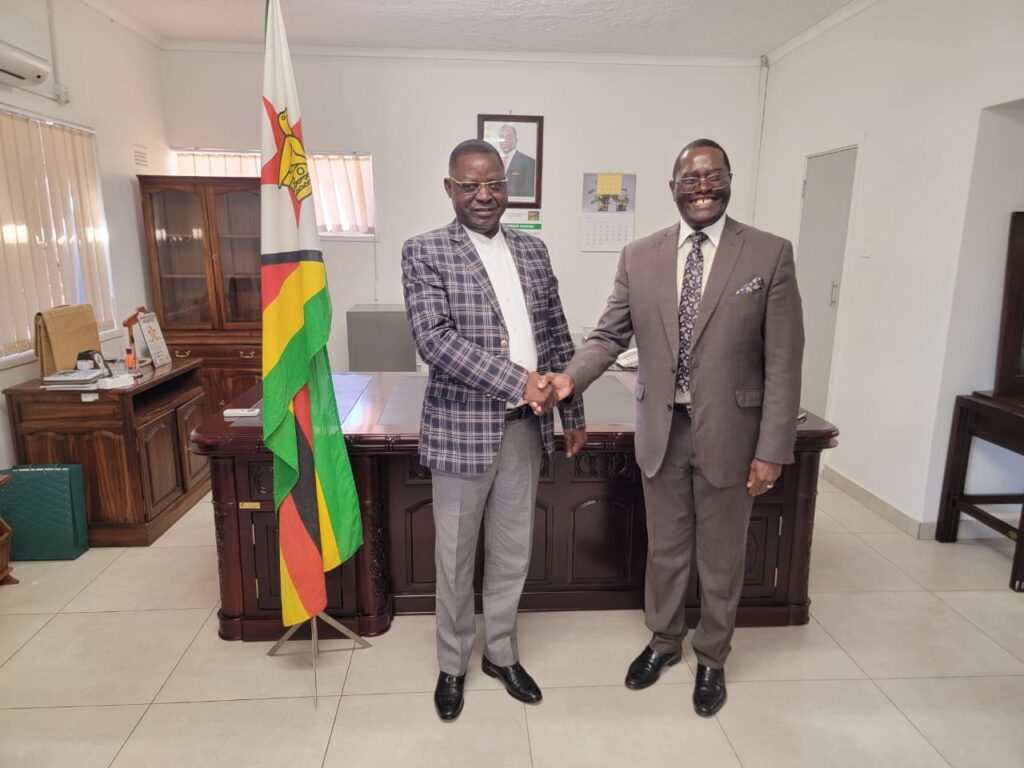
The discussions held in Harare were marked by a strong sense of mutual respect and a forward looking vision that places people at the centre of bilateral relations. Both sides expressed confidence that cultural diplomacy and sporting exchanges can serve as practical tools for strengthening long standing historical ties between Zimbabwe and Namibia.
Hon. Lt. Gen. (Rtd.) Amb. AN. Sanyatwe emphasized that sport and culture are no longer peripheral elements of diplomacy but have become central pillars in building modern international relations. He noted that Zimbabwe is committed to expanding structured cooperation with Namibia in areas that nurture youth talent, encourage creative industries, and promote regional unity.
Ambassador David A. Thomas echoed similar sentiments, highlighting Namibia’s eagerness to work closely with Zimbabwe in designing joint programmes that allow athletes, artists, and cultural practitioners from both countries to collaborate, learn from each other, and grow together. He expressed appreciation for Zimbabwe’s hospitality and its willingness to strengthen bilateral engagement through non political avenues that directly benefit ordinary citizens.
At the heart of the discussions was the shared understanding that sport remains one of the most powerful instruments of unity across Africa. Both parties agreed that football, athletics, boxing, and traditional sporting disciplines can be used to foster stronger bonds among young people in both countries. Exchange programmes, friendly matches, and joint training camps were identified as practical starting points for collaboration.
The conversation also extended into the arts and creative sectors, where both Zimbabwe and Namibia see vast untapped potential. Music, dance, film, and visual arts were highlighted as areas where collaborative festivals and cross border exhibitions could be developed. Such initiatives, it was noted, would not only preserve cultural heritage but also create new economic opportunities for artists and cultural entrepreneurs.
Recreation and community based programmes also featured prominently in the dialogue. Both delegations acknowledged the importance of creating safe and engaging spaces for youth development. Plans for joint recreational initiatives, including community sports development projects and cultural outreach programmes, were discussed as part of a broader strategy to empower young people and promote healthy lifestyles.
The meeting further reinforced the importance of regional cooperation within the broader Southern African Development Community framework. Both Zimbabwe and Namibia share a long history of solidarity and cooperation, and this latest engagement is seen as a continuation of efforts to translate political goodwill into tangible grassroots impact.
Officials present at the meeting described the engagement as warm, constructive, and highly productive. There was a clear sense that both sides are committed to moving beyond symbolic diplomacy toward practical programmes that can be implemented in the near future.
One of the key outcomes of the discussions was the agreement to explore the establishment of a structured cultural and sports exchange framework. This framework would allow for regular interaction between institutions in Zimbabwe and Namibia, ensuring continuity and sustainability in cooperative efforts.
In addition, both parties discussed the possibility of hosting alternating cultural festivals and sporting tournaments between the two countries. These events would serve as platforms for showcasing talent, strengthening tourism, and promoting mutual understanding among citizens.
The Minister reiterated Zimbabwe’s readiness to work with Namibia in advancing policies that support creative industries and sports development. He stressed that the government views these sectors not only as entertainment but as serious economic drivers capable of generating employment and contributing to national development.
Ambassador Thomas noted that Namibia shares a similar vision, particularly in using cultural diplomacy to strengthen African identity and promote unity among nations. He said the partnership with Zimbabwe could serve as a model for other countries in the region.
As the meeting concluded, both sides expressed optimism about the future of Zimbabwe Namibia sports cultural cooperation. They agreed to maintain ongoing communication between their respective ministries and diplomatic missions to ensure that ideas discussed are translated into actionable programmes.
The engagement stands as a clear signal of renewed energy in bilateral relations, with sport, arts, and culture emerging as powerful bridges of connection. It reflects a growing recognition that diplomacy is most effective when it reaches the people directly, inspiring unity, creativity, and shared prosperity.