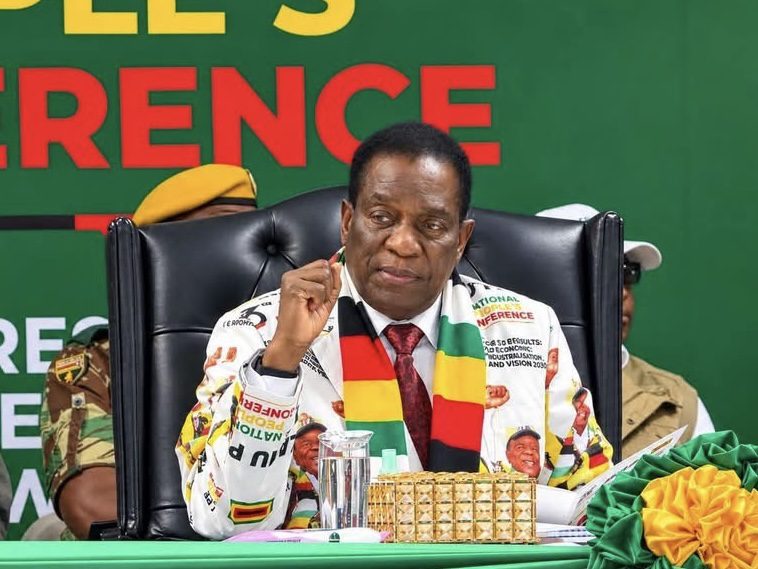
CHINHOYI, Zimbabwe: President Mnangagwa’s 23rd National People’s Conference Address has reinforced the need to transform political resolutions into measurable development outcomes, with economic growth, agricultural productivity, industrialisation, empowerment and national unity emerging as central priorities in Zimbabwe’s journey towards an upper-middle-income economy by 2030.
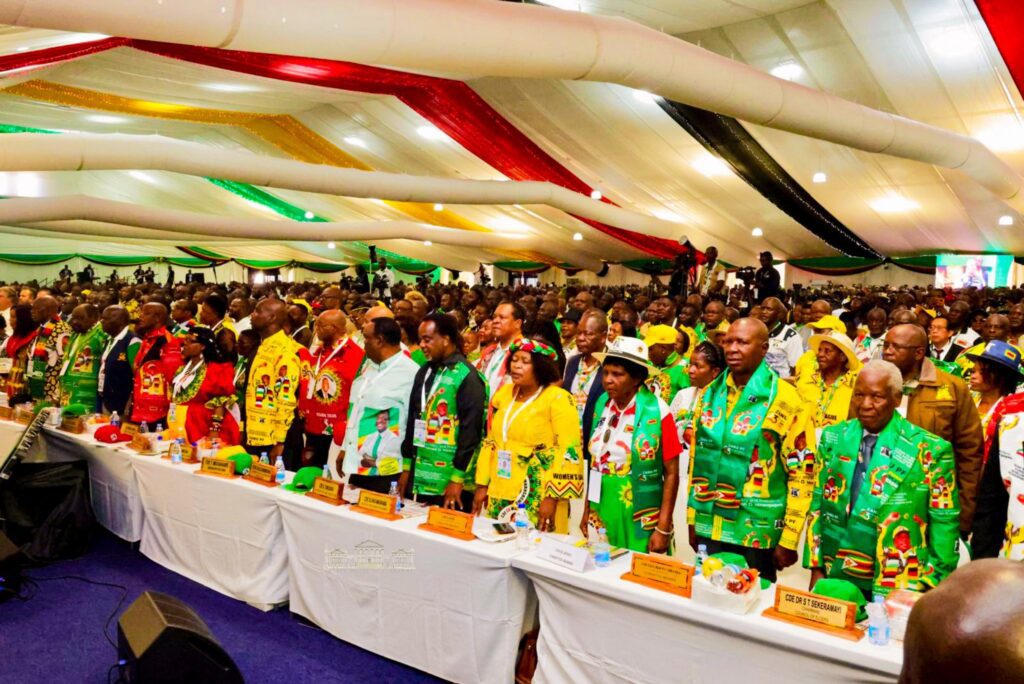
Addressing delegates at the 23rd ZANU PF National People’s Conference in Chinhoyi, President Dr Emmerson Dambudzo Mnangagwa outlined a development agenda that places greater responsibility on party structures and leadership to ensure that resolutions adopted at the conference translate into practical programmes capable of improving livelihoods across the country.
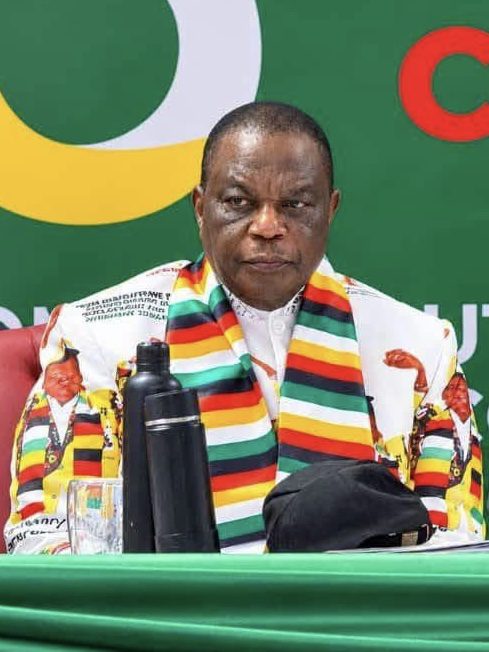
The message reflects the conference theme, From Resolutions to Results: Consolidating Economic Development and Deepening Economic Empowerment Towards Vision 2030, which calls for a stronger connection between political decision-making and tangible economic progress.
The President emphasised that conference resolutions should not remain declarations of intent. Instead, they must be supported by clear implementation responsibilities, measurable targets and practical interventions that address the needs of ordinary citizens.
The emphasis on implementation comes as Zimbabwe advances into the National Development Strategy 2 (NDS2) period, covering 2026 to 2030, with the national objective of building a prosperous and empowered upper-middle-income society.
For communities, businesses and households, the ultimate test of this agenda will be whether national development priorities translate into improved employment opportunities, stronger purchasing power, reliable infrastructure, greater productivity and access to essential services.
Economic growth and stability remain key priorities
In his address, President Mnangagwa highlighted the expansion of Zimbabwe’s economy, with the country’s gross domestic product reportedly increasing from approximately US$16 billion in 2017 to US$66 billion.
GDP per capita was also reported to have risen from about US$1,200 in 2017 to US$3,500, reflecting the economic expansion outlined in the presidential address.
The President further cited economic growth of 8.3 percent in 2025, with growth of approximately 5 percent projected for 2026.
These figures were presented as indicators of progress under the country’s economic transformation programme. Sustaining that progress, however, will require continued investment in productive sectors, improved business confidence, increased industrial capacity and policies that support both established enterprises and emerging businesses.
Inflation and currency stability also featured prominently in the address. Annual inflation was reported to have declined to 2.8 percent, signalling an improvement in price stability.
For households and businesses, sustained price stability is particularly important because it helps consumers plan expenditure, enables enterprises to budget more effectively and creates a more predictable environment for investment.
The President also reported that annual exports had expanded from approximately US$2 billion in 2017 to more than US$20 billion.
Expanding exports remains important to Zimbabwe’s efforts to generate foreign currency, strengthen domestic production and reduce vulnerability to external economic shocks.
The next stage of economic transformation will depend on the country’s ability to increase the value of its exports, diversify its export markets and ensure that more raw materials are processed locally before reaching international markets.
Fiscal discipline and confidence in the economy
President Mnangagwa also highlighted Zimbabwe’s reported performance under the first review of the International Monetary Fund’s Staff-Monitored Programme, stating that the country had met quantitative targets and structural benchmarks.
Fiscal discipline is an important component of macroeconomic stability because government spending, revenue collection and financial management influence inflation, investment conditions and the availability of resources for public services.
Maintaining that discipline while financing infrastructure, social services and productive-sector development will remain a significant policy challenge.
The conference’s economic agenda therefore places emphasis on balancing stability with investment, ensuring that economic growth creates opportunities for businesses, workers, farmers and young people.
Zimbabwe’s Vision 2030 ambition will require more than positive headline economic indicators. It will also depend on the quality of growth, the distribution of economic opportunities and the capacity of industries to create sustainable employment.
Agriculture remains central to food security and rural development
Agriculture featured prominently in the presidential address, with the sector projected to grow by 6.9 percent and strategic grain production estimated at 2.4 million tonnes.
The figures underline the importance of farming to Zimbabwe’s food security, rural incomes, manufacturing and broader economic performance.
President Mnangagwa called for the continuation and strengthening of the Presidential Pfumvudza/Intwasa agricultural programme during the 2026 to 2027 cropping season, with increased production remaining a priority.
The programme promotes conservation farming practices designed to improve productivity through efficient land preparation, moisture conservation and the appropriate use of agricultural inputs.
For smallholder farmers, improved access to inputs, extension services, water and reliable markets will remain essential to translating agricultural support into higher yields and sustainable household incomes.
Zimbabwe’s agricultural transformation agenda also extends beyond grain production. Irrigation development, livestock production, agro-processing and improved access to markets can help communities generate income throughout the year while reducing dependence on seasonal rainfall.
The President’s emphasis on rural industrialisation reflects this broader approach to development.
Boreholes, Village Agro-Business Units, irrigation schemes and agro-processing facilities are expected to play a central role in transforming rural communities into productive economic centres.
When supported by reliable infrastructure, access to finance and viable markets, these initiatives can help farmers move beyond producing raw commodities towards processing, packaging and marketing finished products.
This approach also creates opportunities for young people to establish businesses in transport, agricultural services, food processing and distribution.
The wider challenge is to ensure that rural development programmes are supported by long-term planning, adequate resources and effective monitoring so that their benefits extend beyond individual projects.
Empowerment must create productive opportunities
Youth and women’s empowerment emerged as another important pillar of the presidential address.
President Mnangagwa called for expanded access to productive assets, entrepreneurship, skills development, markets and employment opportunities.
The focus reflects the need to ensure that economic growth is accompanied by broader participation in productive activities.
For young Zimbabweans, empowerment must translate into opportunities to acquire practical skills, establish viable enterprises and secure meaningful employment.
Access to finance alone is not sufficient. Entrepreneurs also need mentorship, reliable electricity, affordable production facilities, business development support and access to customers.
Women, who play a significant role in agriculture, informal trade and small businesses, require opportunities to expand their enterprises, improve productivity and participate more fully in formal economic activity.
The President also stressed the importance of extending empowerment initiatives to people with disabilities and veterans of the liberation struggle.
This emphasis places inclusive development at the centre of the national agenda, reinforcing the principle that economic transformation should benefit different sections of society.
Effective implementation will require programmes to be designed around the particular barriers faced by different groups, with transparent selection criteria and clear measures of impact.
The objective should be to expand productive participation, strengthen household incomes and create opportunities for people to contribute meaningfully to national development.
Industrialisation and investment to drive economic transformation
The presidential address also highlighted the importance of attracting domestic and foreign investment, expanding manufacturing and increasing value addition.
Industrialisation is critical to Zimbabwe’s ambition of building a more diversified economy that creates employment and generates higher-value exports.
The country possesses significant agricultural and mineral resources, but the economic benefits depend partly on how much processing, manufacturing and related commercial activity takes place locally.
Expanding value addition can create opportunities across the production chain, from farmers and miners to manufacturers, transport operators, engineers and retailers.
Investment in industrial capacity must therefore be accompanied by reliable infrastructure, predictable policies, access to finance and a business environment that encourages innovation and enterprise development.
Small and medium-sized businesses also have a role to play in this process. They can supply larger industries, develop local products and create jobs within communities.
At the same time, technological transformation is changing how economies operate. President Mnangagwa called for policies that respond to artificial intelligence, technological advancements and changing global economic conditions.
The growing influence of artificial intelligence presents opportunities to improve productivity, modernise public services and strengthen business operations.
However, these opportunities also create a need for investment in digital infrastructure, technical education and skills development to prepare workers and enterprises for a changing economy.
Zimbabwe’s industrialisation agenda will increasingly depend on its ability to combine natural resources, technological innovation and a skilled workforce.
Unity, discipline and people-centred governance
Beyond economic policy, President Mnangagwa underscored the importance of unity, discipline and constitutional processes within ZANU PF.
He called for continued recruitment and mobilisation through party structures, leagues and affiliates, while emphasising collective responsibility in advancing the organisation’s development agenda.
The President’s message was that party resolutions should address practical challenges facing citizens rather than serve narrow personal interests.
This places responsibility on leaders and structures to remain connected to communities, identify development priorities and ensure that decisions are followed by meaningful action.
The emphasis on people-centred governance also reinforces the importance of accountability in implementing programmes, particularly those involving public resources and community development.
National unity and self-reliance were presented as essential foundations for Zimbabwe’s continued development. The President called on Zimbabweans to work together in building their country, with national interests taking precedence over divisions.
Climate resilience and family values
Climate change and disaster preparedness also featured in the address, with the President calling for increased investment in drought mitigation, disaster management and climate adaptation.
For Zimbabwe, climate resilience remains closely linked to food security, water availability, rural livelihoods and the sustainability of infrastructure.
Investments in irrigation, water harvesting, drought-resistant crops and early warning systems can help communities withstand increasingly unpredictable weather conditions.
The President also expressed concern over marital violence and called for respect for human life and stronger family values.
The message highlighted the importance of peaceful households, responsible relationships and respect within families as part of the wider social foundation needed for national development.
Chinhoyi’s liberation heritage and the road to 2030
The address also invoked the historic 1966 Battle of Chinhoyi, a defining episode in Zimbabwe’s liberation struggle.
President Mnangagwa called on Zimbabweans to draw inspiration from the sacrifices of those who fought for independence, renewing their commitment to sovereignty, national development and prosperity.
The reference connected the country’s liberation heritage with its contemporary economic ambitions, placing national self-reliance and collective responsibility at the heart of the development agenda.
As the 23rd National People’s Conference concludes, the central message is clear: resolutions must be judged by their implementation and their impact on people’s lives.
Zimbabwe’s pursuit of Vision 2030 will require sustained economic growth, productive agriculture, stronger industries, technological advancement and empowerment that reaches communities across the country.
Ultimately, the success of the conference agenda will depend on whether the commitments outlined by President Mnangagwa translate into measurable improvements in employment, incomes, food security, investment and access to essential services.
The challenge now is to turn the conference’s resolutions into a practical programme of action, with clear responsibilities, measurable targets and consistent monitoring.
For Zimbabweans, the significance of the presidential address will be determined not only by the ambitions it sets out, but also by the tangible results delivered in villages, towns, businesses and households as the country advances towards 2030.