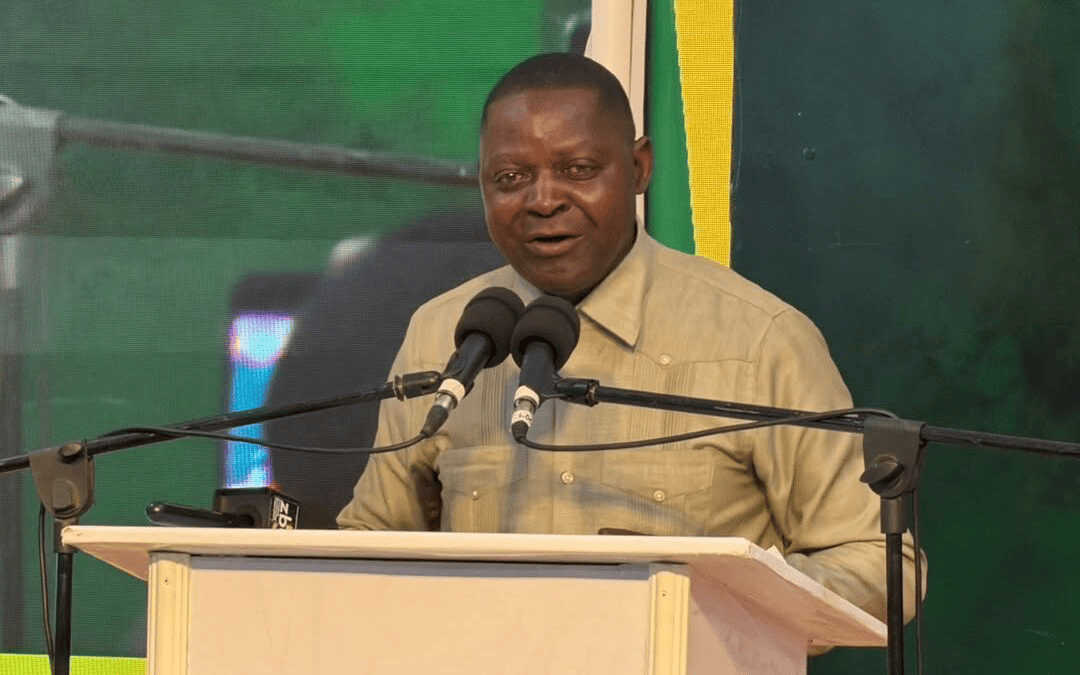
ZITF, Bulawayo – The Minister of Sport, Recreation, Arts and Culture, Hon. Lt. Gen. (Rtd) Amb. Anselem Nhamo Sanyatwe, has hailed KUZANA SCEEZY 2026 as a significant platform for transforming Zimbabwe’s sporting, artistic and cultural talent into sustainable businesses, employment opportunities and investment as the country accelerates implementation of National Development Strategy 2 (NDS2) towards Vision 2030.
The inaugural KUZANA Sport and Creative Economy Expo Zimbabwe, underway at the Zimbabwe International Trade Fair grounds in Bulawayo running began on the 7th of October and ends tomorrow , the 11th.
The KUZANA SCEEZY event brought together stakeholders from sport, arts, culture, business and Government to explore opportunities for commercialising the country’s creative potential.
Held under the theme, “Towards Vision 2030 through Sport and Creative Industries,” the Expo seeks to strengthen the contribution of sporting and creative industries to economic growth, youth empowerment, entrepreneurship and national development.
The significance of the event was underscored during the official opening ceremony, where the Vice President of the Republic of Zimbabwe, Hon. Col. (Rtd) Dr KCD Mohadi, attended as Guest of Honour and delivered an address on behalf of His Excellency the President of the Republic of Zimbabwe, Dr Emmerson Dambudzo Mnangagwa.
The President’s message highlighted the importance of moving beyond viewing sport, arts and culture primarily as recreational and entertainment activities, recognising instead their potential to generate employment, attract investment, earn foreign currency and contribute to national economic development.
For the Minister of Sport, Recreation, Arts and Culture, Hon. Lt. Gen. (Rtd) Amb. Sanyatwe, KUZANA SCEEZY 2026 provides an opportunity to translate this national development ambition into practical opportunities for athletes, artists, entrepreneurs and young people seeking to build sustainable livelihoods from their talents.
Officially opening the Expo as Guest of Honour, the Vice President of the Republic of Zimbabwe, Hon. Col. (Rtd) Dr KCD Mohadi, highlighted the economic opportunities available within Zimbabwe’s sporting and creative industries, emphasising the importance of developing an environment in which talent can flourish commercially.
Delivering the address of His Excellency President Dr Emmerson Dambudzo Mnangagwa, the Vice President underscored the potential of these industries to contribute to employment creation, innovation, tourism and economic growth when adequately supported and commercially developed.
In the address delivered by the Vice President, President Mnangagwa stated: “If properly supported and commercially developed, then these sectors present significant job creation, generators of innovation, vehicles for national pride, tourist attractions, and drivers of economic growth.”
The statement captures the central objective of KUZANA SCEEZY 2026: establishing a stronger connection between talent, investment, enterprise development and the wider economy.
The Vice President’s address reinforced the need for stronger partnerships between Government, businesses, financial institutions, sporting organisations and creative practitioners to unlock the commercial potential of Zimbabwean talent.
For athletes, this means creating opportunities beyond competitions and prize money through sponsorship, professional management, broadcasting, merchandising, sports tourism and other commercial activities.
For musicians, filmmakers, fashion designers, visual artists and cultural practitioners, it means developing sustainable business models that allow them to earn from their intellectual property, products and services.
The message delivered by the Vice President on behalf of the President was therefore not simply about celebrating Zimbabwe’s talent. It was about ensuring that sporting and creative excellence can support livelihoods and contribute meaningfully to the national economy.
Achieving this requires improved infrastructure, professional training, access to finance, market development and stronger intellectual property protection to ensure that athletes and artists receive fair value for their work.
The policy significance of KUZANA SCEEZY 2026 is anchored in the National Development Strategy 2 (NDS2), Zimbabwe’s development blueprint for the 2026 to 2030 period.
Under the leadership of His Excellency President Dr Emmerson Dambudzo Mnangagwa, NDS2 provides the framework for accelerating the country’s transition towards an empowered and prosperous upper-middle-income society by 2030, building on the foundation established under the first National Development Strategy.
The national development agenda places emphasis on employment creation, youth development, entrepreneurship, investment and the growth of productive industries, including opportunities within sport, arts, culture and heritage.
The strategy recognises the importance of economic transformation that extends beyond traditional sectors to harness human capital, innovation, technology and the country’s cultural resources.
In this context, KUZANA SCEEZY 2026 provides a platform for connecting national policy objectives with practical implementation across Zimbabwe’s sporting and creative industries.
The Expo enables stakeholders to examine how the country can strengthen the business environment surrounding sport and the creative economy while expanding opportunities for employment, investment and entrepreneurship.
The Government’s development agenda also emphasises value addition, industrialisation and the development of productive enterprises. Applied to the creative economy, this means ensuring that Zimbabwe does not merely produce talented athletes and artists, but also develops the businesses, institutions and infrastructure that enable their work to generate lasting economic value.
The economic contribution of a sporting event, for example, extends beyond the athletes competing. It includes accommodation, transport, catering, broadcasting, event management, equipment suppliers, advertising and tourism services.
Similarly, the commercial value of music and film productions extends into digital distribution, international licensing, merchandise, advertising, live performances and other revenue streams.
By encouraging investment across these value chains, Zimbabwe can expand the contribution of industries that have traditionally received greater recognition for their entertainment and cultural value than for their economic potential.
His Excellency President Dr Emmerson Dambudzo Mnangagwa’s Vision 2030 agenda seeks to build an empowered upper-middle-income society through inclusive economic growth, employment creation, entrepreneurship and the development of productive industries.
Sport, arts and culture have an important place in this ambition because they combine economic opportunities with national identity, social participation and the development of human potential.
Zimbabwe’s sporting achievements, musical traditions, visual arts, fashion, film and cultural heritage provide a foundation for expanding domestic enterprises and strengthening the country’s presence in regional and international markets.
The challenge is to ensure that these strengths translate into sustainable income, business growth and wider economic participation.
President Mnangagwa has emphasised the role of arts, culture and heritage in socioeconomic development, recognising the contribution of creative and cultural industries to national cohesion, inclusive growth and economic opportunity.
KUZANA SCEEZY 2026 brings these priorities into a practical industry setting by connecting practitioners with potential investors, brands, institutions and commercial partners.
For the sporting sector, opportunities include professional leagues, athlete development, coaching, sports science, sports medicine, equipment manufacturing and sports tourism.
For the creative sector, opportunities extend to music, film, photography, fashion, sculpture, publishing, digital content creation, cultural festivals and heritage tourism.
The combined potential of these industries makes them relevant to Zimbabwe’s efforts to diversify economic activity and expand opportunities for young people.
The role of the Ministry of Sport, Recreation, Arts and Culture, led by Hon. Lt. Gen. (Rtd) Amb. Sanyatwe, is therefore important in advancing the institutional and policy environment required for these sectors to develop.
The Minister of Sport, Recreation, Arts and Culture, Hon. Lt. Gen. (Rtd) Amb. Anselem Nhamo Sanyatwe, has placed the development and commercialisation of sporting and creative activities at the centre of the opportunities presented by KUZANA SCEEZY 2026.
The Expo brings Government and industry stakeholders together to examine the practical requirements for transforming individual talent and cultural resources into sustainable industries.
The development of these industries requires more than identifying talented individuals. It requires reliable infrastructure, professional administration, access to finance, business development skills, market access and investment in the systems that support production and distribution.
In sport, this includes facilities, qualified coaches, athlete welfare, competitive structures, sponsorship and professional management.
In the arts and cultural industries, it includes production facilities, exhibition spaces, creative hubs, professional training, intellectual property protection and access to local and international markets.
These requirements highlight the importance of cooperation between the public and private sectors.
Government can provide an enabling policy environment, while businesses and investors can contribute capital, expertise, technology and market access.
Industry associations, educational institutions and training providers can strengthen professional skills and help young people turn their abilities into sustainable careers.
For the Minister of Sport, Recreation, Arts and Culture, Hon. Lt. Gen. (Rtd) Amb. Sanyatwe, the long-term value of the Expo will depend on whether the momentum generated translates into practical programmes, partnerships and measurable economic outcomes.
Young Zimbabweans stand to benefit from a more commercially developed sporting and creative economy.
Across the country, young people are participating in athletics, football, music, fashion, film, photography, digital media and other creative activities. Many are already using digital platforms to reach audiences, promote their work and develop new business opportunities.
However, talent and online visibility alone do not guarantee sustainable income.
Young practitioners need access to professional training, finance, mentorship, infrastructure and markets. They also need stronger knowledge of business management, marketing, intellectual property and the commercial rights associated with their work.
KUZANA SCEEZY 2026 creates a platform for examining these requirements and connecting emerging talent with potential commercial opportunities.
The economic benefits could extend well beyond athletes and performers to include event organisers, photographers, designers, technicians, transport operators, caterers, marketers and other service providers.
This wider value chain makes the creative economy particularly relevant to employment creation and entrepreneurship under NDS2.
The challenge is to ensure that opportunities are accessible to practitioners in all provinces, including rural communities whose artistic traditions and sporting talent may not always receive the same exposure as those in major urban centres.
Zimbabwe’s cultural heritage provides another avenue for economic development.
Traditional music, dance, sculpture, crafts, fashion, storytelling and indigenous knowledge can support cultural tourism while creating markets for local artists and communities.
The relationship between heritage and economic opportunity has featured in initiatives aimed at developing cultural infrastructure across the country.
Zim Global Media explored this connection in its report, Minister Sanyatwe Commissions Shangwe-Tonga Culture Centre in Gokwe, Unlocking Cultural Tourism Opportunities.
The report examines the potential for cultural facilities to preserve indigenous knowledge while supporting tourism, entrepreneurship and community development.
These opportunities align with the broader objective of strengthening Brand Zimbabwe through cultural diplomacy, tourism and the international marketing of locally produced creative goods and services.
With appropriate investment, Zimbabwean artists and cultural practitioners can reach wider audiences while creating income opportunities at home.
The Minister of Sport, Recreation, Arts and Culture, Hon. Lt. Gen. (Rtd) Amb. Sanyatwe, and other sector stakeholders have an opportunity to use platforms such as KUZANA SCEEZY to strengthen the links between cultural preservation, enterprise development and tourism.
As KUZANA SCEEZY 2026 approaches its conclusion, attention will increasingly turn to what the initiative can deliver beyond the exhibition grounds.
The long-term value of the Expo will depend on whether discussions lead to investment commitments, commercial partnerships, new enterprises, professional development programmes and stronger industry institutions.
For the Government of Zimbabwe, led by His Excellency President Dr Emmerson Dambudzo Mnangagwa, the task is to maintain an enabling environment for the development of sporting and creative industries in line with NDS2 and Vision 2030.
For investors and businesses, the opportunity lies in recognising the commercial potential of Zimbabwean talent and developing sustainable business models around it.
For athletes and creative practitioners, the priority is to strengthen professionalism, protect intellectual property and build enterprises capable of competing in regional and international markets.
The success of this agenda will ultimately be measured by the jobs created, businesses established, investments secured and incomes generated across the sporting and creative value chains.
KUZANA SCEEZY 2026 has brought the economic potential of these industries into sharper focus. The messages delivered by His Excellency President Dr Emmerson Dambudzo Mnangagwa through the Vice President of the Republic of Zimbabwe, Hon. Col. (Rtd) Dr KCD Mohadi, alongside the sectoral leadership of the Minister of Sport, Recreation, Arts and Culture, Hon. Lt. Gen. (Rtd) Amb. Anselem Nhamo Sanyatwe, reinforce the importance of moving from talent recognition to commercial development.
As Zimbabwe implements NDS2 and advances towards Vision 2030, the central task is to ensure that sport, arts and culture become sustainable sources of employment, entrepreneurship, investment and economic value.
Zimbabwean talent must not only entertain, inspire and represent the nation. It must also create livelihoods, support businesses and contribute to the country’s long-term economic development.