Feature – The Africa Skills Week 2026 is set to place Zimbabwe at the centre of a major continental conversation on skills development, human capital, industrialisation and the future of work when African policymakers, industry leaders, educators, innovators and young people converge in Harare from 12 to 16 October.
Zimbabwe will host the third edition of the African Union continental event under the theme, “Skills for Resilient and Competitive African Industries: From Training to Value Creation.” The event is expected to bring together Member States, Regional Economic Communities, industry, academia, youth, development partners, civil society, research institutions and development finance organisations around a common agenda for skills development, employment and industrial transformation.
For Zimbabwe, the event carries significance beyond hosting an international gathering. It comes as President Emmerson Mnangagwa’s administration continues to place human capital, skills development, innovation, industrialisation and value addition within the broader national development agenda towards an upper middle income economy by 2030.
At the centre of Zimbabwe’s preparations is the Ministry of Skills Audit and Development, led by Minister Dr Jenfan Muswere, which has the responsibility of ensuring that the country’s skills base is understood, strengthened and better aligned with the requirements of the economy.
The establishment of the ministry in September 2023 was intended to support Zimbabwe’s transition towards an upper middle income economy by ensuring the availability of an adequate and competent workforce.
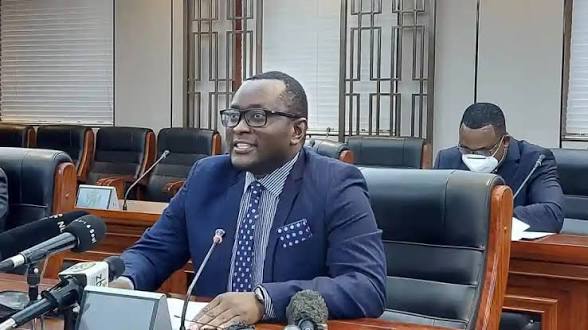
For Minister Dr Jenfan Muswere, the hosting of Africa Skills Week provides Zimbabwe with an opportunity to contribute to the continental debate while demonstrating the country’s own experience in skills governance and human capital development.
Minister Dr Jenfan Muswere has emphasised the importance of the African Union partnership in preparing for the Harare gathering and has highlighted the value President Emmerson Mnangagwa places on skills development, pointing to the creation of a dedicated ministry as evidence of that national priority.
That institutional focus reflects a growing recognition across Africa that education cannot be separated from economic transformation.
Training more people is important, but the bigger question is whether training produces skills that can be applied in workplaces, businesses, industries and communities.
That is why the phrase “From Training to Value Creation” is particularly significant.
It shifts attention from certificates and enrolment figures towards practical economic outcomes.
Can a graduate find employment?
Can a trained young person establish a viable enterprise?
Can an artisan contribute to industrial production?
Can a university researcher transform an idea into a product?
Can employers find workers with the capabilities they require?
Can training institutions adapt quickly enough to technological and industrial change?
These questions sit at the heart of Africa Skills Week 2026.
The African Union has designed the Harare edition as a practical bridge between continental strategies and national implementation. The event is expected to address persistent skills mismatches, weak links between training and productive sectors, limited work based learning, uneven access to quality training and the need for stronger labour market intelligence.
Artificial intelligence and automation are also changing the nature of work, forcing African countries to rethink how young people and workers are prepared for the future.
The African Union has identified digital capabilities, creativity, judgement, care, collaboration and complex problem solving as important elements of the future skills landscape.
For Zimbabwe, this discussion connects directly with President Emmerson Mnangagwa’s emphasis on education as a driver of national transformation.
The Heritage Based Education 5.0 philosophy has sought to move education beyond teaching and learning towards research, innovation, community engagement, industrialisation and the production of goods and services.
Africa Skills Week 2026 therefore provides Zimbabwe with an opportunity to place that experience before a continental audience.
The African Union itself has identified Zimbabwe’s Heritage Based Education 5.0 philosophy as one of the areas that will feature during the high level programme, including discussion of its contribution to value creation.
That gives the event a particularly important national dimension.
President Emmerson Mnangagwa’s broader development agenda has repeatedly emphasised the need for Zimbabwe to develop human capital capable of supporting industrialisation and economic growth.
Under this approach, universities, technical institutions and vocational training centres are increasingly expected to contribute to national production and innovation rather than functioning solely as institutions that award qualifications.
The objective is to create an education and skills ecosystem capable of producing problem solvers, innovators, entrepreneurs, technicians and professionals who can respond to Zimbabwe’s economic requirements.
This is where the mandate of the Ministry of Skills Audit and Development becomes particularly important.
A skills audit is ultimately about understanding what a country has, what it needs and where the gaps are.
Without reliable information about available skills and future demand, governments, businesses and training institutions can struggle to make effective decisions about investment and curriculum development.
Minister Dr Jenfan Muswere has therefore positioned skills intelligence and human capital development within the broader national transformation conversation.
The Ministry’s engagement with the African Union during preparations for Africa Skills Week has also highlighted the potential for Zimbabwe to contribute to continental discussions on skills audits and capacity building.
During a June engagement with African Union Commissioner for Education, Science, Technology and Innovation, Professor Gaspard Banyankimbona, the Commissioner commended Zimbabwe’s role in skills development and said the country had much to offer the continent through skills audits and capacity building.
Minister Dr Jenfan Muswere acknowledged the support from the African Union Commission and explained the ministry’s mandate in relation to human capital development.
The engagement underscored how Zimbabwe intends to use the event not only to host delegates but also to position its own skills development experience within the wider African conversation.
For President Emmerson Mnangagwa, the timing of the event also coincides with the broader drive to strengthen innovation and research as tools for economic transformation.
Recent national discussions around research and innovation have focused on areas such as agriculture, healthcare, financial technology and other sectors where knowledge can be converted into practical solutions and economic opportunities.
The connection between research, skills and production is central to the Education 5.0 model and mirrors the African Union’s emphasis on linking education and training to productive sectors.
Africa Skills Week 2026 will also focus heavily on industry and training partnerships.
The African Union programme identifies apprenticeships, dual training, internships, mentorship and enterprise based learning as important mechanisms for strengthening the relationship between training institutions and employers.
For Zimbabwe, this could have implications across mining, agriculture, manufacturing, construction, energy, tourism, information technology, healthcare and the creative industries.
The country’s economic ambitions require workers who possess both theoretical knowledge and practical capabilities.
Mining companies need technically skilled workers.
Modern agriculture needs people capable of working with digital technologies and precision systems.
Manufacturing requires technicians who understand automation and modern production systems.
The renewable energy sector requires specialised skills.
The digital economy requires programmers, data specialists, cybersecurity experts and artificial intelligence professionals.
The creative industries require new combinations of artistic, technical, entrepreneurial and digital capabilities.
Africa Skills Week 2026 will therefore provide an opportunity for stakeholders to examine how training systems can respond to these rapidly changing demands.
Youth will remain central to the conversation.
Africa has one of the world’s youngest populations, creating enormous potential for economic transformation if young people can access relevant education, practical skills, finance, technology and markets.
But a young population alone does not guarantee economic growth.
The skills must connect to opportunities.
Young people must be able to use their knowledge to create businesses, secure employment, participate in industry and develop new solutions.
That is why the transition from training to value creation is so important.
The African Union has also placed inclusion at the centre of the programme, with attention to women, youth, rural populations, persons with disabilities, informal sector workers and other groups that can face barriers to accessing quality training and employment.
For Zimbabwe, the event presents an opportunity to showcase how skills development can support inclusive economic participation.
It also creates space for Zimbabwean institutions and innovators to engage directly with counterparts from across Africa.
The African Union expects Africa Skills Week 2026 to produce tangible outcomes, including a communiqué, implementation priorities, a skills intelligence agenda, stronger industry partnerships, a financing roadmap and recommendations on inclusion and lifelong learning.
The event is also expected to contribute to discussions around a possible annual continental Africa Education and Skills Summit.
That could give the Harare gathering significance beyond the five days in October.
For Zimbabwe, the opportunity is to demonstrate that skills development can become a practical instrument for industrialisation rather than an isolated education policy.
For President Emmerson Mnangagwa, the event offers an international platform to connect Zimbabwe’s Education 5.0 philosophy with the wider African ambition for industrialisation, innovation and value creation.
For Minister Dr Jenfan Muswere and the Ministry of Skills Audit and Development, it offers an opportunity to advance the conversation around skills intelligence, human capital planning and stronger connections between training institutions and the economy.
The ultimate measure of success, however, will come after the delegates leave Harare.
Africa does not need another conference that produces declarations without implementation.
The real test will be whether the discussions lead to stronger apprenticeships, better industry partnerships, more responsive training programmes, improved skills intelligence, greater investment and new opportunities for young people.
It will be whether qualifications translate into livelihoods.
It will be whether innovation translates into products.
It will be whether research translates into solutions.
And it will be whether skills translate into productive economic value.
That is the promise contained in the theme of Africa Skills Week 2026.
As Harare prepares to welcome the continent, Zimbabwe will be placing a simple but consequential proposition before its African counterparts: the continent’s industrial future will depend not only on its natural resources, infrastructure and markets, but also on the capabilities of its people.
The future workforce must be equipped to build, manufacture, innovate, solve problems and compete.
The countries that understand their skills gaps, invest in human capital, connect education to industry and encourage innovation will be better positioned to participate in the next phase of global economic transformation.
Zimbabwe will have an opportunity to demonstrate its own approach through Education 5.0, skills auditing, vocational training, innovation and industry partnerships.
Under the national development direction associated with President Emmerson Mnangagwa and with the Ministry of Skills Audit and Development coordinating Zimbabwe’s skills development mandate, Africa Skills Week 2026 will bring the conversation firmly into the national development arena.
From 12 to 16 October, Harare will become a continental meeting point for governments, industry, educators, innovators and young people seeking answers to one of Africa’s most important economic questions.
How does the continent turn the enormous potential of its people into productive economic power?
The answer, increasingly, begins with skills.