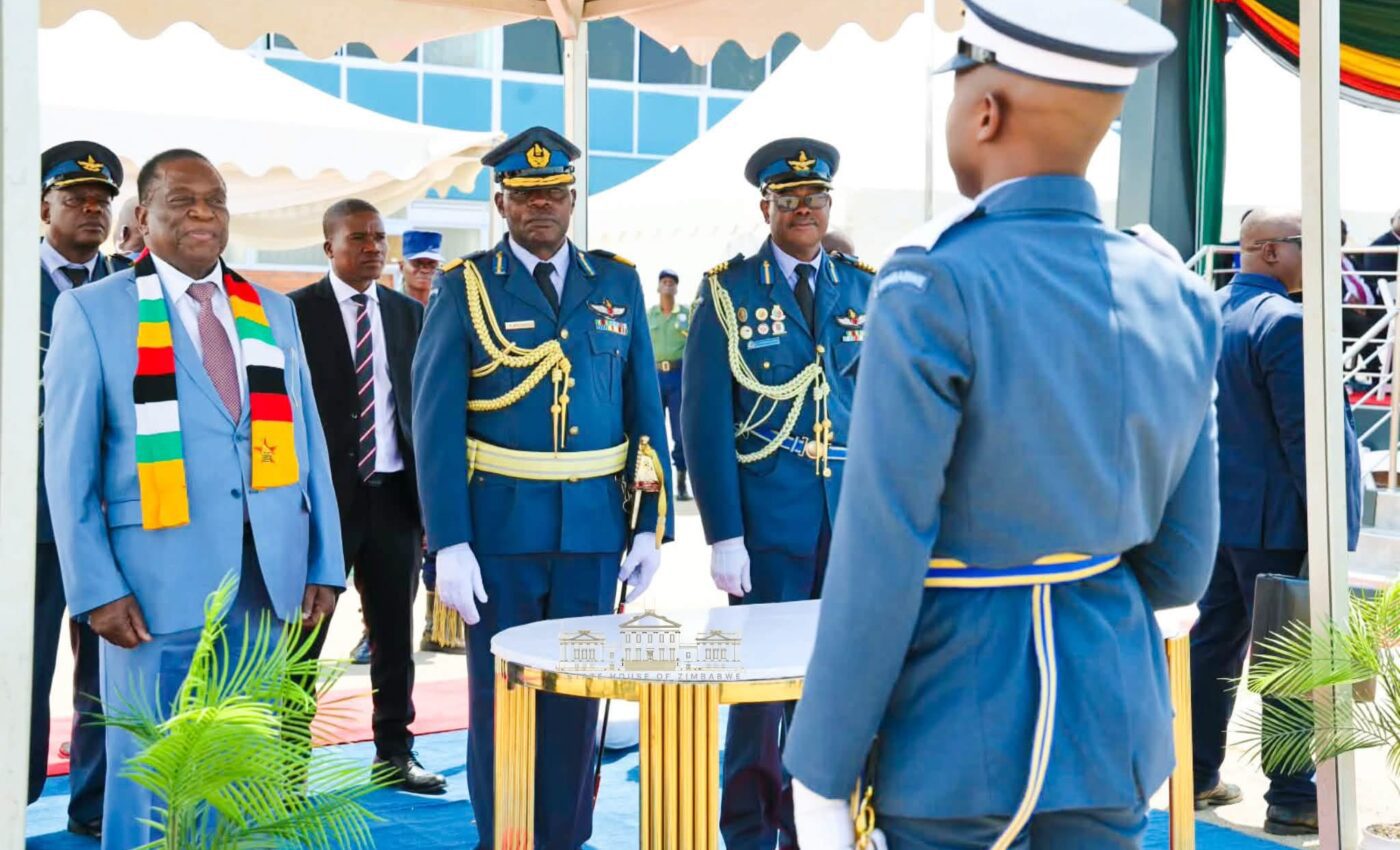
Zimbabwe News – The Air Force of Zimbabwe Pilot Training Course Number 70 has reached a significant milestone following the commissioning of newly trained pilots at the Josiah Tungamirai Air Force Base in Gweru, Midlands Province, with President Dr Emmerson Dambudzo Mnangagwa presiding over the Wings Presentation and Commissioning Parade.
The ceremony marked an important moment in the professional journeys of the newly commissioned pilots, their families and the wider Air Force of Zimbabwe (AFZ), as the country continues to invest in the development of specialised skills and human capital within its defence institutions.
Addressing the gathering, President Mnangagwa described the occasion as a remarkable achievement and a proud moment for the newly commissioned officers, acknowledging the commitment, perseverance and support required to complete the demanding pilot training programme.
The President also recognised the contribution of parents and families who supported the trainees throughout their training journey, noting the significance of their encouragement in helping the officers reach this important stage in their military careers.
However, the celebrations were accompanied by a sombre moment of remembrance following the tragic loss of an Officer Cadet and an Instructor Pilot during training.
President Mnangagwa expressed deep condolences to the bereaved families and fellow members of the Air Force, acknowledging the loss of the two personnel whose lives were cut short while serving the country.
The tragedy cast a solemn atmosphere over an otherwise celebratory occasion, reminding those gathered of the demands and risks associated with military aviation training and the sacrifices made by personnel in the service of Zimbabwe.
The President said the sacrifice of the two officers would never be forgotten, extending heartfelt sympathies to their families and comrades.
Their loss also highlighted the commitment and responsibility associated with preparing military personnel for duties that require high levels of discipline, technical competence, precision and dedication.
Beyond the presentation of wings and commissioning of the new officers, the ceremony provided an opportunity to reflect on the changing requirements of military aviation and the importance of keeping training programmes aligned with developments in the global aviation environment.
President Mnangagwa said the Air Force of Zimbabwe had systematically upgraded its pilot training programme to incorporate modern methods of flying, in keeping with ongoing global trends.
The modernisation of pilot training is an important component of developing an aviation force capable of responding to evolving operational demands. As aviation technology and training approaches continue to advance, military institutions must ensure that their personnel acquire the technical knowledge, practical experience and professional discipline required to operate effectively.
The President’s remarks placed particular emphasis on the need for the newly commissioned pilots to embrace the core values of the Air Force of Zimbabwe as they begin their professional responsibilities.
He urged the officers to remain guided by patriotism, discipline and unyielding loyalty, stressing that their responsibilities extend beyond individual career advancement to the broader duty of serving and protecting the nation.
Military aviation requires a combination of technical expertise, sound judgement, teamwork and strict adherence to established procedures. The commissioning of the new pilots therefore represents not only the completion of a training programme but also the beginning of a demanding professional responsibility within the country’s defence establishment.
President Mnangagwa linked the development of skilled defence personnel to Zimbabwe’s wider national development ambitions, particularly Vision 2030.
He emphasised that human capital development remains a critical pillar in the attainment of the country’s long-term development objectives, adding that investment in defence personnel is central to this national undertaking.
The emphasis on human capital development reflects the importance of equipping institutions with skilled, competent and professionally trained personnel. In the defence sector, specialised training contributes to institutional readiness, operational effectiveness and the ability to perform responsibilities that require advanced technical capabilities.
The President’s address also highlighted the Air Force of Zimbabwe’s contribution to international military cooperation through what he described as robust Air Diplomacy.
Over the years, the AFZ has demonstrated professionalism both within Zimbabwe and beyond its borders, strengthening relationships through engagement and cooperation with other aviation and defence institutions.
Such engagements provide opportunities for the exchange of professional knowledge, technical expertise and experience, while strengthening relationships between participating countries.
President Mnangagwa specifically acknowledged the importance of Zimbabwe’s participation alongside the Standing Aviation Community of the Southern African Development Community (SADC).
Regional cooperation in aviation and defence provides an important framework for strengthening professional relationships, sharing expertise and supporting collective preparedness among member states.
The AFZ’s participation in regional engagements reflects Zimbabwe’s commitment to contributing to cooperation within the SADC community and maintaining constructive relationships with neighbouring countries.
Looking ahead, the President challenged the newly commissioned officers and the wider Air Force to maintain the highest standards of professionalism as the country prepares for upcoming regional and international engagements.
Among the events highlighted were Exercise Runde and the forthcoming Africa Aerospace and Defence exhibition in South Africa.
These engagements present opportunities for military institutions to demonstrate their capabilities, strengthen professional relationships and exchange knowledge in areas relating to aviation and defence technology.
For Zimbabwe, participation in such platforms is also an opportunity to maintain visibility within regional and international defence cooperation structures while reinforcing the importance of professionalism and institutional preparedness.
President Mnangagwa stressed that the nation expects high standards, strong values and a commitment to advancing the national interest from its defence forces.
His message to the newly commissioned pilots was therefore not limited to the successful completion of their training. It was also a call to uphold the reputation of the Air Force of Zimbabwe through responsible conduct, discipline and dedication to duty.
The President further underscored the importance of teamwork, describing it as a defining feature of military tradition.
Military operations depend on coordination, mutual trust and a shared understanding of responsibilities. Within the aviation environment, the relationship between pilots, instructors, technical personnel and other supporting teams is essential to maintaining professional standards and operational effectiveness.
He extended gratitude to the Ministry of Defence, the Commander of the Zimbabwe Defence Forces, the Air Force Command and the entire training team for their continued support and dedication to duty.
The acknowledgement highlighted the collective effort required to train and prepare military aviation personnel. Behind every commissioned pilot is a network of instructors, technical experts, administrators and support personnel whose contribution is essential to the training process.
The Number 70 Pilot Training Course Wings Presentation and Commissioning Parade therefore represented an institutional achievement involving not only the graduating officers but also the wider defence establishment.
For the newly commissioned pilots, receiving their wings marks the transition from the demanding training environment into a new phase of military service. It places upon them the responsibility to apply the knowledge and skills acquired during training while upholding the values and expectations of the Air Force of Zimbabwe.
The occasion also provided an opportunity for families to celebrate the achievement of their loved ones, recognising the sacrifices and commitment associated with pursuing a career in military aviation.
At the same time, the remembrance of the Officer Cadet and Instructor Pilot who died during training served as a reminder that military service carries responsibilities and sacrifices that extend beyond the individual.
The President’s message brought together the different dimensions of the ceremony: celebrating achievement, acknowledging sacrifice, strengthening professionalism and investing in the future capabilities of the country’s defence forces.
The commissioning also comes within the broader national development framework, where skills development, institutional modernisation and investment in human capital remain important considerations across sectors.
As Zimbabwe pursues its Vision 2030 objectives, the development of specialised personnel within the defence sector forms part of building institutions equipped with the technical capabilities and professional standards required to fulfil their national responsibilities.
The Air Force of Zimbabwe remains an important component of the country’s defence establishment, and the development of qualified pilots is central to sustaining its aviation capabilities and professional standards.
The newly commissioned officers now carry the responsibility of translating their training into disciplined and effective service, while contributing to the continued development of the institution.
As President Mnangagwa congratulated the graduates, he also called upon them to remain patriotic, disciplined and loyal in the discharge of their duties.
The ceremony closed on a message of achievement, remembrance and responsibility: celebrating the successful completion of the Number 70 Pilot Training Course while honouring those who lost their lives in service.
Congratulations to the newly commissioned pilots of the Air Force of Zimbabwe. Their wings represent achievement, responsibility and a renewed commitment to national service.