

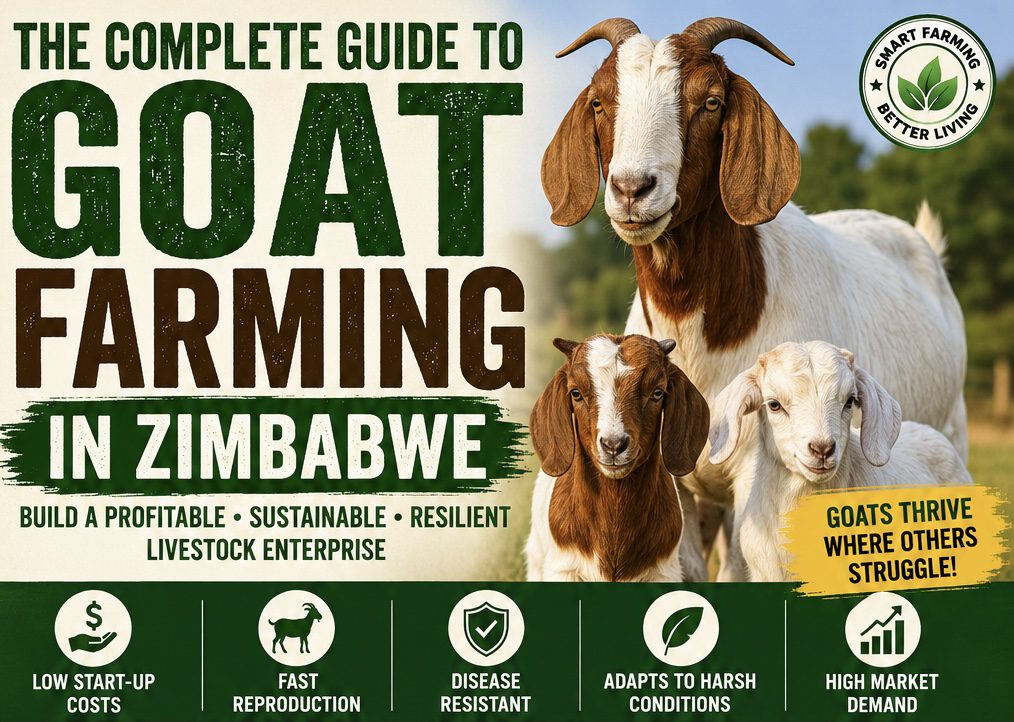
Feature – Goat Farming in Zimbabwe is rapidly emerging as one of the most profitable and resilient agricultural ventures for both small-scale and commercial farmers. As Zimbabwe continues to pursue food security, rural industrialisation, and agricultural transformation, goats have become a preferred livestock option due to their adaptability, low production costs, strong market demand, and ability to thrive in diverse climatic conditions.
With increasing demand for goat meat (chevon), breeding stock, milk, skins, and organic manure, thousands of Zimbabwean farmers are turning to goat production as a reliable source of income. Unlike cattle, goats require less land, reproduce quickly, and can survive in areas where other livestock struggle.
This comprehensive guide explores everything farmers need to know about goat farming in Zimbabwe, from breed selection and housing to feeding, health management, and profitability.
Why Goat Farming is Growing in Zimbabwe
Zimbabwe has one of the largest goat populations in Southern Africa, with millions of goats concentrated mainly in communal and smallholder farming areas.
Several factors are driving the growth of the sector:
- Rising demand for goat meat in local and export markets.
- Climate resilience compared to cattle farming.
- Lower start-up costs.
- Fast reproduction rates.
- Availability of grazing resources.
- Increasing support from government and agricultural organisations.
Goats are particularly important in drought-prone regions such as Matabeleland, Masvingo, and parts of Midlands where cattle production is often challenged by water shortages and poor grazing conditions.
Agricultural experts say goats represent an ideal livestock enterprise for youth, women, and rural households seeking sustainable income opportunities.
Choosing the Right Goat Breed
Success in Goat Farming in Zimbabwe begins with selecting suitable breeds.
- Matebele Goat
The indigenous Matebele goat is highly adapted to Zimbabwean conditions.
Advantages include:
- Excellent disease resistance.
- High tolerance to drought.
- Low feeding requirements.
- Good fertility rates.
- Boer Goat
The Boer goat is one of the most popular commercial meat breeds.
Benefits include:
- Rapid growth.
- Excellent carcass quality.
- High market value.
- Strong breeding potential.
- Kalahari Red
This breed performs exceptionally well in hot environments.
Characteristics include:
- Strong resistance to parasites.
- Good mothering ability.
- Fast weight gain.
- Saanen Goat
Farmers interested in milk production often choose Saanen goats.
Advantages include:
- High milk yields.
- Easy management.
- Strong demand from dairy enterprises.
Many farmers use crossbreeding programmes to combine the hardiness of indigenous goats with the productivity of exotic breeds.
Housing Requirements
Although goats are hardy animals, proper housing significantly improves productivity.
A good goat shelter should provide:
- Protection from rain.
- Adequate ventilation.
- Dry flooring.
- Security from predators.
- Easy cleaning access.
Raised wooden floors are often recommended because they help reduce parasite infestations and improve hygiene.
Each adult goat should have sufficient space to move comfortably and avoid overcrowding.
Feeding and Nutrition
Nutrition is one of the most important factors determining profitability.
Goats feed on:
- Natural grazing.
- Browse plants.
- Shrubs.
- Tree leaves.
- Crop residues.
Farmers can supplement grazing with:
- Hay.
- Lucerne.
- Maize bran.
- Cotton seed cake.
- Commercial livestock feeds.
Pregnant and lactating does require additional nutrition to support growth and milk production.
Access to clean water is essential throughout the year.
A mature goat may consume several litres of water daily depending on weather conditions and feed type.
Breeding Management
One of the greatest advantages of Goat Farming in Zimbabwe is rapid reproduction.
Key breeding facts include:
- Gestation period: approximately 150 days.
- Twins are common.
- Triplets occur occasionally.
- Breeding can occur throughout the year.
Farmers should maintain quality breeding bucks and avoid inbreeding.
A healthy breeding programme helps improve:
- Growth rates.
- Fertility.
- Disease resistance.
- Market value.
Proper record keeping is crucial for tracking breeding performance.
Common Diseases and Health Management
Disease control remains critical to successful goat production.
Common diseases include:
Heartwater
A tick-borne disease that can cause significant losses.
Internal Parasites
Worm infestations reduce growth rates and productivity.
Pneumonia
Usually associated with poor housing and cold weather.
Foot Rot
Often caused by wet conditions and poor sanitation.
Pulpy Kidney
A preventable disease through vaccination.
Farmers should establish relationships with veterinary officers and follow recommended vaccination schedules.
Regular dipping and deworming programmes are essential for maintaining healthy herds.
Marketing Opportunities
The market for goats in Zimbabwe continues to expand.
Major buyers include:
- Individual households.
- Restaurants.
- Butcheries.
- Religious organisations.
- Export markets.
- Breeding farmers.
Demand typically rises during:
- Christmas holidays.
- Easter celebrations.
- Traditional ceremonies.
- Weddings.
- Religious festivals.
Urban centres such as Harare, Bulawayo, Mutare, Gweru, and Masvingo provide strong markets for goat meat.
Value Addition Opportunities
Farmers can increase profits through value addition.
Examples include:
Goat Meat Processing
Processed goat meat attracts premium prices.
Breeding Stock Sales
Quality breeding animals generate higher returns.
Goat Milk Production
Goat milk products are gaining popularity among health-conscious consumers.
Leather and Skins
Goat skins can be sold to leather processors.
Organic Manure
Goat manure is highly valued by horticultural farmers.
These additional income streams improve overall enterprise profitability.
Cost of Starting a Goat Farm
The cost of starting a goat enterprise depends on scale.
A small starter project may require:
- Breeding stock.
- Housing materials.
- Feed supplements.
- Water infrastructure.
- Veterinary supplies.
Many successful farmers begin with as few as five to ten goats and gradually expand through breeding.
Because goats reproduce relatively quickly, herd growth can be achieved without major ongoing livestock purchases.
Challenges Facing Goat Farmers
Despite strong opportunities, several challenges remain:
- Stock theft.
- Disease outbreaks.
- Limited access to finance.
- Poor genetics.
- Drought conditions.
- Market fluctuations.
Addressing these challenges requires improved management practices and stronger farmer organisations.
Government Support and Future Prospects
Zimbabwe’s agricultural transformation agenda increasingly recognises livestock production as a key driver of rural development.
Government initiatives promoting horticulture, value addition, and rural industrialisation continue to create opportunities for livestock producers. Agricultural development projects and community farming programmes are helping farmers improve productivity and market access. (Zim Global Media)
As climate change places pressure on traditional livestock systems, goats are expected to play an even greater role in Zimbabwe’s agricultural future.
Conclusion
Goat Farming in Zimbabwe offers one of the most accessible and profitable agricultural opportunities available today. With relatively low capital requirements, strong market demand, rapid reproduction rates, and resilience to harsh climatic conditions, goats provide an ideal pathway for income generation and food security.
Whether undertaken as a small household project or a large commercial enterprise, successful goat farming depends on proper breed selection, good nutrition, effective disease management, sound breeding practices, and strong market planning.
For Zimbabwean farmers seeking sustainable agricultural enterprises capable of delivering long-term returns, goat farming remains one of the country’s most promising livestock sectors.
Related Articles:
For readers interested in agricultural development and rural enterprise growth, read:
- Hon. Sanyatwe Revives Shapure Community Garden with 30,000 Seedlings Boost: https://www.zimglobalmedia.co.zw/hon-sanyatwe-revives-shapure-community-garden-with-30000-seedlings-boost/
- VP Chiwenga Lauds Rural Industrialization During Tour of Orange Ville Juicing Plant: https://www.zimglobalmedia.co.zw/vp-chiwenga-applauds-rural-industrialisation-during-tour-of-orange-ville-juicing-plant/