The National Gallery of Zimbabwe – A Cultural Powerhouse Anchoring the Nation’s Re-Engagement Drive
4 min read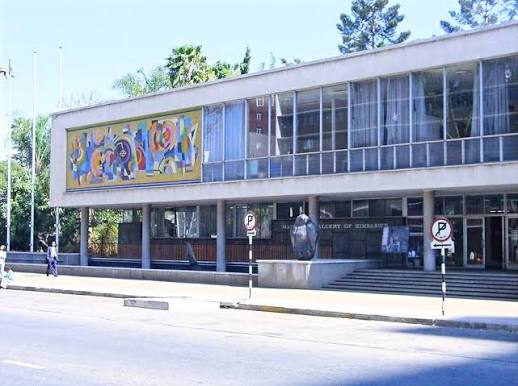
Feature – In the theatre of international relations, power does not only reside in economic muscle or military strength. Sometimes it hangs quietly on gallery walls, chiselled into stone, painted across canvas, whispered through installations that refuse to be ignored.
For Zimbabwe’s unfolding re-engagement narrative, the National Gallery of Zimbabwe stands not as a passive custodian of art, but as a formidable cultural powerhouse, shaping perception, projecting identity and anchoring the country’s soft power strategy with deliberate, unmistakable force.
To walk into the National Gallery of Zimbabwe is to enter a space where history, memory and ambition converge. It is a sanctuary of creativity, yes, but it is also a strategic arena.
In a world where nations compete not only for markets but for moral authority and global respect, culture becomes currency. And Zimbabwe’s art speaks volumes.
Soft power, defined by influence through attraction rather than coercion, has become central to modern diplomacy. For Zimbabwe, whose story has often been filtered through external lenses, cultural institutions such as the National Gallery provide a platform for self articulation. They enable the country to define itself in its own voice, through its own aesthetic language, grounded in its own lived realities.
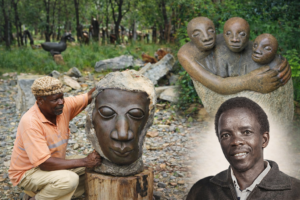
Established in 1957, the Gallery has long been a cornerstone of Zimbabwe’s artistic development. It nurtured and elevated the stone sculpture movement that would later become synonymous with Zimbabwean creative excellence.
Works that originated within its orbit now occupy prestigious international collections, silently carrying Zimbabwe’s identity into global museums and private galleries.
But the present moment demands even more of the institution. Zimbabwe’s re engagement agenda, centred on rebuilding diplomatic ties and strengthening international cooperation, requires multidimensional tools.
While political dialogue and economic negotiations remain critical, cultural diplomacy offers a complementary pathway, one that softens hardened perceptions and invites constructive engagement.
Each exhibition hosted at the National Gallery becomes an act of subtle diplomacy. When foreign ambassadors, cultural attachés and international visitors attend exhibition openings, they are not merely observing art. They are engaging with Zimbabwe’s intellectual life, its debates, its aspirations and its contradictions.
Art, in this context, becomes an unspoken envoy.
The Gallery’s programming reflects a deliberate outward looking posture. Contemporary exhibitions tackle universal themes such as migration, climate change, urban transformation, identity and memory.
By situating Zimbabwean experiences within global conversations, the institution ensures that local narratives resonate internationally.
This alignment strengthens Zimbabwe’s cultural credibility and fosters deeper cross border understanding.
The presence of the National Gallery in Bulawayo further reinforces this national and international reach. By extending its footprint beyond Harare, the Gallery underscores Zimbabwe’s regional diversity and artistic plurality.
Cultural diplomacy is thus not confined to a single city but radiates across provinces, presenting a cohesive yet richly layered national identity.
Importantly, the Gallery’s role extends beyond showcasing established artists. It is a crucible for emerging talent. Youth workshops, mentorship programmes and open calls cultivate a new generation of creators who will carry Zimbabwe’s narrative into the future.
This investment in young artists is not incidental. It is strategic. Sustainable soft power depends on continuous renewal.
In the broader architecture of international relations, culture often prepares the emotional terrain for economic and political agreements.
Nations are more inclined to collaborate with societies they understand and respect. Through carefully curated exhibitions and international partnerships, the National Gallery of Zimbabwe builds that understanding incrementally, exhibition by exhibition, dialogue by dialogue.
Moreover, the institution provides a safe yet intellectually rigorous space for national introspection.
Post liberation identity, colonial legacies, contemporary socio economic realities and aspirations for the future can be explored through artistic expression. This willingness to reflect publicly and creatively signals maturity. It communicates to the international community that Zimbabwe is confident enough to interrogate its own journey while charting its future.
Tourism intersects meaningfully with this soft power strategy. While iconic destinations such as Victoria Falls and Hwange National Park attract global attention, cultural tourism deepens the visitor experience.
A tour of the National Gallery enriches understanding of Zimbabwe beyond landscapes and wildlife. It introduces visitors to the philosophical and creative heartbeat of the nation. Many leave not just with photographs, but with transformed perceptions.
Digital engagement has further amplified this reach. Virtual exhibitions and online programming allow Zimbabwean art to transcend geographical limitations.
In an era where narratives circulate globally within seconds, curated digital presence becomes essential.
The Gallery’s adaptation to digital platforms ensures that Zimbabwe’s creative voice remains visible, relevant and globally accessible.
For policymakers, the strategic value of the National Gallery cannot be overstated. It operates at the intersection of heritage preservation and contemporary innovation. Its leadership must balance safeguarding historical collections with fostering cutting edge artistic expression. They must cultivate international partnerships while strengthening domestic relevance. It is a demanding mandate, yet one filled with opportunity.
For ordinary Zimbabweans, the Gallery represents pride. It affirms identity and resilience. It demonstrates that Zimbabwe is not defined solely by economic statistics or political discourse, but by imagination, craftsmanship and intellectual depth.
As Zimbabwe consolidates its re engagement drive, the National Gallery of Zimbabwe stands as a living testament to the power of culture in diplomacy. It is not merely a building of curated objects. It is a dynamic diplomatic corridor lined with canvases, sculptures and installations that articulate who Zimbabwe has been, who it is and who it intends to become.
In the quiet authority of its exhibition halls, Zimbabwe tells the world a different story. One of creativity over conflict. Dialogue over division. Confidence over caricature.
And in that story, the National Gallery of Zimbabwe emerges not as a peripheral institution, but as a central pillar of the nation’s soft power architecture, shaping perception, fostering connection and anchoring Zimbabwe’s place in the global cultural community.
About The Author