

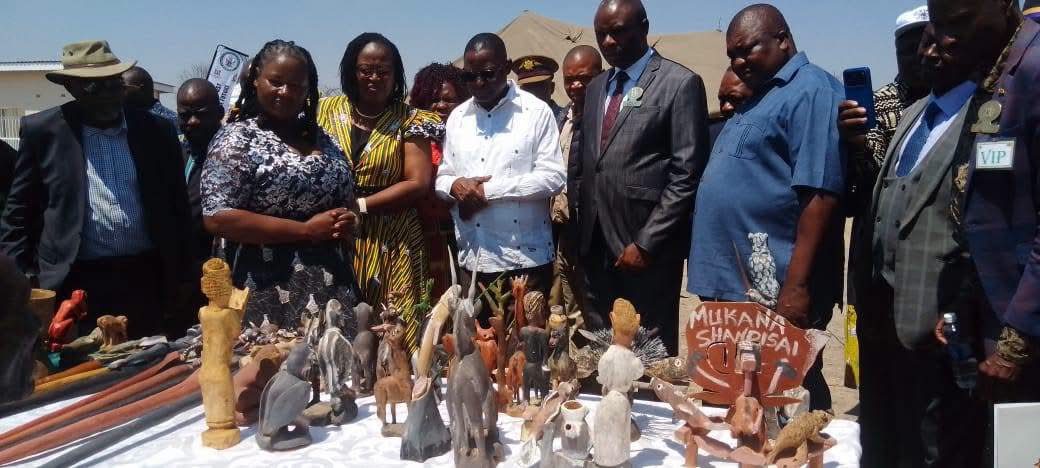
Gokwe – The Shangwe-Tonga Culture Centre has officially been commissioned in Gokwe-Nembudziya, marking a significant milestone in Zimbabwe’s efforts to preserve indigenous knowledge, promote cultural identity and harness the economic potential of the country’s diverse heritage.
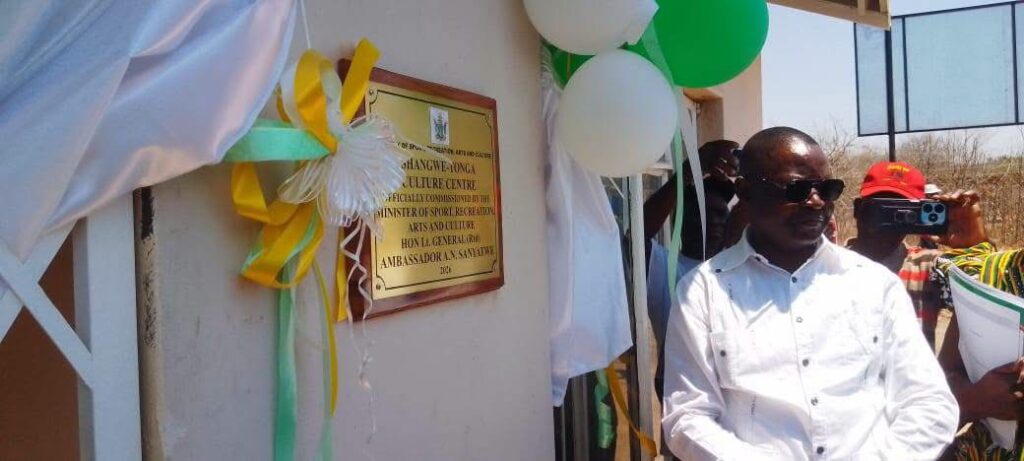
The centre was officially commissioned by the Minister of Sport, Recreation, Arts and Culture, Lieutenant-General (Retired) Ambassador Anselem Nhamo Sanyatwe, during celebrations that brought together traditional leaders, cultural practitioners, community members and other stakeholders.
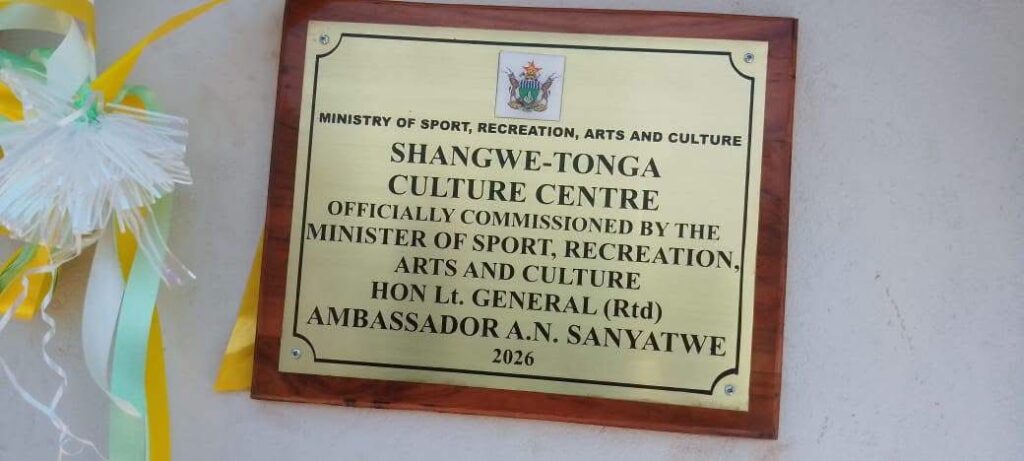
The development provides the Shangwe and Tonga communities with a dedicated platform for preserving, showcasing and transmitting their cultural heritage to present and future generations.
Minister Sanyatwe called on the Gokwe community to regard the new facility not only as a centre for cultural preservation, but also as a potential driver of investment, tourism and community development.
He emphasised the need to transform traditional heritage and cultural artefacts into sustainable investment opportunities, positioning arts and culture as important contributors to Zimbabwe’s broader development agenda.
The commissioning of the Shangwe-Tonga Culture Centre comes at a time when Zimbabwe is placing increasing emphasis on the economic contribution of arts, culture and heritage.
For Minister Sanyatwe, the centre presents an opportunity to demonstrate how cultural resources can contribute to livelihoods while preserving the identity of communities.
The facility has the potential to become a focal point for cultural tourism, giving visitors an opportunity to experience Shangwe-Tonga traditions, storytelling, music, dance, traditional practices, craftsmanship and other forms of creative expression.
Such experiences could create opportunities for local artists, craftspeople, tour operators, accommodation providers, food businesses and other entrepreneurs.
Instead of cultural heritage remaining confined to ceremonial occasions, the centre can provide a platform through which heritage becomes part of a wider local economic ecosystem.
Zim Global Media has previously explored the relationship between Zimbabwe’s heritage, tourism and creative industries in its article, Inside Zimbabwe’s Bid to Become Africa’s Cultural Hub.
At the heart of the Shangwe-Tonga Culture Centre is the preservation of indigenous knowledge.
For generations, traditional knowledge has been passed from elders to younger members of communities through oral traditions, ceremonies, storytelling and practical instruction.
The establishment of a permanent cultural facility provides an opportunity to document and preserve some of this knowledge while ensuring that younger generations remain connected to their heritage.
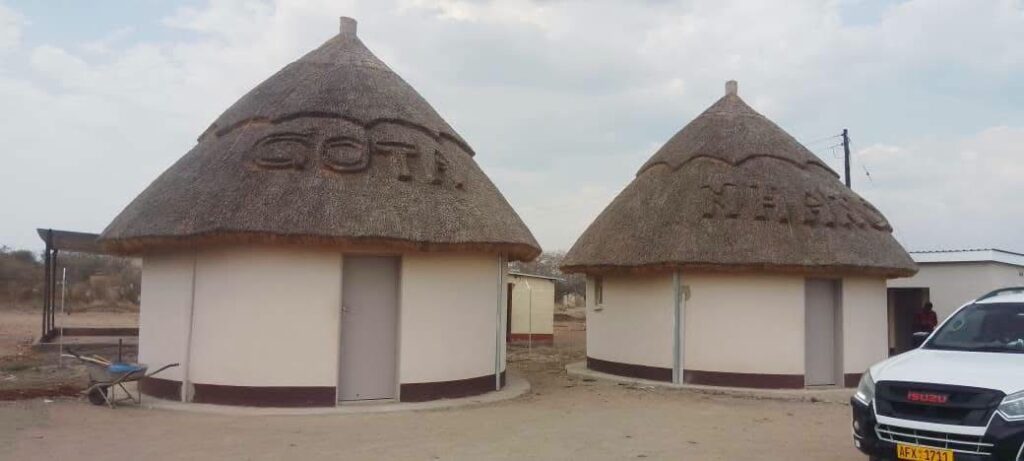
The centre includes facilities associated with traditional knowledge transmission, including a traditional leaders’ court, offices and dedicated Nhanga and Gota facilities.
These spaces can provide opportunities for elders and traditional leaders to share knowledge with young people in a structured environment.
The importance of such facilities extends beyond the preservation of physical artefacts.
Culture is also reflected in language, customs, music, traditional dress, food, ceremonies, craftsmanship, stories and knowledge of the natural environment.
Preserving these elements helps maintain the cultural identity of communities while creating opportunities for visitors and researchers to better understand Zimbabwe’s diverse heritage.
The long-term success of the Shangwe-Tonga Culture Centre will depend heavily on community participation.
Minister Sanyatwe has encouraged local communities, artists, cultural practitioners and entrepreneurs to contribute by donating artefacts that can be displayed at the facility.
Such participation can ensure that the centre remains connected to the people whose heritage it represents.
Traditional artefacts can provide important insights into how communities lived, worked, celebrated, travelled and interacted with their environment.
When presented alongside oral histories and explanations from community members, these artefacts can provide visitors with a richer and more authentic cultural experience.
The centre could also provide a platform for local artists and craftspeople to showcase and market their work.
This could include traditional crafts, contemporary artwork, music, dance, fashion and other creative products inspired by Shangwe-Tonga heritage.
The Shangwe-Tonga Culture Centre has the potential to broaden Zimbabwe’s tourism offering by creating another destination based on cultural heritage.
Zimbabwe is internationally known for attractions such as Victoria Falls and Great Zimbabwe, but the country’s tourism potential extends across numerous communities and cultural landscapes.
Cultural tourism enables visitors to experience the traditions, histories, food, crafts, music and lifestyles associated with different communities.
The Shangwe-Tonga Culture Centre could therefore become part of a wider cultural tourism route in the Midlands Province and surrounding areas.
Such development would have potential benefits beyond the centre itself.
Visitors require transport, accommodation, food, entertainment and other services, creating opportunities for small and medium-sized enterprises.
Local entrepreneurs could develop complementary products and services around the centre, while tour operators could incorporate the facility into cultural and educational itineraries.
Domestic tourism could also play an important role.
Schools, universities, researchers and Zimbabwean families could visit the centre to learn more about the Shangwe and Tonga communities and the wider cultural history of Zimbabwe.
Minister Sanyatwe has emphasised the importance of positioning arts and culture as key pillars of national development towards Vision 2030.
The commissioning of the Shangwe-Tonga Culture Centre therefore represents more than the opening of another public facility.
It provides an example of how cultural infrastructure can potentially contribute to national development through tourism, entrepreneurship, education and employment.
The centre’s value will ultimately be measured not only by the building itself, but by the activities, partnerships and opportunities generated around it.
Government, traditional leaders, communities, artists, cultural practitioners and private-sector players all have a role to play in ensuring that the facility develops into a sustainable cultural institution.
Young Zimbabweans are among the key groups that could benefit from the centre.
As technology continues to transform the way people consume and share cultural content, young people can play an important role in documenting and promoting traditional heritage.
The centre could provide opportunities for young people to participate in digital storytelling, photography, filmmaking, music, research and creative entrepreneurship.
Young people could document oral histories from elders, record traditional music and performances, produce documentaries and develop digital content that introduces Shangwe-Tonga heritage to audiences beyond Gokwe.
Such initiatives could help bridge traditional knowledge and modern technology.
They could also ensure that indigenous knowledge remains relevant to future generations rather than becoming disconnected from contemporary society.
The commissioning of the Shangwe-Tonga Culture Centre adds to Zimbabwe’s wider network of institutions and initiatives dedicated to protecting cultural heritage.
Zimbabwe’s cultural identity is made up of many communities, languages, traditions, histories and artistic expressions.
Dedicated cultural institutions can help ensure that these different identities remain visible, documented and accessible to future generations.
The role of cultural institutions in national development was also examined by Zim Global Media in its article, The National Gallery of Zimbabwe – A Cultural Powerhouse Anchoring the Nation’s Re-engagement Drive.
The Shangwe-Tonga Culture Centre can similarly serve as a platform where heritage preservation, education, tourism and creative enterprise intersect.
The immediate task following the commissioning will be to translate the centre’s potential into sustainable programmes and economic activity.
This will require continued investment, proper preservation of artefacts, effective management, community participation and partnerships with tourism and creative-sector stakeholders.
Cultural entrepreneurs could develop locally produced crafts, traditional food experiences, performances, guided tours and educational programmes.
Artists could use the centre to exhibit their work, while cultural practitioners could organise workshops, festivals and other events.
Tourism operators could also incorporate the centre into regional itineraries, giving visitors another reason to explore Gokwe-Nembudziya and surrounding areas.
With appropriate management and sustained community involvement, the facility could become an important cultural and economic asset.
The official commissioning of the Shangwe-Tonga Culture Centre marks a new chapter in the preservation and promotion of Shangwe and Tonga heritage.
For the local community, the facility provides a permanent space where traditions can be celebrated, knowledge can be transmitted and cultural identity can be preserved.
For Zimbabwe’s tourism sector, it presents another potential destination capable of showcasing the country’s diverse cultural heritage.
For artists, cultural practitioners and entrepreneurs, it creates a platform around which new opportunities can potentially emerge.
Minister Sanyatwe’s call for the community to transform cultural heritage and traditional artefacts into sustainable investment opportunities places economic participation at the centre of the facility’s future.
The challenge now is to build on the foundation created by the commissioning and ensure that the centre remains active, accessible and connected to the community.
If that is achieved, the Shangwe-Tonga Culture Centre can serve not only as a guardian of the past, but also as a platform for education, tourism, creativity and enterprise.
The commissioning therefore represents more than the opening of a cultural facility. It is an opportunity to demonstrate how Zimbabwe’s heritage can be preserved while contributing to the country’s social and economic development agenda.