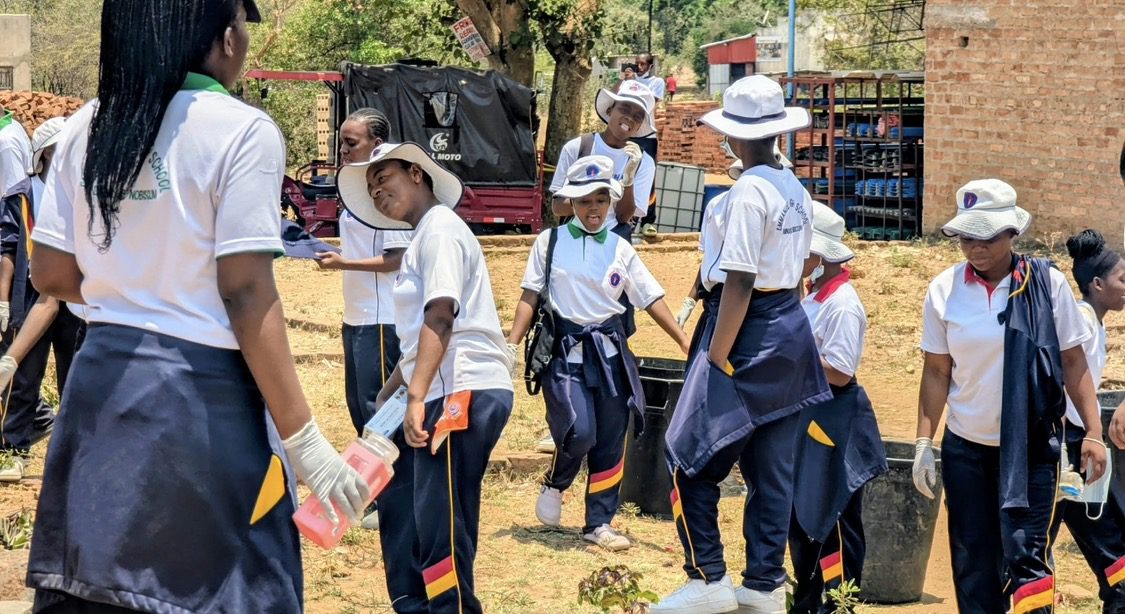
Nyanga North – Emmanuel High School, Nyanga has demonstrated the importance of youth participation in environmental protection and community development following a successful clean-up campaign conducted across parts of Nyanga on Friday, 6 November 2026 as the first Friday of the month of November.
Member of the House of Assembly for Nyanga North, Hon. Chido Sanyatwe, commended the initiative, highlighting the importance of educational institutions taking an active role in building responsible communities and supporting the country’s national development aspirations.
Hon. Sanyatwe said: “The participation of Emmanuel High School in this important national programme demonstrates that our young people are not merely beneficiaries of development but active participants in shaping the future of their communities. We must continue encouraging our learners to embrace responsibility, patriotism and environmental consciousness as we work towards the aspirations of Vision 2030. Development begins with collective responsibility, and keeping our communities clean is one practical way of contributing to national progress.”
The campaign, organised through the school’s Environmental Management Club, covered a route stretching from Emmanuel High School to Elim Mission Hospital, along Ministry Road and ultimately to Ruwangwe Growth Point.
Running from 7:30am to midday, the initiative brought environmental education into practical community service, with learners participating in litter collection, sanitation awareness and the cleaning of public spaces.
The exercise also reinforced the importance of the monthly National Clean-Up Programme declared by President His Excellency Dr. Emmerson Dambudzo Mnangagwa, which designates the first Friday of every month as National Clean-Up Day.
The programme commenced at Emmanuel High School with registration, an opening prayer and welcome remarks from the student leadership, the Environmental Management Club Patron and the School Principal, Mr. Kenneth Mutukumira.
Invited guests also addressed participants before a safety briefing, group allocation and distribution of protective gloves, refuse bags and cleaning equipment.
The preparatory session ensured that participants understood their responsibilities, with designated group leaders coordinating the movement and activities of learners throughout the exercise.
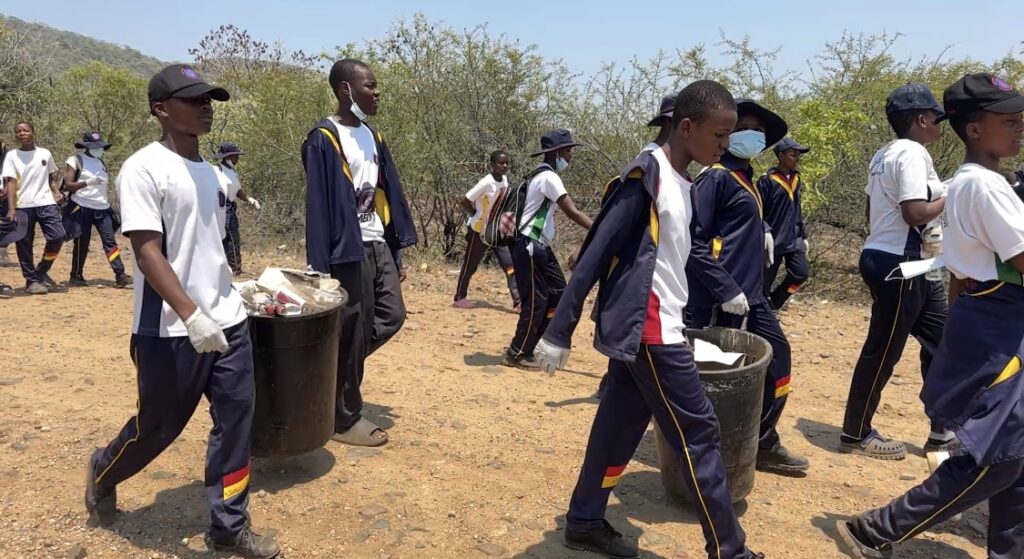
The first phase involved walking from Emmanuel High School towards Elim Mission Hospital while collecting litter along the roadside.
Police officers and marshals supported the safe movement of participants, particularly at road crossings.
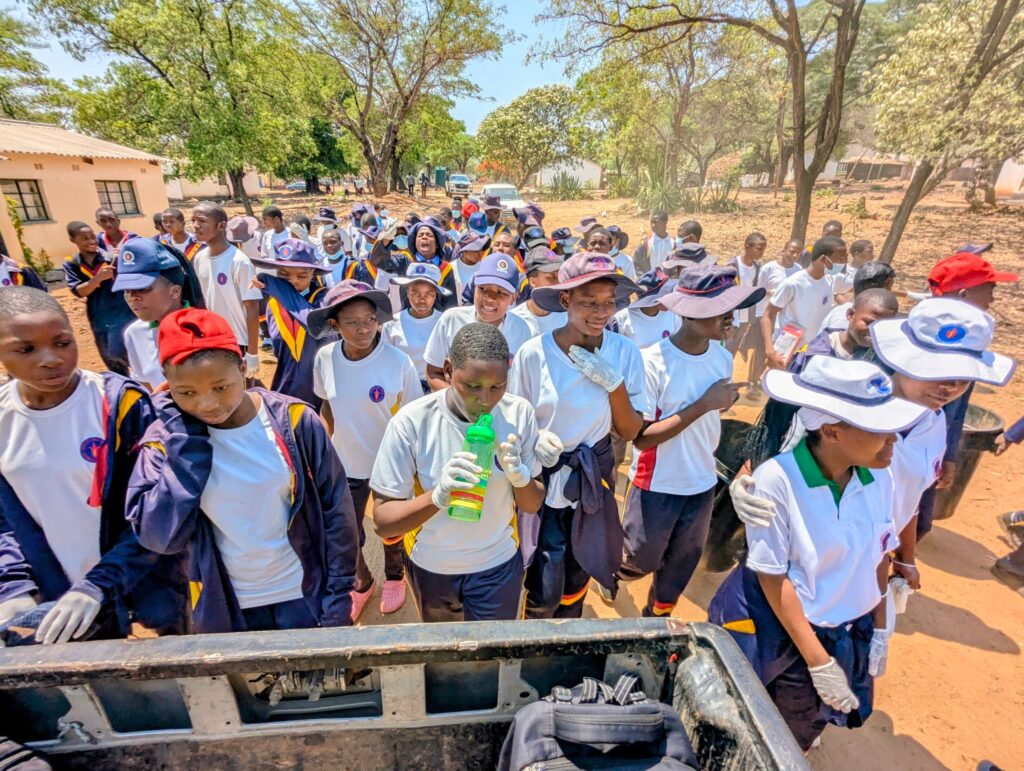
The initiative demonstrated how schools can translate environmental education into practical action by encouraging learners to take responsibility for their surroundings.
At Elim Mission Hospital, participants were received by hospital representatives who conducted an awareness session focusing on hygiene, sanitation and safe waste disposal.
The engagement highlighted the close relationship between environmental cleanliness and public health, particularly the importance of maintaining hygienic surroundings within healthcare institutions.
Participants also undertook a clean-up exercise around the hospital entrance and surrounding areas before taking a scheduled water break.
The involvement of the hospital provided an important opportunity to connect environmental protection with disease prevention and community wellbeing.
Environmental Health Officer with the Nyanga Rural District Council, Mr. Munyau, was also highlighted in the campaign’s public health engagement, reinforcing the importance of responsible waste management and maintaining hygienic public spaces.
Mr. Munyau said: “Environmental cleanliness is fundamental to public health. Poor waste disposal practices can create conditions that expose communities to preventable diseases and other environmental health risks. We must therefore encourage households, institutions, businesses and individuals to take responsibility for proper waste management. Clean-up campaigns are important, but the greatest achievement is when communities maintain these standards every day.”
The engagement reinforced the importance of cooperation between schools, local authorities and healthcare institutions in promoting environmental health.
Following the hospital engagement, participants proceeded along Ministry Road towards Ruwangwe Growth Point.
The walking and clean-up exercise involved collecting litter along both sides of the road, extending the campaign into public spaces regularly used by residents, motorists and businesses.
The inclusion of Ministry Road reflected the importance of maintaining clean public infrastructure and discouraging irresponsible waste disposal.
Roadside litter can contribute to environmental degradation, obstruct drainage systems and create unhealthy surroundings.
Through their participation, learners were encouraged to appreciate that protecting the environment requires consistent behavioural change and collective responsibility.
The campaign also demonstrated the importance of involving young people in activities that directly improve the communities in which they live and learn.
The final destination was Ruwangwe Growth Point, where participants undertook a targeted clean-up exercise covering shops, the market area, the bus stop and surrounding open spaces.
As an important commercial centre serving surrounding communities in Nyanga, Ruwangwe Growth Point plays a significant role in local trading, transport and social interaction.
Maintaining cleanliness in such an environment is essential for public health, business confidence and the general appearance of the community.
The participants worked together to collect litter from identified public spaces before undertaking final waste collection, sorting and handover arrangements for appropriate disposal.
The exercise also presented an opportunity to remind business operators, market vendors, transport operators and residents that maintaining a clean growth point is a shared responsibility.
The programme concluded with a vote of thanks, closing prayer and group photograph at Ruwangwe Growth Point.
School Principal, Mr. Kenneth Mutukumira, was among the key institutional figures associated with the campaign, which demonstrated Emmanuel High School’s commitment to developing learners beyond academic achievement.
The initiative reflected the school’s understanding that education must also nurture discipline, leadership, social responsibility and practical skills that prepare learners to contribute meaningfully to society.
Mr. Mutukumira said: “At Emmanuel High School, we believe that education must go beyond the classroom. We have a responsibility to develop learners who are academically capable, socially responsible and conscious of the challenges affecting their communities. Through initiatives such as this clean-up campaign, we are teaching our learners that leadership is demonstrated through service, responsibility and practical action.”
He also emphasised the importance of encouraging learners to become ambassadors of environmental cleanliness within their homes, schools and surrounding communities.
The campaign provided an opportunity for learners to develop teamwork, leadership and coordination skills while contributing to a cleaner environment.
Environmental Management Club Patron, Mr. Valiant Kandororo, played an important role in the environmental education dimension of the initiative.
The club’s involvement provided a platform for learners to understand environmental challenges and participate in activities aimed at promoting sustainable practices.
Mr. Kandororo said: “Our objective is to develop a generation that understands the importance of protecting the environment and takes practical responsibility for doing so. Environmental awareness should not end when a clean-up campaign concludes. Learners must carry these lessons into their homes and communities, encouraging responsible waste disposal, recycling and the protection of public spaces. We want environmental responsibility to become a lasting culture.”
The initiative also highlighted the importance of strengthening environmental clubs in schools as platforms for practical learning, conservation awareness and community engagement.
The Emmanuel High School initiative was undertaken in line with the national environmental programme championed by President His Excellency Dr. Emmerson Dambudzo Mnangagwa.
On 5 December 2018, President Mnangagwa declared the first Friday of every calendar month as National Clean-Up Day, calling upon individuals, businesses, institutions and communities to take responsibility for cleaning their surroundings.
The Environmental Management Agency continues to promote the programme as a national commitment towards creating clean, safe and healthy environments.
The Presidential declaration encourages participation across educational institutions, workplaces, religious establishments, residential areas, recreational facilities, vending sites and public spaces.
Emmanuel High School’s campaign on 6 November 2026 therefore represented a practical demonstration of this national commitment.
The initiative also connects with the country’s broader development agenda under the National Development Strategy 2 (NDS2), covering the 2026–2030 period, and the aspiration of achieving Vision 2030.
NDS2 seeks to accelerate Zimbabwe’s transformation into a prosperous and empowered upper-middle-income society.
Environmental sustainability, effective waste management and the development of healthy communities are important considerations in building a modern, productive and sustainable economy.
The connection between environmental cleanliness and national development is particularly significant for growth points such as Ruwangwe, where commercial activity, public infrastructure and community wellbeing must develop together.
A clean environment contributes to healthier communities, improves the attractiveness of business centres and strengthens the foundation for sustainable local development.
The campaign demonstrated how national development aspirations can be supported through practical initiatives at school and community level.
The success of the campaign ultimately highlighted the importance of collaboration between elected leadership, educational institutions, local authorities, healthcare facilities and ordinary citizens.
Hon. Chido Sanyatwe’s recognition of the initiative, the environmental health engagement involving Nyanga Rural District Council and the active participation of Emmanuel High School’s leadership and learners collectively reflected the value of community-driven development.
However, sustaining the results requires continued commitment beyond designated clean-up days.
Businesses must maintain clean premises, residents must dispose of waste responsibly and communities must support appropriate waste collection systems.
Educational institutions also have an important responsibility to continue promoting environmental awareness among young people.
For Emmanuel High School, the campaign provided a practical demonstration of its commitment to education, discipline and community service.
The journey from the school through Elim Mission Hospital and Ministry Road to Ruwangwe Growth Point carried a message that resonates with Zimbabwe’s broader development aspirations.
As the country implements NDS2 and advances towards Vision 2030, environmental responsibility must remain part of the collective effort to build cleaner, healthier and more sustainable communities.
The campaign ended at Ruwangwe Growth Point, but its message extends far beyond the final collection of litter.
A clean Zimbabwe begins with responsible citizens. Through collective action, environmental awareness and sustained community participation, the aspirations of a cleaner, healthier and more prosperous nation can become a reality.