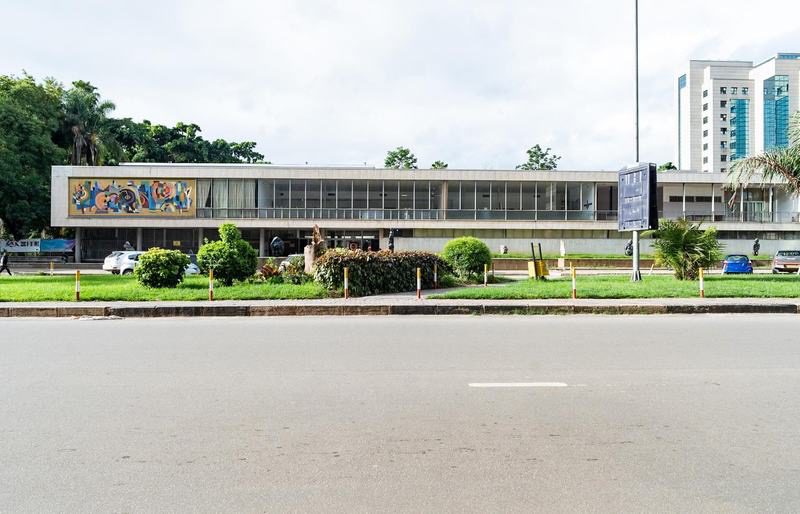
Feature – The National Gallery of Zimbabwe is preparing to showcase the country’s rich artistic heritage and international cultural connections through two major exhibitions scheduled to open during the 58th Annual Conference of the International Committee for Museums and Collections of Modern Art (CIMAM), taking place in Harare from November 20 to 22, 2026.
The exhibitions, titled A View to a Horizon: From Henry Munyaradzi to Andrea Piazza and Connecting Elements, will bring together historical masterpieces, contemporary African artistic expressions and international cultural collaborations, offering delegates and local audiences an opportunity to explore different dimensions of visual art.
The exhibitions are scheduled for launch on November 21 at the National Gallery of Zimbabwe as part of an international gathering expected to bring together museum directors, curators, researchers and cultural professionals from across the world.
The 58th CIMAM Annual Conference marks a significant milestone for Zimbabwe’s cultural sector, providing an international platform for the country’s visual arts institutions and creative practitioners to participate in discussions about contemporary art, museum development and cultural heritage.
Officially opened on July 16, 1957, by Queen Elizabeth The Queen Mother, the National Gallery of Zimbabwe has established itself as the country’s premier institution for the presentation, preservation and conservation of contemporary art and visual heritage.
For nearly seven decades, the institution has played a central role in shaping Zimbabwe’s artistic identity, promoting local creative talent and introducing the country’s distinctive artistic traditions to international audiences.
One of its most significant contributions has been the promotion of Shona stone sculpture, which has become an internationally recognised expression of Zimbabwean artistic creativity.
The Gallery houses a permanent collection of close to 6,000 artworks, representing different periods, artistic movements and cultural traditions. Its collection includes celebrated Shona stone sculptures, contemporary paintings, multidisciplinary installations, textiles, basketry and other traditional cultural artefacts.
Beyond its headquarters in Harare, the institution has developed a national presence through its regional gallery network, including Douslin House in Bulawayo, its Victoria Falls presence and the artistic community at Tengenenge.
Over the decades, seven directors have guided the institution’s development. They include Fran McEwen, Brian Bradshaw, Christopher Till, Cyril Rogers, George Kahari, Doreen Sibanda and Raphael Chikukwa.
Their respective contributions have helped shape the Gallery into an important custodian of Zimbabwe’s artistic heritage and a platform for nurturing creative talent.
One of the major attractions during CIMAM 2026 will be A View to a Horizon: From Henry Munyaradzi to Andrea Piazza, co-curated by Raphael Chikukwa and Zvikomborero F. Mandangu.
Presented in partnership with the Italian Embassy in Zimbabwe, the exhibition draws from the National Gallery’s permanent collection, bringing together works by Old Italian Masters and Modernist African Masters.
The exhibition seeks to establish a conversation between two artistic traditions that are often presented separately, encouraging audiences to reconsider their historical relationships, influences and shared possibilities.
Its central idea is that different artistic worlds can engage with one another across geographical, historical and cultural boundaries, creating new ways of understanding artistic heritage.
The exhibition also represents an important milestone in the continuing cultural partnership between Zimbabwe and Italy.
The Italian Embassy has contributed significantly towards the restoration of the Gallery’s Italian masterworks, several of which have remained unseen by local and international audiences for many years.
An important chapter in this relationship dates back to 2018, when three Italian masterpieces were repatriated from the United Kingdom.
These include Patriarch and The Astronomer by Paolo Veronese, as well as The King of Poland Being Welcomed by the Doge of Venice by Andrea Piazza.
Their return represented an important achievement in preserving the Gallery’s historical collection and strengthening cultural relations between Zimbabwe and Italy.
The forthcoming exhibition will provide an opportunity for audiences to encounter these restored works alongside African artistic masters, including celebrated Zimbabwean sculptor Henry Munyaradzi.
The continued engagement between the National Gallery of Zimbabwe and the Italian Embassy, under the leadership of Italian Ambassador Giuseppe Giacalone, demonstrates how cultural diplomacy can contribute to heritage preservation and international artistic exchange.
Through this exhibition, audiences will be encouraged to look beyond conventional artistic boundaries and appreciate the connections that exist between different historical and cultural experiences.
The second major exhibition, Connecting Elements, will explore relationships between people, materials, histories, environments and systems of knowledge.
Co-curated by Raphael Chikukwa and Zvikomborero F. Mandangu, the exhibition is presented through a partnership involving the National Gallery of Zimbabwe, the Embassy of Switzerland in Zimbabwe and Delta Beverages.
Its central concept examines connection as an ongoing process of remembering, reassembling and reimagining relationships rather than something permanently established.
At a time when social, ecological and cultural relationships are increasingly challenged, the exhibition invites audiences to consider how seemingly separate elements can be brought into meaningful dialogue.
The participating artists approach these ideas through different materials, artistic processes and perspectives, moving between personal experiences and collective histories.
Their works explore relationships between the natural and constructed environment, memory and imagination, individual identity and shared cultural experiences.
Among the participating artists are Mthabisi Pili, Berry Bickle, Hellen Tidd, Kreshia Mukwazhi, Clive Mukucha and Simon Nyanda.
Simon Nyanda’s artistic background provides an interesting connection to the historical relationship between Zimbabwe and Switzerland.
Nyanda is a former student of Serima Mission, founded by Swiss missionary Father Hans Groeber. His inclusion offers an opportunity to reflect on the historical interactions between cultural traditions, education and artistic expression.
Through the different works presented, Connecting Elements seeks to create encounters between generations, disciplines, cultures and different ways of understanding the world.
The exhibition also challenges audiences to reconsider what it means to reconnect with the past. Rather than simply returning to previous ways of doing things, it suggests that meaningful reconnection requires learning from history while remaining open to new possibilities.
Its presentation during CIMAM 2026 will provide an international platform for Zimbabwean artists to share their perspectives with museum professionals and contemporary art audiences from different parts of the world.
The two exhibitions form part of a wider effort to position Zimbabwe as an important destination for international cultural exchange.
The 58th CIMAM Annual Conference, running from November 20 to 22, will bring together professionals responsible for shaping contemporary art institutions and collections around the world.
The gathering provides an opportunity to demonstrate the importance of African artistic heritage and the contribution of local institutions to international museum practice.
It also creates opportunities for professional networking, institutional partnerships, artistic collaborations and greater international visibility for Zimbabwean creatives.
The exhibitions will complement these discussions by presenting Zimbabwean and international artistic traditions within a shared cultural space.
For emerging artists, the gathering could also provide opportunities to interact with established curators, museum directors and international cultural practitioners.
The conference’s significance extends beyond Harare, particularly as Zimbabwe continues to explore ways of strengthening its creative industries and expanding cultural tourism.
The National Gallery of Zimbabwe’s contribution to the country’s cultural development extends beyond organising exhibitions and maintaining an important collection.
Its role in promoting artists, preserving historical works and creating opportunities for artistic expression remains central to the development of the creative sector.
The institution’s activities also connect with broader efforts to decentralise cultural infrastructure and expand access to artistic opportunities beyond the capital.
In Manicaland, the proposed development of a new National Gallery facility in Mutare following the donation of 10 hectares at Mount Worsley Estate presents an opportunity to strengthen access to visual arts infrastructure.
Zim Global Media previously reported on the proposed Mutare arts facility in its article, National Gallery of Zimbabwe Set for Revival with New 10-Hectare Mutare Arts Centre.
The forthcoming CIMAM gathering builds on the institution’s wider international engagement and Zimbabwe’s participation in major global artistic platforms.
Zim Global Media also examined the significance of Zimbabwe hosting the international gathering in its article, National Gallery Races to Host the Olympics of the Arts, the 2026 CIMAM Annual Conference.
As the November conference approaches, the two exhibitions are expected to provide an important opportunity for Zimbabwe to present its artistic heritage while encouraging dialogue between different cultures and generations.
For local audiences, they offer an opportunity to rediscover historical masterpieces and engage with contemporary artistic ideas. For international delegates, they provide a window into Zimbabwe’s artistic journey, its creative talent and its contribution to global visual culture.
Through A View to a Horizon and Connecting Elements, the National Gallery of Zimbabwe will bring history, contemporary creativity and international cultural relationships into one space, reinforcing the importance of art as a platform for preserving heritage, building connections and imagining the future.
The exhibitions are scheduled to open on November 21, 2026, at the National Gallery of Zimbabwe in Harare during the 58th CIMAM Annual Conference.
For more information about the institution and its exhibitions, visit www.nationalgallery.co.zw.