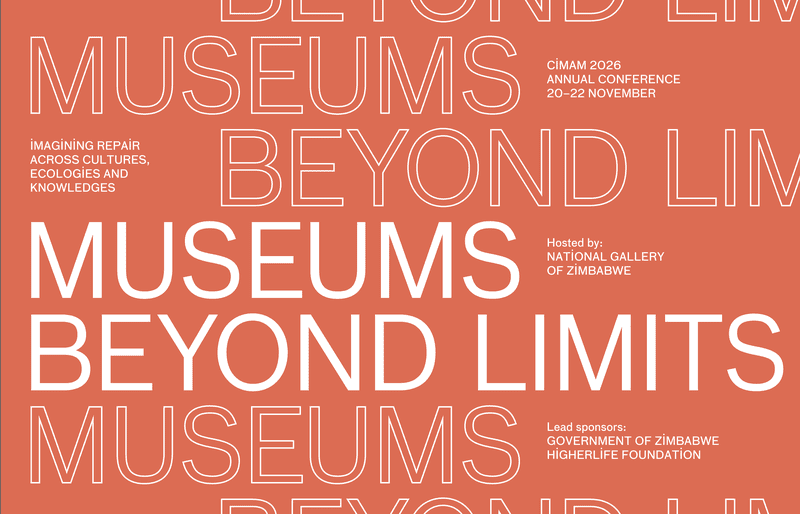
HARARE, Zimbabwe – CIMAM 2026 is set to place Zimbabwe at the centre of international conversations about the future of museums, contemporary art, cultural identity and the preservation of global heritage when the 58th Annual Conference of the International Committee for Museums and Collections of Modern Art convenes in Harare from 20 to 22 November 2026.
The conference will bring international attention to Zimbabwe’s cultural sector through a programme built around three interconnected themes: Good Museum Practice, Tools of Transformation and Radical Hospitality. Together, these themes challenge conventional approaches to museum management, question established cultural hierarchies and explore how museums can become more inclusive, responsive and relevant institutions in an increasingly complex world.
For Zimbabwe, hosting this prestigious gathering represents more than an international professional engagement. It provides an opportunity for the country’s cultural institutions, artists and heritage practitioners to participate in global conversations while presenting African experiences as an essential part of the future of museum practice.
The first day, Friday, 20 November, will focus on Good Museum Practice, introducing a critical discussion about the standards traditionally used to define excellence in museum institutions.
According to the official CIMAM 2026 programme, the session questions the long-standing influence of Western institutional norms in defining best practices, particularly in a world characterised by asymmetrical power relationships and cultural plurality.
At the heart of the discussion is an important question: What does best practice mean, and for whom?
For African museums, this conversation carries considerable significance. Across the continent, museums operate within different historical, economic, cultural and institutional environments. Their responsibilities extend beyond collecting and displaying artworks to include preserving indigenous knowledge, interpreting contested histories and representing communities whose cultural contributions have not always received equal recognition in international institutions.
The discussion creates an opportunity to reconsider whether internationally accepted museum standards adequately reflect the realities and priorities of African societies.
Zimbabwe has an important contribution to make through its experience in preserving visual heritage, promoting contemporary artistic expression and maintaining cultural institutions that connect historical traditions with modern creative practices.
The National Gallery of Zimbabwe, as the country’s premier institution for the presentation, preservation and conservation of contemporary art and visual heritage, occupies a particularly important position in this conversation.
Its institutional experience offers an important perspective on how museums can balance professional standards, financial sustainability, cultural relevance and their responsibility to the communities they serve.
The second day, Saturday, 21 November, will move into Tools of Transformation, placing particular emphasis on the tools, technologies and strategies that enable museums to act as catalysts for change.
The discussions come at a time when cultural institutions are navigating rapid technological developments, changing audience expectations and increasing demands for accessibility.
Museums are no longer expected simply to preserve objects and provide spaces for exhibitions. They are increasingly required to develop new ways of communicating knowledge, engaging communities and making collections accessible to audiences beyond traditional gallery environments.
Digital technologies, innovative curatorial approaches, educational programmes and international institutional partnerships are among the areas that can contribute to this transformation.
For Zimbabwe, the conversation presents an opportunity to examine how museums can embrace innovation while remaining firmly connected to the country’s cultural identity.
Technology can support the documentation and preservation of artworks, improve access to collections and create new opportunities for audiences to experience exhibitions. It can also help institutions connect with younger generations whose engagement with culture is increasingly influenced by digital platforms and interactive forms of communication.
However, transformation should not be measured by technology alone. The effectiveness of museums also depends on institutional leadership, investment in professional development, sustainable funding models and the ability to develop meaningful relationships with communities.
African museums must therefore be empowered to develop solutions that respond to their own institutional realities rather than simply reproduce approaches developed elsewhere.
The third and final day, Sunday, 22 November, will focus on Radical Hospitality, a theme that challenges traditional perceptions of museums as authoritative spaces.
According to the conference programme, the session will examine how museums can practise openness amid exclusion, generosity within scarcity and become shared dwellings for contested histories and possible futures rather than simply sites of institutional authority.
This theme introduces an important question about the relationship between museums and the communities whose histories, identities and experiences they preserve.
Historically, museums have sometimes been perceived as exclusive spaces, with decisions about collections, exhibitions and cultural interpretation largely controlled by established institutions and professional authorities.
Radical Hospitality encourages a different approach by suggesting that museums should create environments where different communities can encounter one another, share experiences and participate in conversations about history, identity and the future.
For African institutions, this approach is particularly relevant because cultural heritage is often rooted in collective memory, indigenous knowledge, oral traditions and community experiences.
The preservation of heritage cannot be separated from the people who give it meaning. Museums must therefore find ways of engaging communities as active participants in cultural preservation rather than treating them solely as audiences.
This includes creating opportunities for young people, emerging artists, traditional knowledge holders and historically underrepresented communities to contribute to exhibitions and cultural conversations.
The theme also recognises the realities facing cultural institutions operating with limited resources. Practising hospitality does not necessarily require expensive infrastructure. It requires institutional openness, meaningful engagement and a willingness to recognise different perspectives.
Beyond the central discussions, the official CIMAM 2026 programme includes afternoon visits, exhibitions and guided tours in Harare. These activities will provide delegates with opportunities to engage with Zimbabwe’s cultural environment beyond formal conference sessions.
The exhibitions and visits are particularly important because museums are not only discussed through academic presentations and professional debates. Their significance is also experienced through collections, artistic interpretation, architecture and direct engagement with cultural heritage.
The National Gallery of Zimbabwe is expected to play a central role in providing this experience.
Two major exhibitions, A View to a Horizon: From Henry Munyaradzi to Andrea Piazza and Connecting Elements, are scheduled to open at the Gallery on Saturday, 21 November.
The exhibitions will bring together different artistic traditions and perspectives, providing an opportunity to explore relationships between Zimbabwean and international artistic heritage.
Their presentation during the conference reinforces the importance of connecting professional discussions with actual artistic practice.
For international delegates, the exhibitions will offer an opportunity to encounter Zimbabwe’s visual heritage and contemporary creative expression within the country’s own cultural environment. For local audiences, the occasion provides an opportunity to participate in an international cultural gathering taking place on home soil.
The significance of these exhibitions and the Gallery’s preparations have been explored in Zim Global Media’s coverage, National Gallery of Zimbabwe Unveils Landmark Exhibitions Ahead of Historic CIMAM 2026 Conference.
The conference programme also includes an Arrival and Practical Information Guide designed to assist participants travelling to Zimbabwe.
The guide covers essential travel considerations, including entry requirements, airport arrivals, health and safety, transportation and local services.
The organisers have also provided a dedicated conference attendees directory, known as Who’s Who at CIMAM 2026, to facilitate professional networking and exchange.
The directory is designated as a private resource for conference participants. Its accompanying guidelines prohibit the unauthorised collection, extraction, sharing or use of contact information for unsolicited mass communication. Participants are expected to respect individual privacy and observe CIMAM’s Code of Ethics when using the resource.
The significance of CIMAM 2026 extends beyond the three days of scheduled discussions.
Zimbabwe’s hosting of the conference creates an opportunity to strengthen the international visibility of its cultural institutions and position African perspectives within important global conversations about contemporary art.
For decades, debates about museum standards, collections and institutional development have been strongly influenced by established cultural centres outside Africa. Bringing this gathering to Harare creates space for African experiences, histories and intellectual contributions to become part of those discussions.
It also reinforces the importance of cultural diplomacy as a tool for building international relationships.
Art has the ability to connect societies beyond political boundaries. Through exhibitions, professional exchanges and institutional partnerships, museums can promote mutual understanding while presenting the identities and histories of their communities to the wider world.
Zimbabwe’s cultural institutions have an opportunity to use this platform to establish stronger professional relationships, explore collaborative projects and expand international engagement.
The longer-term value of the conference will ultimately depend on what follows after delegates leave Harare. Professional relationships must translate into meaningful partnerships. Conversations about transformation must encourage practical institutional innovation. Discussions about hospitality must inspire museums to become more accessible and responsive to the communities they serve.
The National Gallery of Zimbabwe’s contribution to this process is particularly important. Its experience in promoting artists, preserving historical works and creating opportunities for artistic expression remains central to the development of the country’s creative sector.
As previously examined in Zim Global Media’s article, Africa Moves from Exhibition to Authority as Zimbabwe Hosts CIMAM 2026, the conference presents an opportunity for African institutions to move beyond simply participating in international cultural conversations and take a more influential role in shaping them.
As Harare prepares for the arrival of the international museum community, CIMAM 2026 presents Zimbabwe with an opportunity to contribute to a broader reconsideration of what museums should represent in the modern world.
Good Museum Practice challenges established definitions of excellence. Tools of Transformation explores how museums can respond to changing realities. Radical Hospitality questions how institutions can open themselves to different communities, histories and possibilities.
Together, the three themes reflect a vision of museums that are not merely repositories of the past but active participants in shaping the future.
For Zimbabwe, the conference is an opportunity to demonstrate that African museums have knowledge, experience and perspectives that deserve a central place in international cultural discourse.
From the preservation of historical collections to the promotion of contemporary artistic expression, the country’s cultural institutions have an important role to play in shaping how future generations understand heritage and creativity.
As the 58th CIMAM Annual Conference opens in Harare from 20 to 22 November 2026, the central question will extend beyond how museums preserve art. It will be about how they create meaning, transform communities and build a future in which cultural heritage belongs to everyone.
Zimbabwe is preparing not simply to host a global museum conversation, but to help shape it.