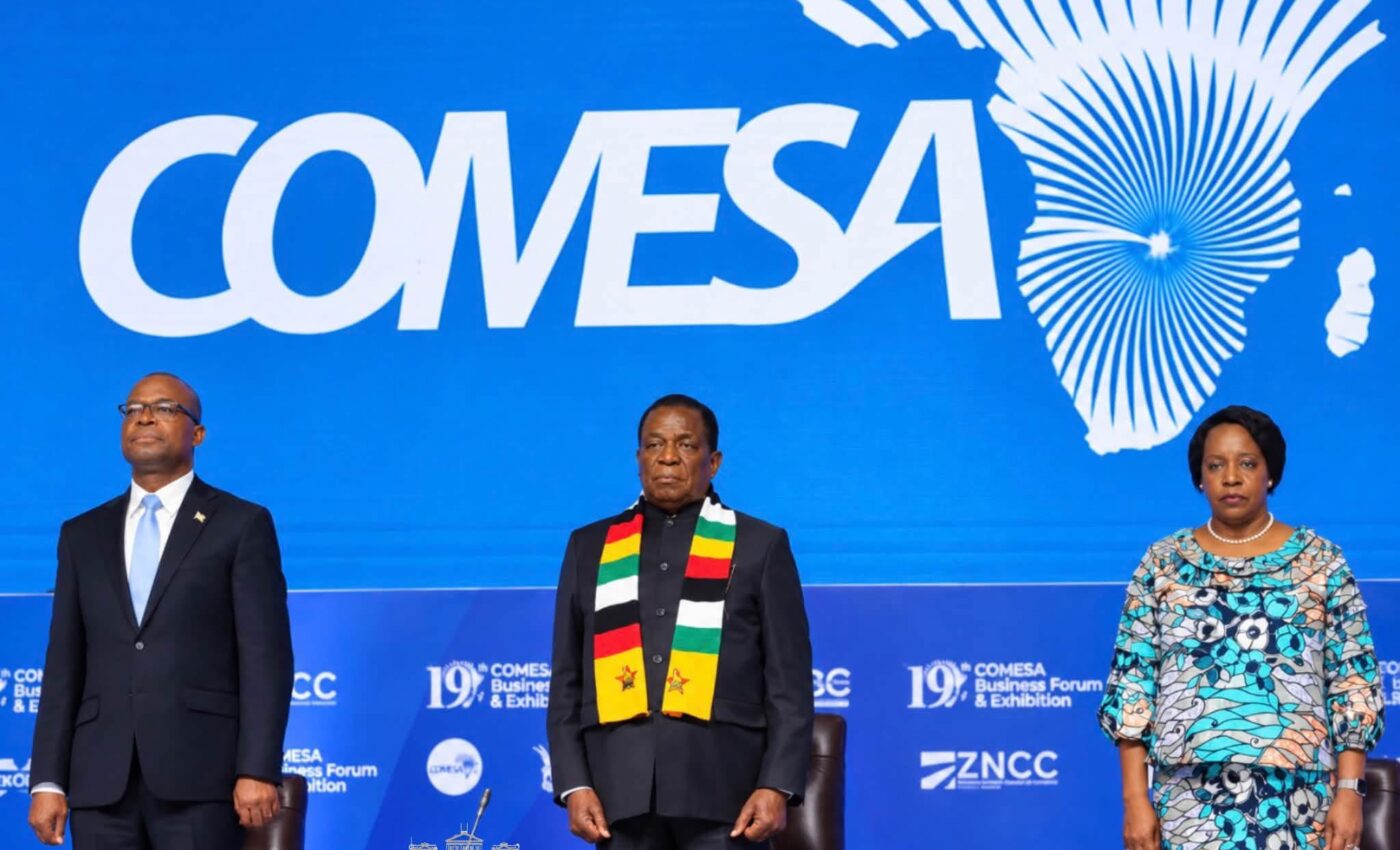
HICC, Harare – COMESA regional trade has emerged as a key priority as incoming Chair, President Dr. Emmerson Dambudzo Mnangagwa, calls on member states to connect investments through mutually beneficial cross-border projects that strengthen regional value chains, expand markets and boost intra-regional commerce.
The call underscores the importance of economic cooperation among African countries at a time when governments, businesses and investors are seeking practical ways to accelerate industrialisation, increase production and unlock new opportunities across the continent.
President Mnangagwa’s appeal places regional investment cooperation at the centre of efforts to build stronger, more connected economies, where countries can leverage their individual strengths to achieve shared development objectives.
For Zimbabwe, the emphasis on cross-border investment presents an opportunity to strengthen its position as a regional trading partner, attract investment into productive sectors and expand markets for locally manufactured goods, agricultural products and other value-added exports.
The message is particularly significant as Zimbabwe prepares to assume a greater leadership role within the Common Market for Eastern and Southern Africa (COMESA), a regional economic bloc that provides a platform for cooperation on trade, investment and economic development.
Linking Investments to Build Stronger African Economies
At the heart of President Mnangagwa’s call is the need to move beyond isolated national investment projects towards coordinated regional initiatives that deliver benefits across borders.
Rather than pursuing development projects independently, COMESA member states can explore opportunities to connect their industries, infrastructure networks, production systems and markets.
Such cooperation can help countries reduce duplication, improve resource utilisation and develop industries capable of competing more effectively in regional and international markets.
Cross-border investments in transport infrastructure, energy generation, agricultural processing, manufacturing and digital connectivity can support the movement of goods and services while reducing the barriers that often limit commercial activity between neighbouring countries.
For instance, coordinated investment in transport corridors can improve access to regional markets, while cooperation in energy infrastructure can help address electricity supply challenges affecting manufacturers and other productive industries.
Similarly, regional agricultural value chains can connect farmers, processors, packaging companies, logistics operators and retailers across several countries, creating commercial opportunities at different stages of production.
The objective is to ensure that investment produces tangible economic benefits, including increased productivity, employment creation, improved competitiveness and stronger trade relations.
Regional cooperation can also help smaller economies and businesses access opportunities that may be difficult to pursue independently because of limited capital, technology or domestic market size.
What Stronger COMESA Regional Trade Means for Zimbabwe
Zimbabwe stands to benefit from deeper regional integration through opportunities to expand exports, attract investors and connect domestic industries to larger markets.
The country has productive potential in agriculture, mining, manufacturing, tourism and services. However, converting that potential into sustained economic growth requires investment, competitive production systems and reliable access to markets.
Stronger COMESA regional trade could help Zimbabwean businesses identify customers beyond the domestic market, establish partnerships with regional companies and participate in supply chains serving multiple countries.
Manufacturers, for example, could explore supplying processed foods, construction materials, textiles, packaging products and other manufactured goods to regional markets where commercial opportunities exist.
Agricultural producers could benefit from stronger connections with regional processors and distributors, while logistics companies could gain from increased demand for the transportation and storage of goods moving between countries.
Small and medium-sized enterprises could also benefit from regional partnerships that provide access to new customers, technical expertise, distribution networks and potential investment.
For these opportunities to translate into measurable results, however, businesses need practical information about export requirements, product standards, customs procedures, payment arrangements and potential commercial partners.
Governments and regional institutions therefore have an important role in ensuring that regional integration is not limited to high-level declarations but produces opportunities that businesses can access and use.
Regional Value Chains Can Drive Industrialisation
A central element of the COMESA regional trade agenda is the development of value chains that allow countries to participate in different stages of production.
Across Africa, many economies possess valuable natural resources and agricultural products but have historically faced challenges in expanding domestic processing and manufacturing.
Regional value chains offer a potential pathway towards addressing these limitations by encouraging countries to specialise, cooperate and invest in complementary industries.
Under such arrangements, raw materials produced in one country can be processed in another, components can be manufactured across several locations, and finished products can be distributed throughout the region.
This approach can support industrial development by allowing businesses to access a wider range of inputs, technologies, skills and markets.
For Zimbabwe, the opportunity lies in expanding value addition and beneficiation while strengthening commercial links with other COMESA economies.
Agricultural products can support food processing industries, mineral resources can underpin downstream manufacturing, and locally developed services can support regional business operations.
The benefits, however, depend on effective coordination between governments and the private sector. Investors require predictable regulations, reliable infrastructure, access to financing and confidence that cross-border projects can operate commercially over the long term.
Regional value chains must also be structured to ensure that participating countries and communities receive meaningful economic benefits rather than remaining confined to supplying low-value raw materials.