
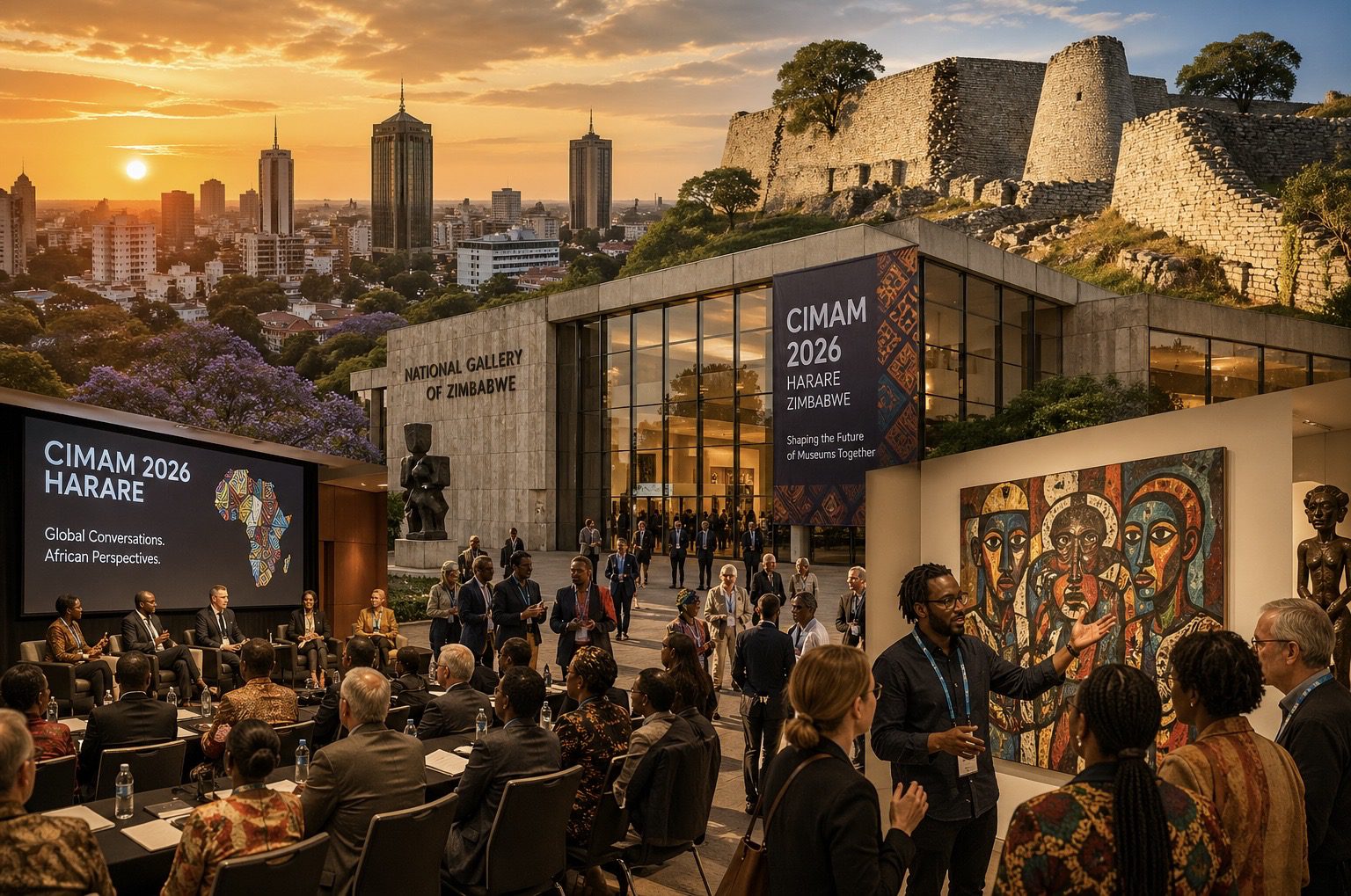
Arts & Lifestyle – There are moments in history when a single event quietly shifts the direction of an entire sector. CIMAM 2026, set to take place in Harare, feels like one of those moments. It is not just another international conference on museums and modern art. It is a gathering that carries the weight of history, the urgency of the present, and the possibility of a very different future for Africa’s cultural institutions.
At its core, CIMAM, formally known as the International Committee for Museums and Collections of Modern Art, has long been a space where global museum leaders come together to exchange ideas and shape the direction of the sector. For decades, however, much of that conversation has been centered in Europe and North America. By bringing CIMAM 2026 to Zimbabwe, the axis shifts. Africa is no longer simply participating in global cultural discussions. It is hosting them, framing them, and influencing where they go next.
This shift matters more than it might seem at first glance. African museums have historically operated under the shadow of colonial legacies, often constrained by narratives that were never truly their own. Collections were defined elsewhere. Interpretations were shaped externally. Even the idea of what a museum should be often arrived as an imported concept. CIMAM 2026 creates a rare opportunity for African institutions to challenge these inherited frameworks and begin articulating models that reflect local realities, histories, and aspirations.
In Zimbabwe, this conversation carries particular depth. The country’s cultural landscape is layered with stories of resilience, creativity, and identity. Institutions such as the National Gallery of Zimbabwe have played a crucial role in preserving and promoting these narratives while also engaging with global art movements. Under the leadership of figures like Raphael Chikukwa, Zimbabwe has steadily built a reputation as a serious voice in contemporary African art. Hosting CIMAM 2026 is both recognition of that progress and a catalyst for what comes next.
One of the most profound ways CIMAM 2026 marks a turning point is in how it redefines authority in the cultural space. For too long, African institutions have been positioned as subjects of study rather than producers of knowledge. This conference flips that dynamic. It places African curators, scholars, and practitioners at the center of global discourse. It allows them to speak not as representatives of a region being examined, but as equal contributors shaping the intellectual direction of the museum world.
This shift is not symbolic. It has practical implications. When African voices are central to decision making, the priorities of the sector begin to change. Issues such as restitution, repatriation, and ethical collecting practices move from abstract debates to urgent realities. The return of cultural artifacts, many of which were taken during colonial periods, becomes more than a diplomatic discussion. It becomes a moral imperative backed by a unified and increasingly influential African perspective.
CIMAM 2026 also arrives at a time when museums globally are questioning their purpose. Are they simply repositories of objects, or are they active spaces for dialogue, education, and social change? African institutions, many of which are deeply embedded in their communities, are uniquely positioned to answer this question. Their approaches often blur the lines between heritage, lived experience, and contemporary expression. By hosting this conference in Harare, the global museum community gains access to models that are not only innovative but deeply human.
The economic dimension cannot be ignored either. Cultural institutions in Africa have often struggled with funding, infrastructure, and visibility. An event of this magnitude brings attention, investment, and potential partnerships. International delegates do not just arrive with ideas. They bring networks, resources, and opportunities for collaboration. For emerging institutions and independent curators, this can translate into exhibitions, residencies, and long term support that might otherwise have remained out of reach.
At the same time, CIMAM 2026 challenges African institutions themselves to rise to the occasion. Hosting the world comes with expectations. It demands professionalism, organization, and a willingness to engage critically with both strengths and shortcomings. This moment invites African museums to reflect on their own practices, to innovate, and to position themselves as leaders rather than followers.
There is also a deeper, more emotional layer to this turning point. For many African cultural practitioners, recognition has often come from outside the continent. Validation was something to be sought elsewhere. CIMAM 2026 shifts that dynamic inward. It affirms that African spaces are not just capable of hosting global conversations, but that they are essential to them. It creates a sense of ownership and pride that cannot be easily quantified but will undoubtedly influence how institutions see themselves moving forward.
The presence of global museum leaders in Harare will also create moments of exchange that go beyond formal sessions. Conversations over meals, visits to local galleries, and encounters with Zimbabwean artists will shape perceptions in ways that no policy paper can. These human interactions often become the foundation for lasting collaborations, and they carry the potential to reshape how African art and institutions are understood internationally.
Zimbabwe’s broader cultural heritage adds another layer of significance to this moment. Sites such as Great Zimbabwe stand as powerful reminders of the continent’s long history of innovation, architecture, and cultural sophistication. For delegates experiencing these places, the narrative of Africa shifts from one often framed by deficit to one grounded in depth and achievement. This context inevitably influences how museums and collections from the continent are valued and interpreted.
Perhaps what makes CIMAM 2026 most significant is that it is not an endpoint. It is a beginning. The conversations that take place in Harare will ripple outward, influencing policies, exhibitions, and institutional strategies across the globe. For Africa, it marks the start of a more assertive and confident engagement with the cultural sector. For the world, it offers a chance to listen, to learn, and to rethink long held assumptions.
In the end, CIMAM 2026 is about more than museums. It is about voice, power, and the right to tell one’s own story. As Harare prepares to welcome the world, there is a quiet understanding that this is not just another conference. It is a moment when the balance begins to shift, when Africa steps forward not as a participant on the margins, but as a central force shaping the future of cultural institutions worldwide.