

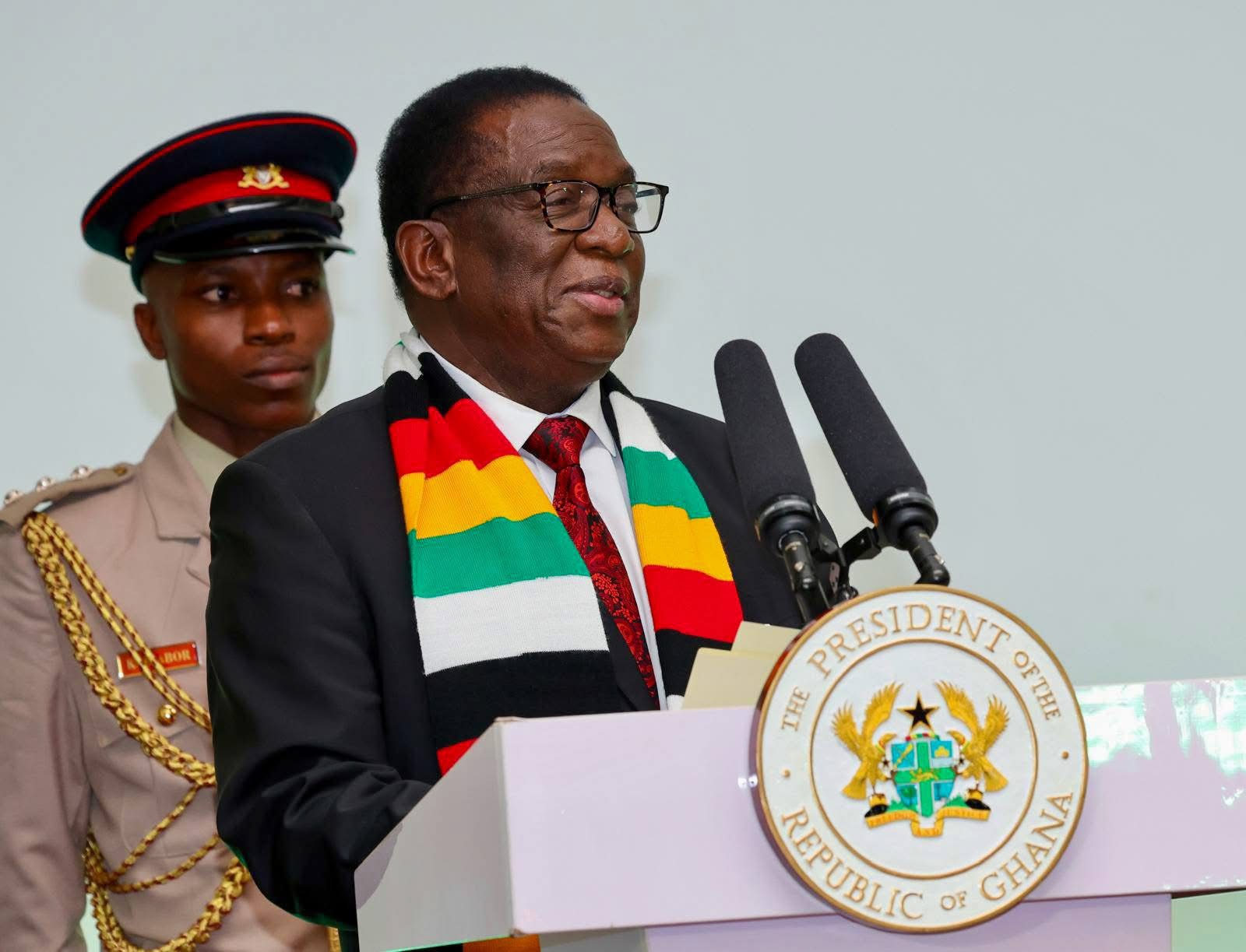
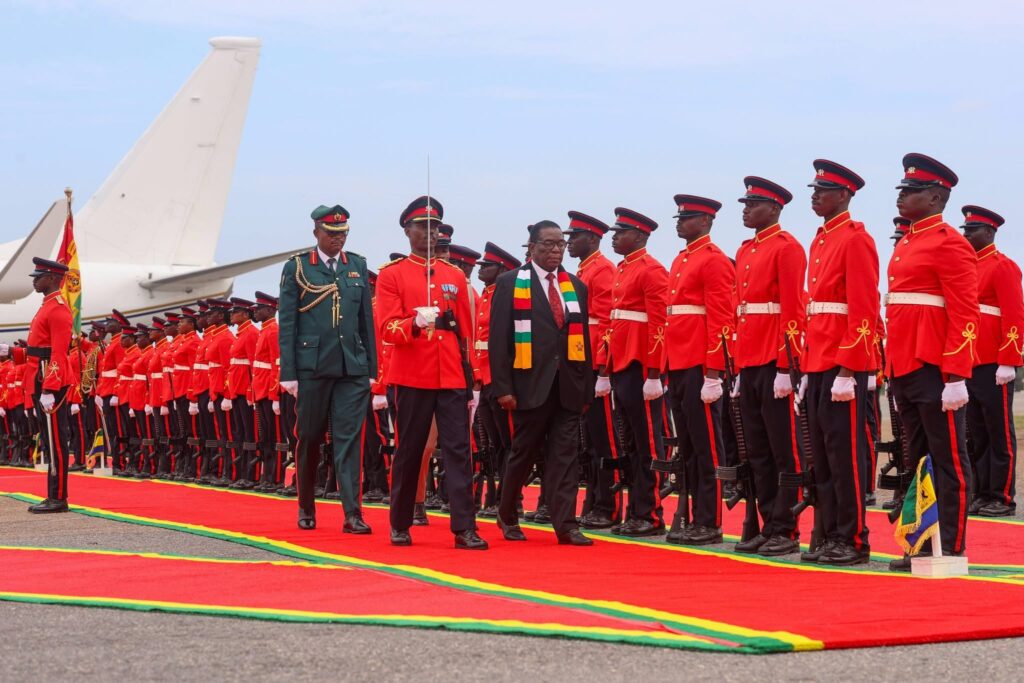
Accra, Ghana – In a defining moment for African diplomacy and economic cooperation, His Excellency President Dr. Emmerson Dambudzo Mnangagwa has reaffirmed Zimbabwe’s commitment to strengthening continental partnerships following a high-level State Banquet hosted by Ghanaian leader John Mahama in the vibrant capital of Accra.
The banquet, held in an atmosphere of warmth and brotherhood, symbolised more than ceremonial diplomacy. It marked a renewed push toward deeper collaboration between Zimbabwe and Ghana, anchored on shared history, mutual respect, and a collective vision for Africa’s economic transformation.
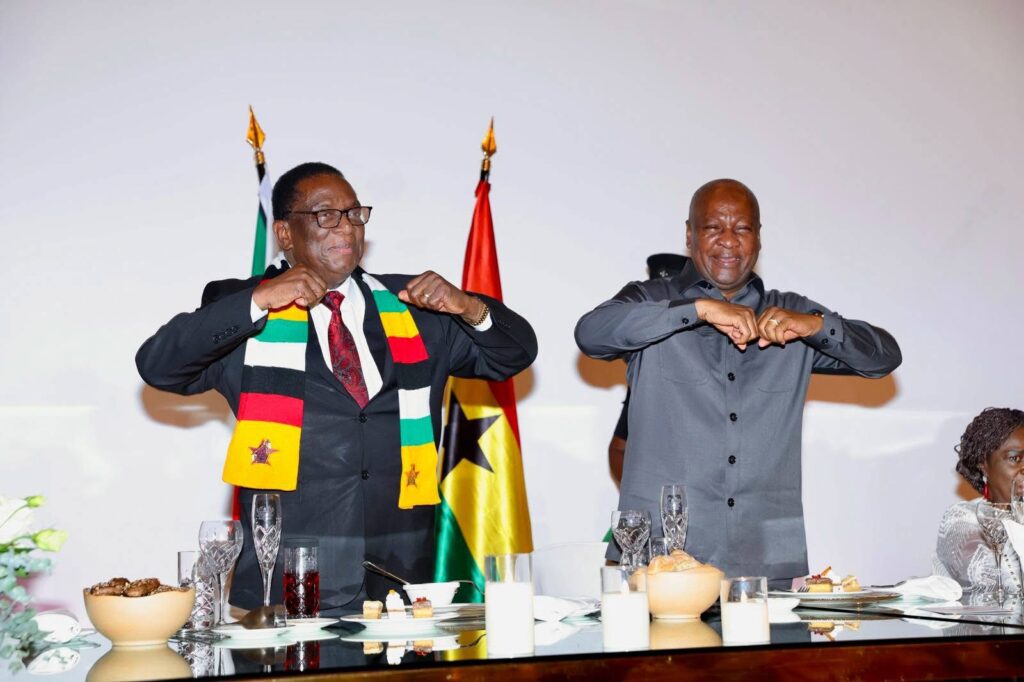
Speaking during the occasion, President Mnangagwa described the visit as “a profound honour,” underscoring the importance of fraternal relations between African nations. He emphasised that Zimbabwe’s foreign policy under the Second Republic is firmly rooted in engagement and re-engagement, a strategic approach aimed at rebuilding international relationships and expanding economic opportunities.
“This visit is a powerful testament to our unwavering commitment to engagement and re-engagement,” he noted, adding that Zimbabwe is actively seeking to broaden its strategic partnerships across Africa. The message was clear: Harare is looking inward to the continent as a primary driver of growth, cooperation, and resilience.
Zimbabwe and Ghana’s relationship is deeply entrenched in the liberation struggles that shaped modern Africa. Both nations emerged from colonial rule with strong Pan-African ideals, and their leaders have historically championed unity and self-determination.
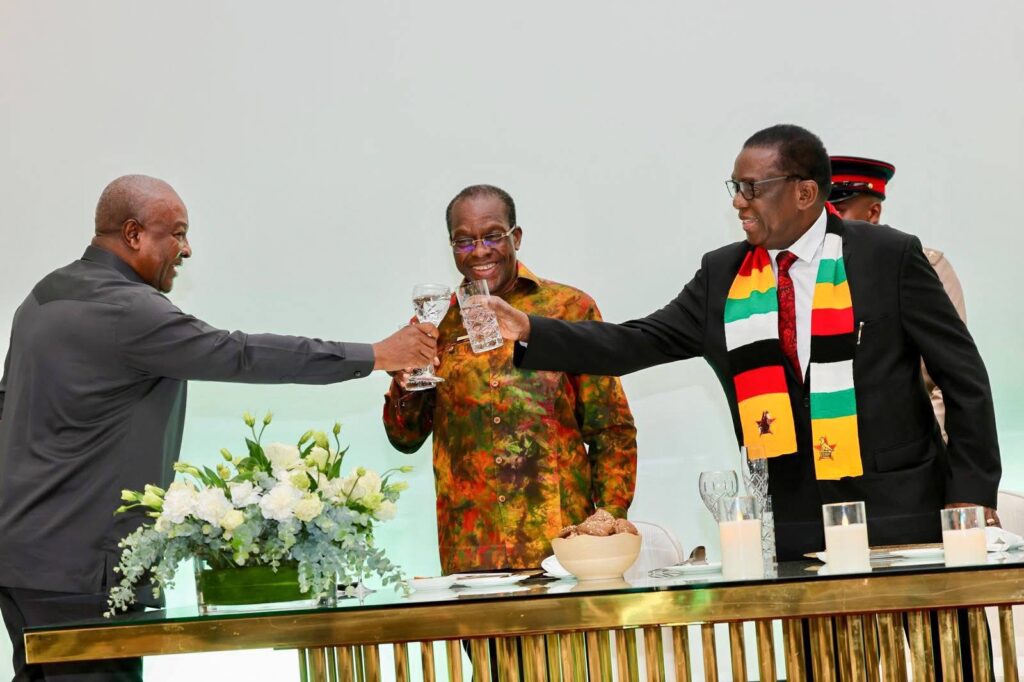
President Mnangagwa highlighted that the bond between the two countries goes beyond diplomatic ties. “We share more than just history; we share a common destiny,” he said, capturing the spirit of solidarity that continues to define relations between Harare and Accra.
This shared destiny, according to the Zimbabwean leader, must now translate into tangible outcomes for citizens. The emphasis is shifting from symbolic unity to practical cooperation that delivers real economic benefits.
At the heart of the discussions was a bold commitment to transform historical ties into meaningful economic partnerships. Both countries are exploring ways to deepen cooperation in trade, investment, and industrialisation, sectors viewed as critical to unlocking sustainable growth.
Zimbabwe’s push to industrialise and diversify its economy aligns closely with Ghana’s own development agenda. By leveraging each other’s strengths, the two nations aim to create new opportunities for businesses, investors, and ordinary citizens.
President Mnangagwa stressed that Africa’s vast natural resources must begin to benefit its own people more directly. “We are ensuring that the wealth of Africa benefits Africans first,” he declared, echoing a growing continental sentiment that calls for value addition, local beneficiation, and reduced dependence on external markets.
This approach reflects a broader shift in African economic thinking, where countries are increasingly prioritising intra-African trade and collaboration over traditional export models that favour raw material exports.
Central to this vision is the African Continental Free Trade Area, widely regarded as one of the most ambitious economic integration projects in the world. Both Zimbabwe and Ghana see AfCFTA as a critical tool for reshaping Africa’s economic landscape.
The agreement aims to create a single continental market for goods and services, reduce trade barriers, and promote industrial development. For countries like Zimbabwe and Ghana, it presents an opportunity to expand markets, attract investment, and build competitive industries.
President Mnangagwa described AfCFTA as “our roadmap to the future,” highlighting its potential to unlock new value chains across sectors such as agriculture, mining, manufacturing, and technology.
Through closer collaboration, Zimbabwe and Ghana are positioning themselves to take full advantage of the agreement. This includes identifying complementary industries, enhancing cross-border trade infrastructure, and fostering innovation-driven growth.
Beyond trade, the leaders also emphasised the importance of building resilient economies capable of withstanding global shocks. The COVID-19 pandemic, geopolitical tensions, and supply chain disruptions have exposed vulnerabilities in many African economies, underscoring the need for greater self-reliance.
Zimbabwe and Ghana’s partnership is expected to focus on strengthening local industries, improving food security, and enhancing technological capacity. By working together, the two nations aim to reduce their exposure to external risks and create more stable economic environments.
“We are no longer just telling our story; we are actively shaping a prosperous, sovereign destiny,” President Mnangagwa said, signalling a shift toward proactive leadership in Africa’s development narrative.
The State visit also served as a platform for Zimbabwe to reinforce its “open for business” policy, a cornerstone of the Second Republic’s economic strategy. The government has been actively courting investment, implementing reforms, and promoting ease of doing business.
Partnerships with countries like Ghana are seen as vital in this regard. By strengthening ties within Africa, Zimbabwe hopes to attract not only capital but also expertise, technology, and market access.
Ghana, with its relatively stable economy and growing reputation as a business hub in West Africa, offers valuable opportunities for collaboration. Joint ventures, knowledge exchange, and cross-investment initiatives are expected to feature prominently in future engagements.
The growing cooperation between Zimbabwe and Ghana aligns with the broader aspirations of the African Union’s Agenda 2063, often referred to as “The Africa We Want.” This vision emphasises inclusive growth, sustainable development, and continental integration.
By deepening bilateral relations, the two countries are contributing to this larger goal. Their partnership reflects a belief that Africa’s future lies in unity, cooperation, and a shared commitment to progress.
As the State visit concludes, the message from Accra is one of optimism and determination. Zimbabwe and Ghana are not merely reaffirming old ties; they are forging a new path forward, one that prioritises economic empowerment, resilience, and African-led development.
In an era where global uncertainties continue to challenge developing economies, such partnerships offer a beacon of hope. They demonstrate that through collaboration and shared vision, African nations can chart their own course toward prosperity.
For Zimbabwe, the engagement with Ghana represents more than diplomacy. It is a strategic step in building a stronger, more connected, and economically vibrant Africa—an Africa where its people are not just participants in the global economy, but key architects of their own destiny.