Why Zimbabwe Must Embrace Industry Driven Education with AI at the Core
5 min read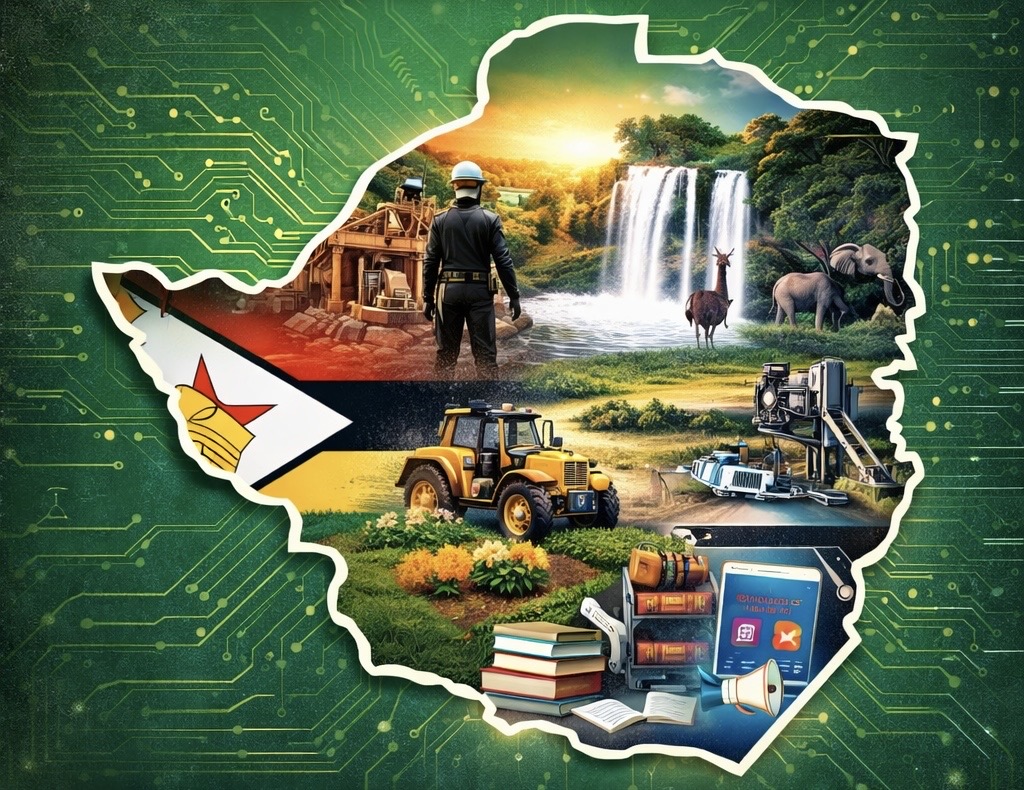
OPINION – For decades, Zimbabwe’s education system has proudly stood on a subject based curriculum that produced doctors, lawyers, engineers and scholars who have excelled across the globe. It is a legacy built on discipline, structure and academic rigor. But as the world accelerates into a new economic era shaped by technology, innovation and rapidly shifting markets, a hard question confronts us. Is our curriculum still aligned with the industries that drive modern prosperity?
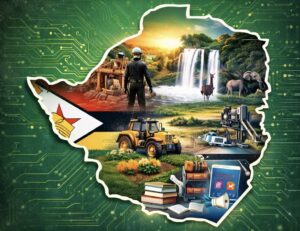
There is growing consensus among educators, industrialists and young professionals that Zimbabwe must urgently rethink its education architecture. The time has come to move beyond a purely subject based curriculum and transition toward an industry specific education model that directly feeds into key economic sectors such as mining, tourism, agriculture, manufacturing, writing, book publishing and the ever expanding social media economy. Crucially, artificial intelligence must be infused across all areas of study.
Zimbabwe’s current system is still largely organized around traditional academic subjects. Students study mathematics, history, geography, literature, sciences and commercial subjects as distinct silos. While these disciplines are foundational and should not be discarded, the challenge lies in the disconnect between classroom theory and industry application. Too many graduates leave school with certificates but without clear pathways into productive sectors.
The country is endowed with vast mineral wealth, fertile agricultural land, breathtaking tourism destinations and a vibrant creative community. Yet our curriculum does not systematically channel students into these strategic sectors from an early stage. A mining rich nation should not be producing students who know little about geology, mineral processing, mine safety, value addition or environmental management beyond a brief theoretical mention. A tourism powerhouse should not rely on imported expertise for hospitality management, digital marketing or heritage interpretation.
An industry driven education model would realign learning with Zimbabwe’s comparative advantages. At secondary level, students could choose structured pathways aligned to sectors. For example, a Mining and Extractives pathway would integrate geology, environmental science, mathematics, safety engineering and mineral economics into a coherent program. Agriculture pathways would combine soil science, agribusiness management, irrigation technology, climate adaptation and agro processing. Tourism pathways would blend hospitality management, cultural studies, digital storytelling and language proficiency.
Manufacturing would emphasize production systems, robotics, supply chain management and quality assurance. Writing and book publishing pathways would cultivate creative writing, editing, graphic design, printing technologies and intellectual property law. Social media and digital communication pathways would train students in content creation, branding, analytics, digital ethics and platform monetization strategies.
The infusion of artificial intelligence across all these fields is not optional. It is essential. AI is transforming mining exploration through predictive analytics. It is revolutionizing agriculture through precision farming and drone mapping. Tourism marketing is increasingly driven by data analytics and personalized digital campaigns. Manufacturing relies on automation and smart systems. Publishing is shaped by digital editing tools and algorithm driven distribution. Social media thrives on AI powered recommendation systems.
If Zimbabwe’s students are not trained to understand and use AI tools responsibly and creatively, they risk being left behind in a global economy that rewards technological literacy. AI should not be treated as a standalone subject but as an integrated skill set applied within each industry pathway. A mining student should learn how AI analyzes geological data. An agriculture student should use AI tools for crop forecasting. A writer should explore AI assisted editing and publishing platforms. A social media specialist should understand algorithm optimization and ethical content management.
Critics may argue that industry specific education risks narrowing intellectual development. But a properly designed model would maintain core competencies in language, mathematics, critical thinking and civic education while contextualizing them within real world sectors. The goal is not to eliminate foundational knowledge but to make it purposeful.
The benefits of such a transformation would be profound. First, it would reduce graduate unemployment by aligning skills with market needs. Students would graduate not only with theoretical knowledge but with practical competencies and industry exposure. Partnerships between schools, universities and companies would become standard practice, enabling internships, mentorships and project based learning.
Second, it would stimulate entrepreneurship. A student trained in agribusiness from Form Three onward is more likely to start a value added processing enterprise. A student groomed in digital publishing could establish an independent media platform. A graduate equipped with manufacturing skills could innovate within small and medium enterprises. Education would cease to be a waiting room for employment and instead become a launchpad for enterprise creation.
Third, it would enhance national productivity. When education feeds directly into mining, tourism, agriculture and manufacturing, the economy benefits from a workforce that understands sector dynamics from an early stage. Productivity gaps would narrow. Innovation would increase. Zimbabwe would strengthen its value chains rather than exporting raw materials and importing finished products.
There are, of course, practical considerations. Curriculum reform requires teacher retraining, infrastructure investment and policy clarity. Laboratories, digital hubs, demonstration farms and simulation centers must be established. Teachers must be equipped not only with subject expertise but with industry knowledge and technological fluency. This demands collaboration between the Ministry of Primary and Secondary Education, the Ministry of Higher and Tertiary Education, industry associations and technology partners.
Funding remains a concern. Yet the cost of inaction may be higher. A generation trained for an outdated economy is a generation forced to migrate or remain underemployed. Strategic public private partnerships could mobilize resources. Mining companies could support geological training centers. Tourism operators could sponsor hospitality labs. Agricultural firms could invest in demonstration plots and irrigation technology. Publishing houses and media companies could mentor creative writing cohorts.
Equally important is the need to address ethical and civic dimensions. As AI becomes integrated into education, students must be taught digital responsibility, data protection and the ethical implications of automation. Industry driven education must not sacrifice social consciousness. It must cultivate citizens who are technologically competent and morally grounded.
Zimbabwe has never shied away from bold reforms when national development demanded it. The expansion of education in the early years of independence transformed literacy rates and empowered millions. Today, the next frontier is relevance. The world economy is not static. It is industry driven, innovation led and digitally powered. Our curriculum must reflect that reality.
The shift from a rigid subject based structure to a dynamic industry aligned framework will require courage, consultation and careful planning. But the rewards are immense. A generation of students trained for mining excellence, tourism innovation, agricultural sustainability, manufacturing competitiveness and digital creativity would redefine Zimbabwe’s economic trajectory.
Education must not be a museum of past models. It must be a workshop for the future. If Zimbabwe is serious about achieving upper middle income status and sustaining long term prosperity, then aligning education with industry and embedding artificial intelligence across all disciplines is not merely an option. It is a national imperative.
About The Author