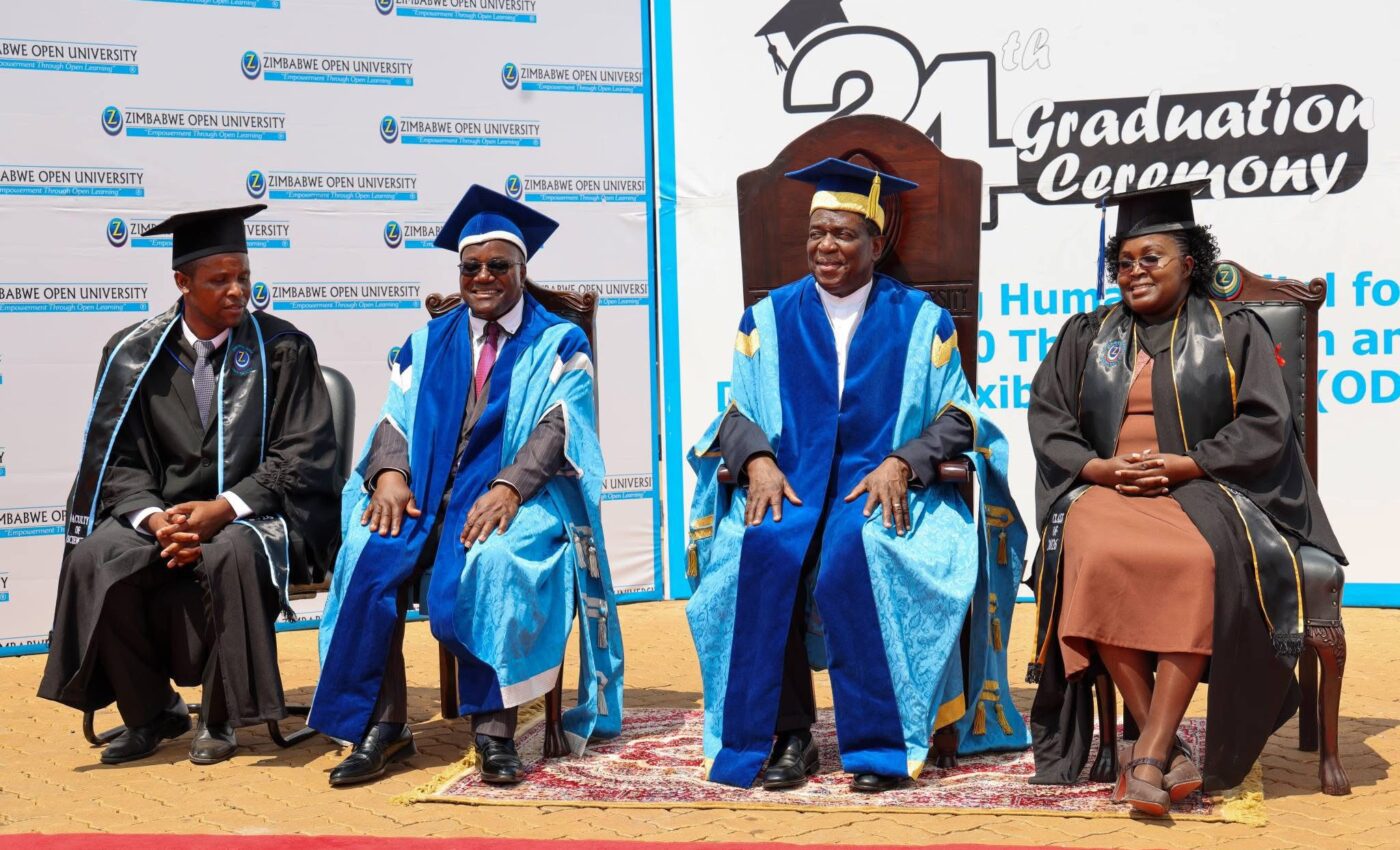
Harare – His Excellency the President Dr Emmerson Dambudzo Mnangagwa has capped 2,729 graduates at the Zimbabwe Open University (ZOU) Class of 2026 graduation ceremony, marking another milestone in the development of Zimbabwe’s human capital as the country advances towards Vision 2030.
The graduating cohort reflects the growing importance of higher education, professional development and specialised skills in preparing Zimbabweans to participate in economic transformation. Women accounted for 67.4 percent of the graduates, while 274 completed Science, Technology, Engineering and Mathematics (STEM) programmes and 318 graduated in critical skills areas considered important to national development and modernisation.
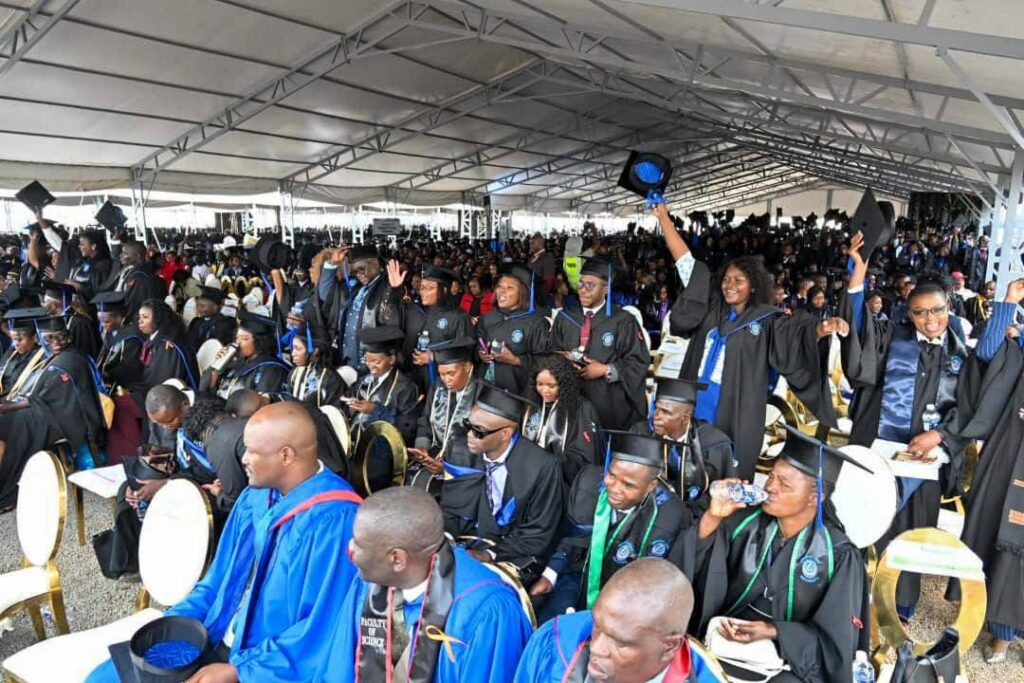
The class also included 121 international students who chose Zimbabwe as their academic destination, highlighting the university’s role in providing higher education opportunities beyond national borders.
The graduation ceremony, held at the university’s Hatcliffe Main Campus in Harare on Friday, October 9, 2026, was the institution’s 24th graduation ceremony. ZOU announced the ceremony under the theme, “Advancing Human Capital for Vision 2030 Through Open and Distance Flexible Learning.”
The event placed the spotlight on the role of universities in equipping individuals with the knowledge, professional competencies and practical capabilities required to contribute to national development.
For the 2,729 graduates, the occasion marked the culmination of years of study, examinations, research and personal commitment. For Zimbabwe, the cohort represents a pool of trained people whose contribution will depend on how effectively their qualifications are translated into productive work, innovation, entrepreneurship and improved public services.
The strong participation of women was among the defining features of the graduating class. With women representing 67.4 percent of the cohort, the figures highlight their substantial contribution to Zimbabwe’s higher education landscape.
Women’s access to tertiary education has implications that extend beyond individual academic achievement. Educated women can contribute to professional leadership, business development, research, public administration and community initiatives. Their participation also strengthens the pool of talent available to employers and institutions across the economy.
The figures, however, represent an opportunity that must be supported by meaningful pathways into employment, enterprise development and leadership. Ensuring that graduates can apply their knowledge in the workplace and establish sustainable businesses remains an important consideration as Zimbabwe seeks to expand economic participation.
STEM education also featured prominently in the 2026 graduating class, with 274 graduates completing programmes in science, technology, engineering and mathematics.
These disciplines are closely connected to the capabilities required by modern economies, including technological innovation, digital transformation, engineering, industrial production and scientific research.
Zimbabwe’s development priorities span sectors such as mining, agriculture, manufacturing, energy, construction, healthcare and information technology. Each requires people with the technical knowledge to improve productivity, solve practical problems and develop solutions suited to local conditions.
STEM graduates can contribute through research, product development, engineering services, technology-based enterprises and the adoption of more efficient production systems. Their impact will depend on opportunities to work with industry, access research facilities, secure funding and participate in projects that turn knowledge into practical outcomes.
The 318 graduates from critical skills programmes further underline the importance of aligning tertiary education with the needs of the economy.
Critical skills are particularly relevant where employers, public institutions and productive sectors require specialised expertise to sustain operations, expand capacity and improve service delivery. The effectiveness of these programmes ultimately depends on whether graduates possess competencies that match the requirements of the industries and institutions in which they seek to work.
As Zimbabwe implements its development priorities under National Development Strategy 2 and pursues the broader Vision 2030 objective of becoming an upper-middle-income economy, the relationship between education, skills development and economic productivity remains important.
A growing supply of qualified professionals can support national ambitions, but qualifications alone cannot guarantee economic transformation. The country also requires investment, expanding businesses, functional infrastructure, access to finance, research opportunities and an enabling environment in which skilled people can build careers and enterprises.
For ZOU graduates, the transition from academic achievement to professional contribution will therefore be the next major test. Those entering employment will need to demonstrate adaptability, integrity, continuous learning and the ability to apply theoretical knowledge to real-world challenges. Those pursuing entrepreneurship will need to identify market opportunities, develop viable business models and create products or services that respond to genuine needs.
The presence of 121 international students adds another dimension to the graduation ceremony. Their decision to study in Zimbabwe demonstrates the university’s reach beyond the domestic student population and creates opportunities for academic exchange, cross-cultural learning and professional networks.
International students can contribute to a diverse learning environment by bringing different experiences and perspectives into academic discussions. Their relationships with Zimbabwean graduates may also support future collaboration in research, business and professional practice across borders.
For the university, sustaining this international participation will require continued attention to academic quality, student support, accessible learning systems and the relevance of its programmes to changing regional and global demands.
Open and distance flexible learning remains particularly significant in expanding access to education. It can provide opportunities for people who face geographical, employment or personal constraints that make conventional full-time campus attendance difficult.
For working adults and students living outside major urban centres, flexible learning arrangements can create pathways to further education while allowing them to balance study with employment and family responsibilities.
However, access must be matched by quality. Students need reliable learning materials, effective academic guidance, appropriate assessment systems and opportunities to develop practical competencies. Digital access and connectivity also remain important factors in ensuring that learners can participate fully in modern education.
The 2026 graduation therefore offers an opportunity to consider not only how many students complete their studies, but also how effectively universities prepare them for a changing world of work.
Zimbabwe’s economy is experiencing shifts associated with technology, changing business models, evolving industrial requirements and the growing importance of specialised knowledge. Graduates entering this environment will need to combine academic qualifications with communication, problem-solving, digital literacy, teamwork and entrepreneurial thinking.
Universities, employers, Government and private-sector organisations can strengthen the transition from education to employment through internships, apprenticeships, research partnerships, graduate development programmes and support for start-ups.
Such collaboration can help institutions identify emerging skills requirements while giving students opportunities to gain practical experience before completing their studies. It can also help businesses access new ideas and research capabilities developed within universities.
The 2,729 ZOU graduates join a wider national community of skilled people whose knowledge can contribute to development across urban and rural areas. Their impact may be seen in classrooms, businesses, government departments, farms, hospitals, technology companies, research institutions and community organisations.
For communities, the value of higher education becomes more visible when graduates use their knowledge to improve livelihoods, strengthen institutions, create employment and address local challenges. This makes community engagement and practical problem-solving important components of the broader contribution expected from tertiary education.
The graduation ceremony also reinforces the importance of lifelong learning. A qualification represents a significant achievement, but professional relevance increasingly requires individuals to update their skills, respond to technological changes and remain open to new knowledge.
As the graduates begin the next chapter of their lives, they face both opportunities and responsibilities. Their qualifications provide a foundation, while their decisions, professional conduct and willingness to innovate will help determine the value they create for themselves and the communities around them.
President Dr Emmerson Dambudzo Mnangagwa’s role in capping the graduates placed the ceremony within Zimbabwe’s wider focus on developing human capital as part of its national development agenda. The challenge ahead is to ensure that the knowledge cultivated through higher education contributes to measurable outcomes in productivity, innovation, enterprise growth and improved livelihoods.
The Class of 2026 leaves ZOU with a significant achievement to celebrate. The next milestone will be turning that achievement into action, applying knowledge to solve problems, creating opportunities and contributing to Zimbabwe’s development.
As the country works towards Vision 2030, the graduates’ success will be measured not only by the qualifications they have earned, but also by the contribution they make in their professions, businesses and communities.