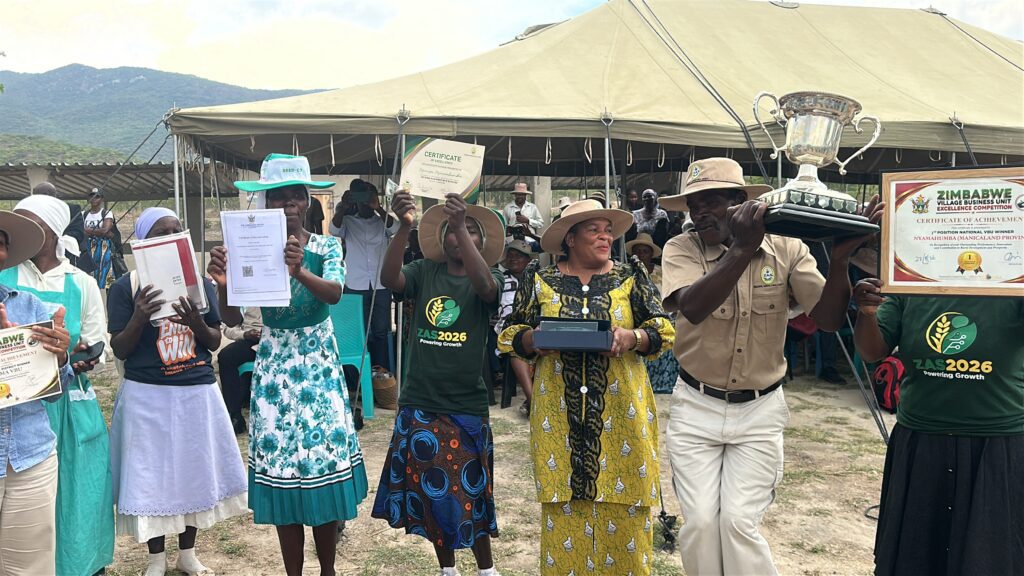
NYANGA NORTH – The Nyamahumba Tractor Handover has marked a significant milestone in the transformation of rural agriculture, as farmers in Ward 6 of Nyanga North Constituency received recognition for their outstanding performance in commercial farming and community-driven agricultural development.
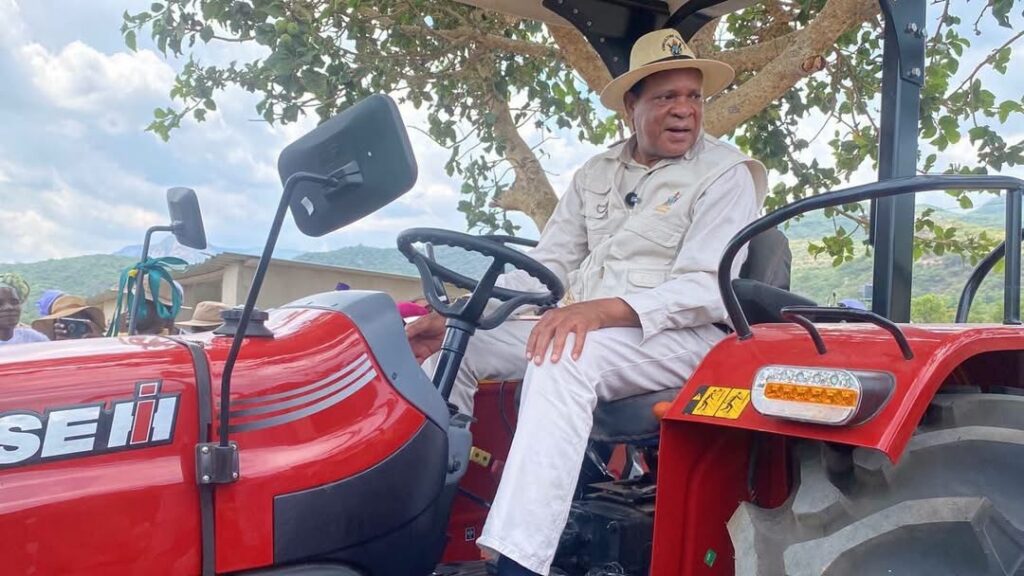
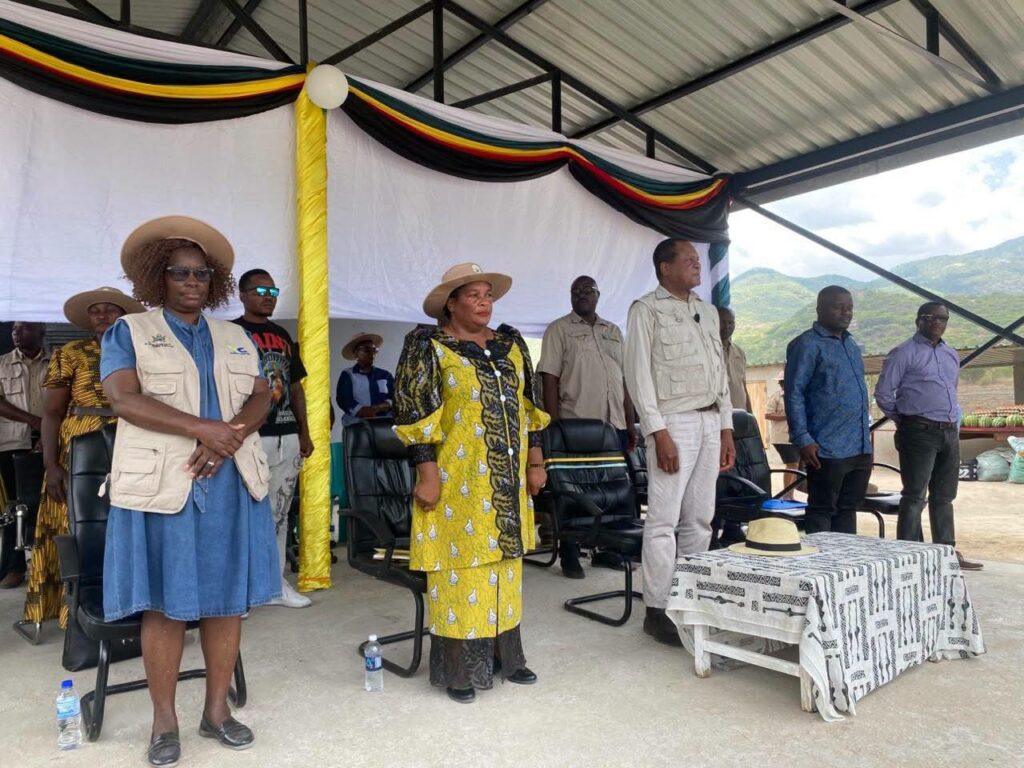
The handover programme, held yesterday at the Nyamahumba Village Business Unit (VBU), brought together Government ministers, provincial and district leadership, agricultural stakeholders, traditional leaders, farmers and community representatives under the theme, “Shifting Rural Communities From Subsistence Farming To Commercial, Industrialised Enterprises”.
Zimbabwe’s agricultural transformation agenda is firmly anchored in the National Development Strategy 2 (NDS2) and the national aspiration of achieving Vision 2030, as championed by President Dr Emmerson Dambudzo Mnangagwa.
Under the President’s leadership, Government is pursuing a decisive shift from subsistence farming towards productive, mechanised and commercially oriented agriculture, where rural communities become active centres of production, industrialisation and wealth creation.
NDS2 (2026–2030) places agricultural productivity, food security, mechanisation, irrigation development, value addition and rural industrialisation at the heart of national economic transformation.
The Nyamahumba Village Business Unit tractor handover therefore reflects the President’s call to transform villages through increased agricultural production and empower farmers to move from subsistence producers to surplus-producing, export-oriented enterprises.
It is this vision of an empowered rural economy, where no community and no citizen is left behind, that gives the Nyamahumba initiative its wider national significance and positions it as a practical contribution towards the realisation of Vision 2030.
The occasion represented more than the presentation of agricultural machinery. It celebrated the determination of rural farmers to move beyond subsistence production and establish organised, commercially viable agricultural enterprises capable of generating income, creating employment and contributing to national economic development.
At the centre of the celebrations was Hon. Chido Sanyatwe, Member of Parliament for Nyanga North Constituency, whose participation as host legislator placed the aspirations of local farmers and the broader rural development agenda firmly at the heart of the programme.
Hon. Sanyatwe’s scheduled address was one of the principal highlights of the programme, reflecting the importance of political leadership in mobilising communities, facilitating development partnerships and ensuring that national agricultural transformation programmes translate into tangible improvements at grassroots level.
For Nyanga North, the achievement of Nyamahumba Village Business Unit provides an important example of what communities can accomplish when Government support, agricultural expertise, development partnerships and collective responsibility come together.
The constituency has increasingly positioned agricultural development as a central pillar of its community empowerment agenda.
The success of Nyamahumba demonstrates the potential of Village Business Units to become productive economic centres rather than merely community gardens established for household food consumption.
The programme also provided an important platform for the Minister of Agriculture, Mechanisation and Water Resources Development, Hon. Dr Anxious Masuka, whose participation as Guest of Honour underscored Government’s commitment to agricultural modernisation and the expansion of mechanisation opportunities to rural farming communities.
Hon. Dr Masuka’s address was particularly significant given the national drive to modernise agricultural production, improve productivity and strengthen the capacity of farmers to participate in commercial agriculture.
The Ministry’s mechanisation agenda is central to addressing some of the longstanding challenges confronting rural farmers, including dependence on labour-intensive production methods, limited access to appropriate agricultural equipment and the difficulties associated with expanding cultivated land.
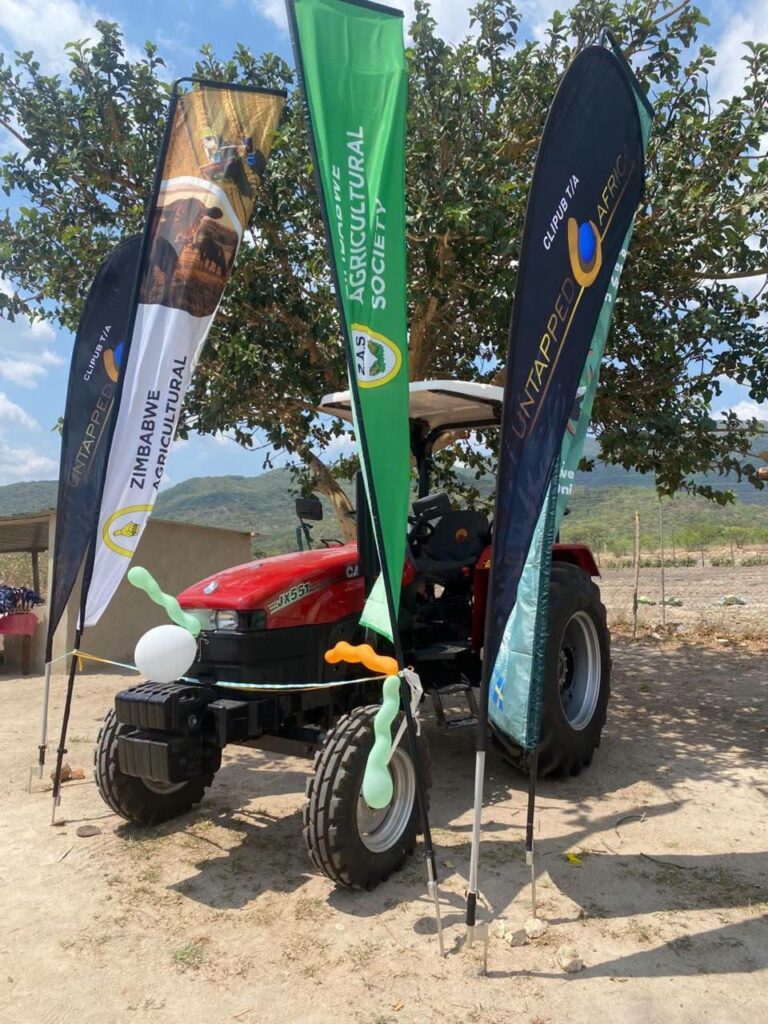
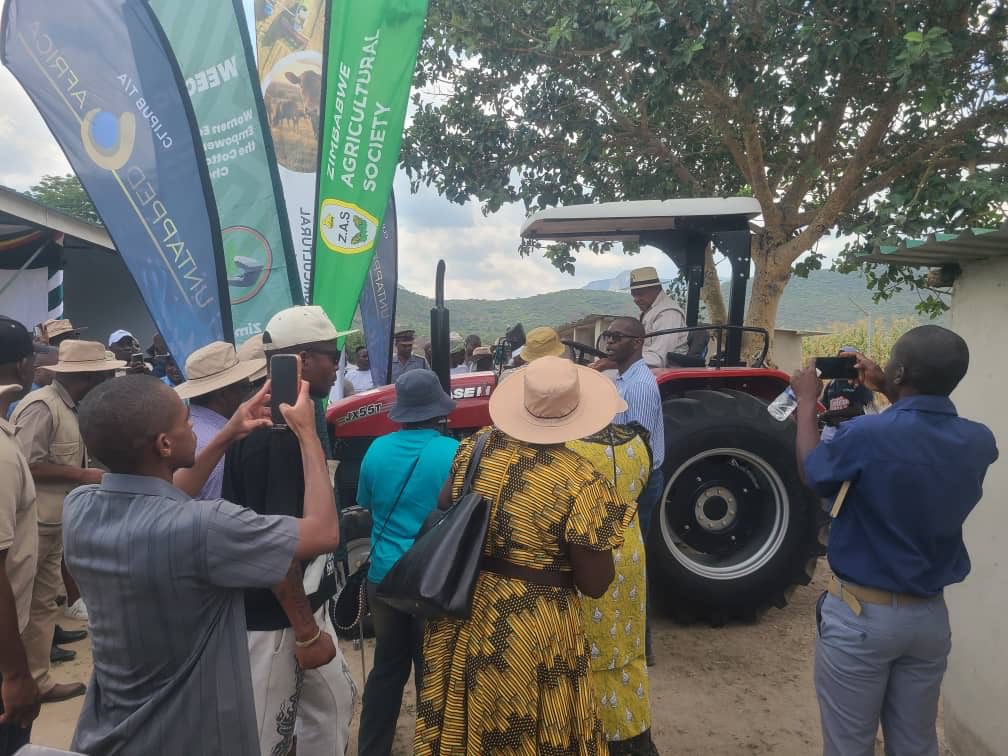
The presentation of a tractor to Nyamahumba therefore represents a practical investment in the productive capacity of the community.
Mechanisation has the potential to reduce the time and labour required for land preparation, improve operational efficiency and allow farmers to increase the scale of their agricultural activities.
For a community seeking to expand production and diversify its agricultural enterprises, access to machinery can make a considerable difference.
The Minister’s presence also reinforced the importance of aligning local agricultural initiatives with the country’s broader economic development priorities, particularly the transition towards an agriculture-led industrial economy.
Nyamahumba’s achievement did not happen overnight. The Village Business Unit has developed through sustained community participation, agricultural investment and partnerships that have strengthened its productive capacity.
The unit has attracted national recognition after being named Zimbabwe’s Best Village Business Unit at the 116th Zimbabwe Agricultural Show in Harare.
The award was presented by President Dr Emmerson Dambudzo Mnangagwa, recognising the community’s achievements in agricultural production and enterprise development.
Its success is particularly important given the agricultural conditions experienced in parts of Nyanga North, where unreliable rainfall and prolonged dry spells can place considerable pressure on farming households.
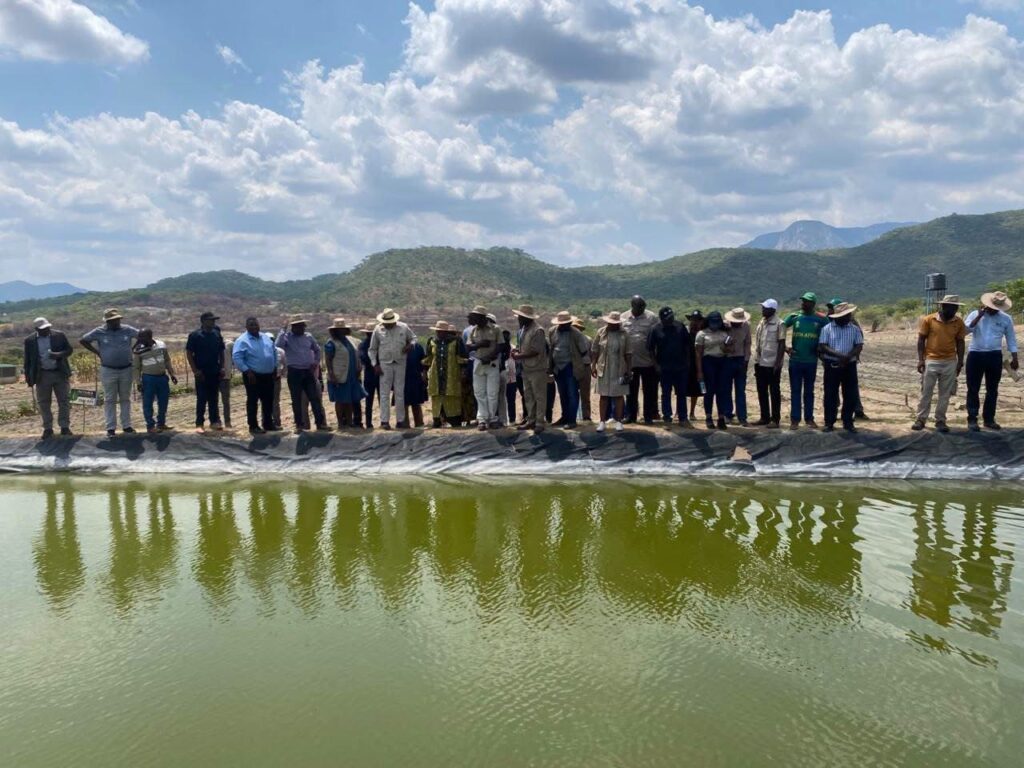
Investment in water infrastructure and irrigation has helped the community establish a more reliable production system. The development includes a solar-powered borehole, water storage facilities, a drip-irrigated community garden, fishponds and poultry production.
These investments have helped diversify the economic activities of the Village Business Unit while strengthening its capacity to generate income beyond conventional crop production.
The tractor handover consequently comes at a critical stage in the unit’s development, providing an opportunity to consolidate previous investments and increase production capacity.
It also sends an important message to other communities across Nyanga District that organised farming groups can compete nationally when they embrace effective management, accountability, innovation and commercially oriented agricultural practices.
The programme’s field tour provided an opportunity for visiting officials and stakeholders to appreciate the activities taking place at the business unit before the formal proceedings commenced.
The field tour was facilitated by Mr Munamati, Nyanga District Agricultural and Environmental Officer, together with the Agricultural Business Advisory Officer for Nyanga Ward 6 and the Village Business Unit chairman.
The involvement of agricultural extension personnel highlighted the important role played by technical expertise in supporting farmers, improving production methods and ensuring that agricultural projects remain productive and sustainable.
The formal proceedings included the National Anthem, opening prayer, traditional Kuombera ceremony and introductions, followed by welcome remarks from the Minister of State for Provincial Affairs and Devolution, Honourable Advocate Misheck Mugadza who was represented by Nyanga District Development Coordinator Mr. Chikomo.
The programme also featured comments on the competition from the adjudication chairman, Mr Washington Katiyo of the Agricultural and Rural Development Authority (ARDA), providing an opportunity to recognise the standards and performance that contributed to the Village Business Unit’s achievement.
The prize handover brought together several key stakeholders, including the Minister of Agriculture, Hon. Chido Sanyatwe, representatives of the Zimbabwe Farmers Union, the Zimbabwe Agricultural Society and Untapped Africa.
The involvement of these institutions demonstrated the importance of collaboration between Government, farmers’ organisations and development partners in strengthening agricultural production and rural enterprise development.
For Nyanga North, the occasion also carried wider significance beyond the immediate achievement of one Village Business Unit.
Agriculture remains a major source of livelihoods for rural households, but the sector’s contribution to economic development depends increasingly on the ability of farmers to produce commercially, access markets, adopt modern technologies and participate in value addition.
Village Business Units provide a framework through which communities can pool resources, share knowledge, organise production and improve their bargaining power in agricultural markets.
When properly managed, these initiatives can create opportunities for women, young people and other members of rural communities to participate in productive economic activities.
The Nyamahumba experience demonstrates how agricultural production can be diversified to include horticulture, livestock, poultry and fisheries, creating multiple income streams and reducing dependence on a single agricultural activity.
The next important task will be to ensure that the tractor is managed as a productive community asset, with transparent operating arrangements, proper maintenance, clear scheduling and accountability to the farmers who benefit from it.
The machinery must serve as an instrument for expanding production, supporting other farmers and strengthening the business unit’s long-term financial sustainability.
As Zimbabwe pursues agricultural modernisation, food security and rural industrialisation, the experience of Nyamahumba provides an encouraging example of how community-based enterprises can contribute to the country’s broader development ambitions.
For the farmers of Nyamahumba, the tractor represents an important new resource and recognition of the hard work that has brought their Village Business Unit national prominence.
For Nyanga North, it is an opportunity to build on that achievement and inspire similar initiatives throughout the constituency and the wider district.
The message emerging from Nyamahumba is clear: rural communities must increasingly become centres of production, enterprise, innovation and wealth creation.
As the country continues to pursue its agricultural transformation agenda, Nyamahumba’s journey demonstrates that the transition from subsistence farming to commercial agriculture is possible when communities are organised, supported and determined to succeed.
Rooted in the Village, Recognised Nationwide.