Malema Sentenced – A Defining Moment for South Africa’s Rule of Law
4 min read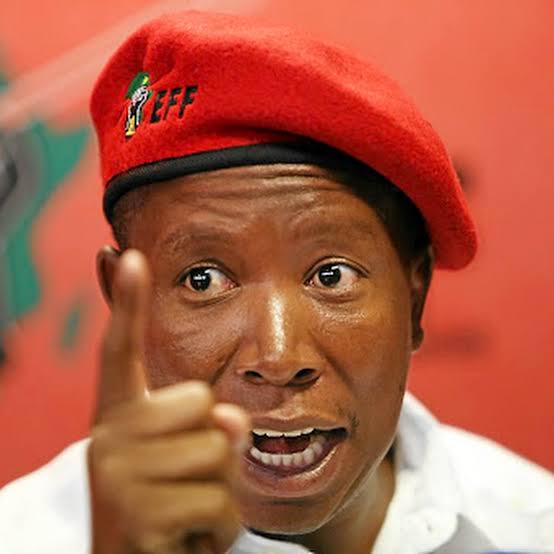
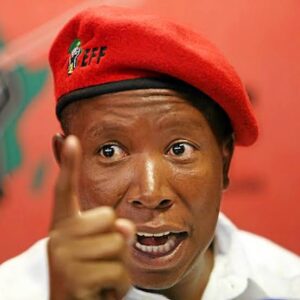
South Africa – South Africa’s political landscape has been jolted by a dramatic court ruling that has sent shockwaves across the region. Economic Freedom Fighters leader Julius Malema has been sentenced to an effective term of imprisonment following a long-running case tied to the unlawful discharge of a firearm at a public rally in 2018.
The ruling, delivered by Twanet Olivier at the KuGompo City Regional Court, marks a significant moment not only for Malema as an individual but for South Africa’s justice system as a whole. The court handed down a sentence of seven years, structured across multiple counts, with portions running concurrently. In effect, Malema will serve five years of direct incarceration.
According to the court’s findings, Malema received five years on the primary charge relating to the unlawful discharge of a firearm during the Economic Freedom Fighters rally in Mdantsane in 2018. An additional two years were imposed on a secondary charge, while fines amounting to R20,000, or six months’ imprisonment for each unpaid fine, were attached to other counts. However, with the sentences running concurrently, the custodial term has been consolidated into five years.
The case itself has its origins in a moment that was widely circulated across media platforms at the time. During the rally in Mdantsane, Malema was seen discharging what appeared to be a firearm into the air, an act that sparked immediate controversy and legal scrutiny. What followed was a prolonged legal battle that has now culminated in a decisive judgment.
In delivering the sentence, Magistrate Olivier underscored the seriousness of the offence, particularly given the public setting in which it occurred. The court emphasised that the unlawful use of a firearm, especially by a prominent political leader, posed a significant threat to public safety and undermined the rule of law. The judgment reinforced the principle that no individual, regardless of status or political influence, stands above the law.
The sentencing of such a high-profile political figure is rare in South Africa’s democratic era and is likely to carry far-reaching implications. For supporters of the judiciary, the ruling serves as a reaffirmation of institutional independence and the strength of constitutional democracy. It sends a clear message that accountability remains a cornerstone of governance.
However, the political ramifications are equally profound. As leader of the EFF, Malema has been a central figure in shaping South Africa’s political discourse, particularly on issues of economic justice, land reform, and youth empowerment. His absence from active political life, even temporarily, is expected to create a vacuum within the party’s leadership structures.
Within the EFF, questions will inevitably arise regarding succession, continuity, and strategy. The party, known for its militant stance and strong grassroots support, will need to navigate this period with careful coordination to maintain its political momentum. Senior figures within the organisation are likely to step into more prominent roles, but Malema’s unique influence and oratory presence will be difficult to replicate.
Across the broader political spectrum, reactions have been mixed. Some political actors have welcomed the ruling as a necessary affirmation of justice, while others have expressed concern over its potential to inflame tensions among supporters. The coming days are expected to see heightened political activity, with statements, demonstrations, and strategic recalibrations unfolding across the country.
Legal analysts have pointed out that Malema may still have avenues available to challenge the ruling. The possibility of an appeal remains open, and such a move could delay the implementation of the sentence pending further judicial review. Nonetheless, the current judgment stands as a powerful statement from the courts.
Beyond the immediate political implications, the case also raises broader questions about leadership, responsibility, and public conduct. The actions of political leaders carry significant weight, shaping not only policy but also societal norms. The court’s ruling highlights the expectation that those in positions of influence must adhere strictly to the law.
For ordinary South Africans, the case resonates on multiple levels. It touches on issues of safety, justice, and equality before the law. In a society still grappling with deep socio-economic challenges, the consistent application of legal standards is seen as essential to building trust in public institutions.
The Mdantsane incident, once a fleeting moment in the heat of a political rally, has now become a defining chapter in South Africa’s legal and political narrative. It serves as a reminder that actions taken in public spaces, particularly by influential figures, are subject to scrutiny and consequence.
As the nation absorbs the implications of this ruling, attention will turn to the next steps. Will Malema pursue an appeal? How will the EFF reorganise its leadership? And what impact will this have on the broader political landscape as South Africa moves forward?
What remains clear is that this moment will be remembered as a critical intersection of law and politics. It underscores the enduring importance of accountability and the role of the judiciary in upholding democratic principles.
In the final analysis, the sentencing of Julius Malema is more than a legal outcome. It is a reflection of a system asserting its authority, a society grappling with complex questions of leadership and responsibility, and a region watching closely as events continue to unfold.
South Africa now stands at a pivotal juncture, where the rule of law has been emphatically reaffirmed, and where the consequences of this decision will continue to reverberate across its political and social landscape for years to come.