

Feature – The ZANU PF 23rd National People’s Conference is set to take place in Chinhoyi, Mashonaland West Province, from October 12 to 17, 2026, as the ruling party prepares for one of its major annual gatherings with a focus on translating previous resolutions into measurable economic and developmental outcomes.
The conference will be hosted by Mashonaland West Province at Chinhoyi University of Technology under the theme, “From Resolutions to Results: Consolidating Economic Development and Deepening Empowerment towards Vision 2030.”
With only days remaining before the conference, preparations have entered an intensive phase, including the accreditation of delegates, service providers and members of the media.
Accreditation for the ZANU PF 23rd National People’s Conference is now underway, with teams deployed across the country to process and verify delegates expected to attend the gathering.
ZANU PF Director for Information and Publicity Cde Farai Marapira said the accreditation process was progressing smoothly, with provincial teams working to ensure that approved delegates are properly cleared ahead of the conference.
The accreditation exercise is also taking place at the party’s headquarters in Harare, where delegates, service providers and members of the media have been seeking clearance for the event.
The process is intended to establish an approved list of participants and facilitate the logistical organisation of the conference.
The gathering is expected to bring together senior party officials, provincial leadership, delegates from across Zimbabwe and other invited participants for several days of deliberations.
The 23rd National People’s Conference places Mashonaland West in the national spotlight as the province prepares to demonstrate its capacity to host a major political gathering.
The province last hosted the ZANU PF National People’s Conference in 2013.
Provincial preparations have included mobilisation of resources and coordination among party structures, businesses and other stakeholders.
In August, a fundraising dinner held in Harare raised more than US$500,000 towards preparations for the October conference, exceeding the original US$300,000 target.
The fundraising initiative attracted senior party officials, Government representatives, business leaders and corporate stakeholders.
Mashonaland West Provincial Chairperson Mary Mliswa-Chikoka said the conference would provide an opportunity for the province to showcase its agricultural, mining, tourism and industrial potential.
The province is home to major agricultural activities as well as mineral resources and tourism destinations, giving the host province an opportunity to place its economic sectors before delegates arriving from around the country.
The central message of this year’s conference is captured in its theme: “From Resolutions to Results: Consolidating Economic Development and Deepening Empowerment towards Vision 2030.”
The theme places implementation at the centre of the conference agenda.
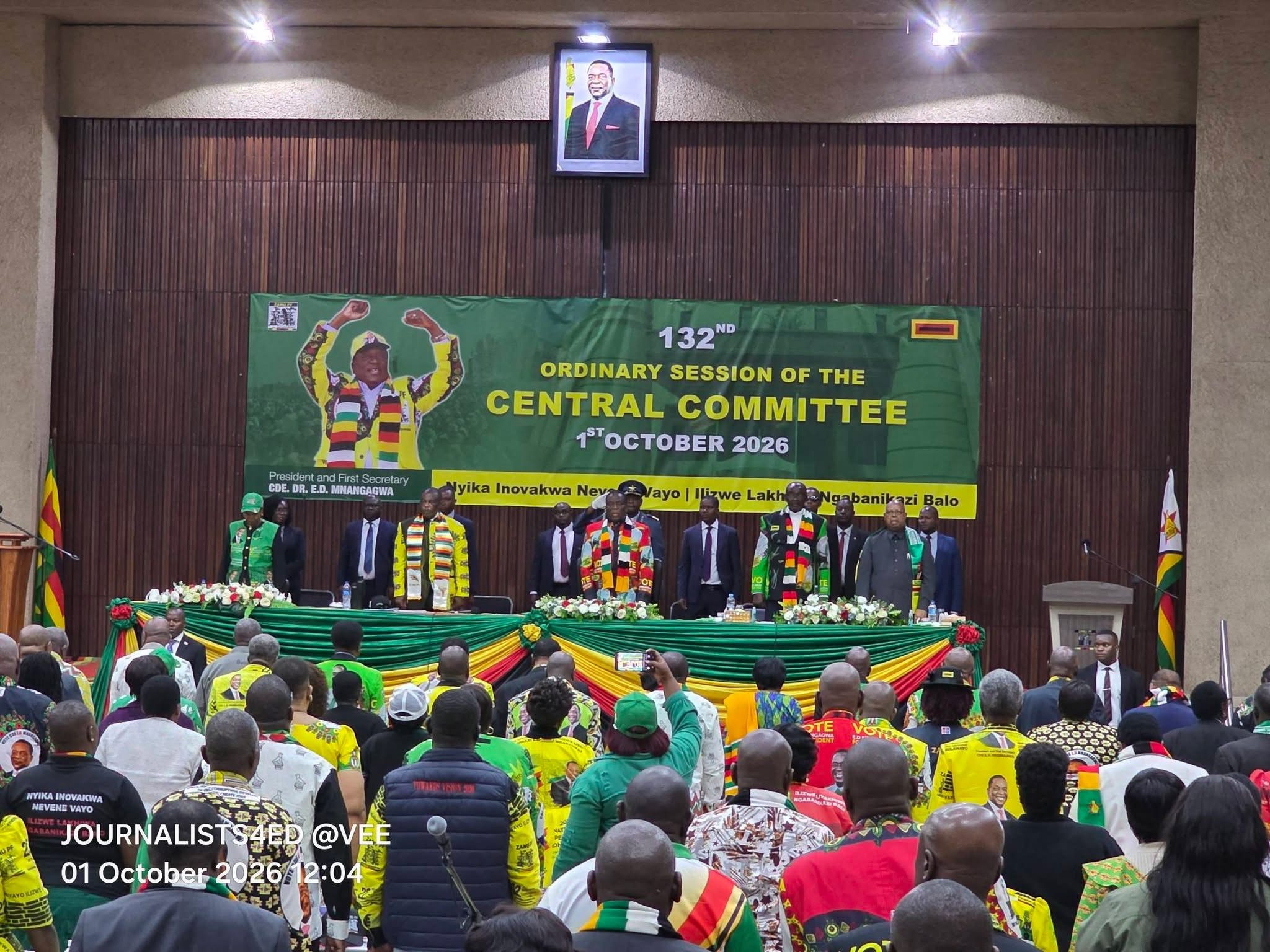
President and First Secretary of ZANU PF, Dr. Emmerson Dambudzo Mnangagwa, recently told the party’s Central Committee that the conference should provide an opportunity to take stock of progress, identify areas requiring correction and refocus party priorities.
He also called for the implementation of previous conference and congress resolutions across party and Government structures.
According to the President’s address, the conference is expected to consider resolutions coming from provincial structures and ensure that these are rooted in the concerns and aspirations of party members and the wider population.
The emphasis on implementation comes as Zimbabwe continues to pursue the objectives contained in its national development agenda and Vision 2030.
For the ruling party, the conference therefore provides a platform to assess the progress of programmes associated with economic development, empowerment, agriculture, industrialisation and other areas of national policy.
Economic development is expected to feature prominently during the conference.
The theme specifically references consolidation of economic development and deepening empowerment, areas that have remained central to the Government’s policy messaging in recent years.
The discussions are expected to include issues affecting production, investment, agriculture, mining, industrialisation and opportunities for young people and other sections of society.
President Mnangagwa’s recent Central Committee address also highlighted agricultural resilience, mineral beneficiation, innovation, youth empowerment and economic transformation as areas requiring continued attention within the party’s structures.
The address linked these priorities to the broader objective of achieving Vision 2030.
The conference is consequently expected to serve not only as an internal party gathering but also as an important forum for discussing the implementation of policies and programmes that the ruling party says are intended to support national development.
The Chinhoyi gathering follows the 22nd ZANU PF National People’s Conference held in Mutare in October 2025.
The 22nd conference brought together senior party leadership and delegates from across the country and focused on issues including party unity, discipline, development and Vision 2030.
President Mnangagwa officially opened the conference at Mutare Polytechnic, where he addressed delegates on the party’s direction and priorities.
The previous conference also produced a series of resolutions that are now part of the implementation discussion ahead of the 23rd gathering.
As a result, this year’s theme places particular emphasis on moving from resolutions to measurable results.
The focus on implementation is also consistent with the President’s call for the party’s Secretary General, working with the Office of the President and Cabinet, to coordinate the implementation of previous conference and congress resolutions.
For readers following the evolution of the party’s annual conferences, Zim Global Media previously covered the opening of the 22nd conference in Mutare:
Another issue expected to feature at the 23rd National People’s Conference is the strengthening of party structures from national leadership to grassroots level.
In his latest Central Committee address, President Mnangagwa called for stronger intra-party communication, ideological education, leadership development and improved information flows throughout the party.
He said well-organised grassroots structures were important to the party’s organisational strength.
The conference therefore comes at a time when ZANU PF is reviewing the functioning of its structures and seeking to strengthen coordination between national, provincial, district and grassroots levels.
Such discussions are expected to form part of the resolutions that will emerge from the Chinhoyi gathering.
Vision 2030 continues to provide an important reference point for the Government’s development messaging and the ruling party’s political programme.
The conference theme explicitly links economic development and empowerment to Vision 2030, signalling the party’s intention to connect its organisational resolutions with longer-term national development objectives.
ZANU PF has repeatedly framed its development agenda around economic transformation, industrialisation, agricultural production, infrastructure development and empowerment.
The 23rd National People’s Conference will therefore provide an opportunity for delegates to review progress and consider priorities for the period ahead.
Zim Global Media has previously reported on the party’s broader development discussions, including the 27th National Consultative Assembly:
President Mnangagwa 27th National Consultative Assembly: ZANU PF Charts Course for Unity, Economic Growth and Vision 2030
The 23rd National People’s Conference is also taking place against the backdrop of significant political developments in Zimbabwe during 2026.
The country’s constitutional and electoral framework has been the subject of continuing political debate following Constitutional Amendment No. 3, while discussions within ZANU PF have included questions concerning the party’s leadership and political direction beyond the current electoral cycle.
These issues have generated differing views among political actors and civic stakeholders, making the conference a closely watched event.
However, the formal agenda and theme of the conference remain centred on party resolutions, economic development, empowerment and Vision 2030.
The conference will provide the party’s structures with an opportunity to formally deliberate on submissions and resolutions brought forward through its provincial structures.
As delegates prepare to travel to Mashonaland West, Chinhoyi is set to become the centre of ZANU PF’s national organisational activities for the duration of the conference.
The event will run from October 12 to 17, with accreditation already underway and logistical preparations continuing.
The hosting of the conference is also expected to bring increased attention to Chinhoyi and Mashonaland West’s economic and social potential.
For the ruling party, however, the most important measure of the gathering will be the resolutions adopted and how those resolutions are subsequently implemented.
The theme itself makes that expectation clear: the emphasis is on moving from resolutions to results.
As delegates converge in Chinhoyi, attention will therefore turn to the issues raised during the conference, the resolutions adopted and the priorities that will shape ZANU PF’s organisational and policy agenda in the period ahead.
The ZANU PF 23rd National People’s Conference is consequently positioned as an important moment in the party’s 2026 calendar, bringing together its structures at a time when Zimbabwe continues to pursue its longer-term development objectives under Vision 2030.