

…Calls for Servant Leadership, Innovation and Economic Transformation
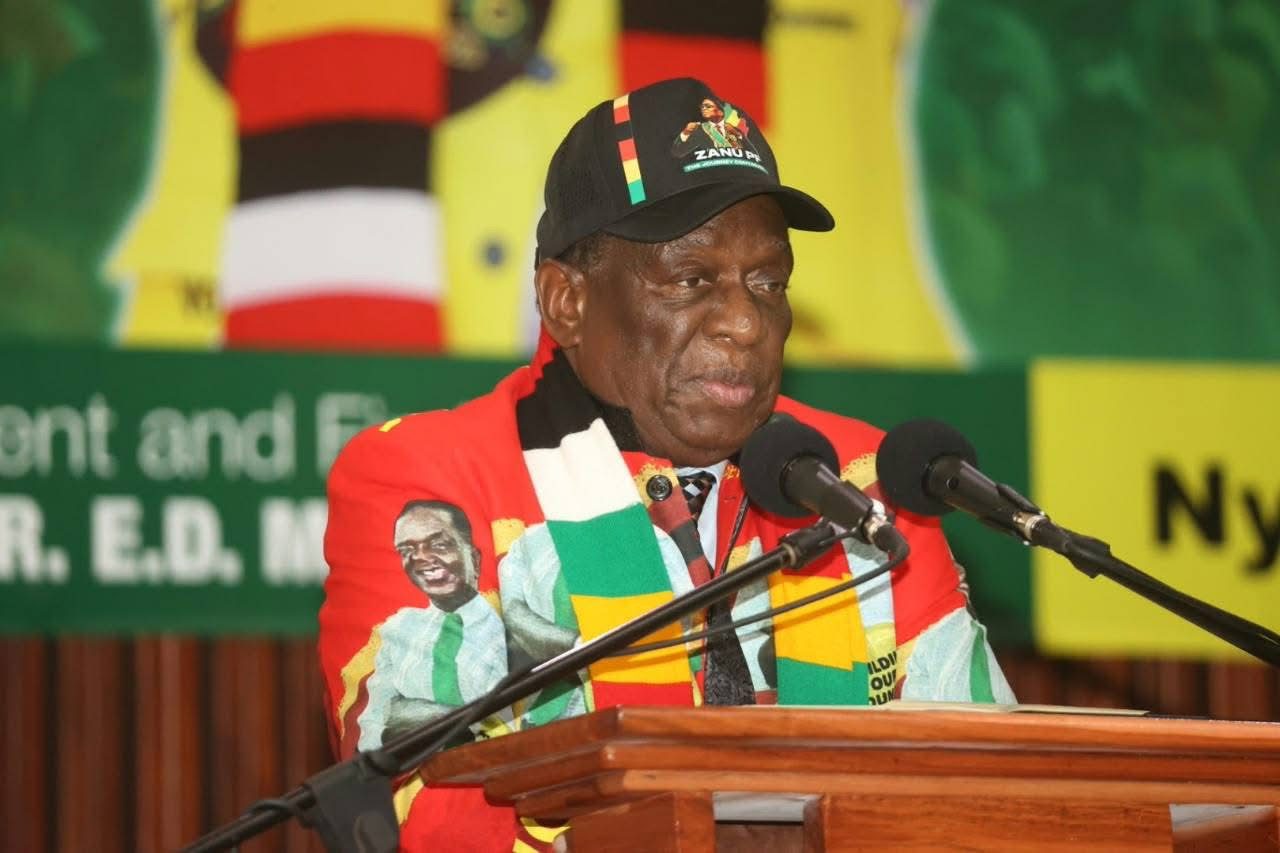
ZANU PF HQ, Harare — The address by the President His Excellency Dr. ED. Mnangagwa to the 132nd Central Committee meeting has placed servant leadership, accountability, youth empowerment, innovation, agricultural resilience and mineral beneficiation at the centre of discussions as ZANU PF prepares for its 23rd National People’s Conference.
President Emmerson Dambudzo Mnangagwa addressed the 132nd Ordinary Session of the ZANU PF Central Committee earlier today, outlining a series of priorities which he said should guide the party and Government as Zimbabwe pursues its development objectives.
According to the President, political leadership must increasingly be measured by tangible improvements in the lives of citizens, including better livelihoods, expanded opportunities, productive communities and improved infrastructure.
His remarks come at a time when the Government is advancing its development programme under National Development Strategy 2 (NDS2) and the broader Vision 2030 framework.
The President called for improved servant leadership within ZANU PF and Government, saying political stewardship should be reflected in tangible improvements in people’s lives.
A major theme of the President’s 132nd Central Committee Address was the need for stronger accountability and discipline among political leaders and public officials.
The President said leaders have an obligation to continuously raise the quality of servant leadership and governance.
He said political stewardship should ultimately be reflected in practical outcomes at community level rather than remaining confined to policies, speeches and resolutions.
The message comes as ZANU PF continues preparations for its 23rd Annual National People’s Conference, scheduled for Chinhoyi in Mashonaland West Province from 12 to 17 October 2026.
The President has previously said the conference should focus on converting party resolutions into practical strategies capable of improving people’s lives.
This emphasis on implementation places greater attention on the relationship between policy decisions and their eventual impact at provincial, district and grassroots levels.
Another key point highlighted in the presentation was the need for every province and district to identify its own opportunities and challenges.
The approach places emphasis on locally informed development, with provincial structures expected to identify practical economic opportunities and develop solutions appropriate to their circumstances.
The Government has increasingly promoted a development model that seeks to connect national priorities with projects at community level.
Under this approach, agriculture, mining, infrastructure, manufacturing, technology and other productive sectors can contribute to economic growth depending on the resources and opportunities available in each locality.
The approach also complements the broader push towards rural industrialisation and decentralised economic activity.
The President also placed particular emphasis on Zimbabwe’s youth.
According to the highlights released from the Central Committee session, young Zimbabweans were challenged to defend the gains of the liberation struggle through productivity, innovation and economic participation.
The President encouraged young people to embrace modern knowledge, new technologies and artificial intelligence as Zimbabwe seeks to modernise and industrialise its economy.
He also linked youth development to an understanding of Zimbabwe’s liberation history and the responsibilities associated with national sovereignty.
In his remarks, President Mnangagwa said young people should understand where Zimbabwe came from, where the country is now and where it is going as the country moves towards Vision 2030.
The focus on technology is particularly significant as artificial intelligence and digital technologies increasingly influence education, business, manufacturing, agriculture, media and public administration.
The Central Committee highlights also called for ZANU PF to embrace research, innovation and new technologies.
The emphasis is on building what the President described as a modern and responsive party while maintaining its ideological foundations.
Beyond the political environment, technology has become an increasingly important component of Zimbabwe’s economic development agenda.
The Government has identified digital transformation, innovation and technological adoption as important tools for improving productivity and competitiveness.
For businesses and young entrepreneurs, greater adoption of technology could affect areas ranging from financial services and agriculture to manufacturing, communications and online commerce.
The President also highlighted the importance of grassroots structures within the party.
According to the Central Committee highlights, provincial, district, branch and cell structures should remain vibrant and well mobilised.
The emphasis includes stronger intra-party communication, ideological education and leadership development.
The call reflects the party’s stated intention to strengthen organisational structures ahead of the 23rd National People’s Conference.
The conference is expected to provide an opportunity for the party to review its priorities and consider strategies for translating resolutions into practical programmes.
Agriculture was another significant area highlighted during the session.
The President pointed to measures aimed at climate-proofing agriculture ahead of the 2026/27 summer cropping season.
These measures include expanded irrigation, water harvesting, drought-resistant crops and early-warning systems.
The focus comes against concerns over rainfall patterns in the wider SADC region.
Earlier this week, while opening the Fourth Session of Zimbabwe’s Tenth Parliament, Mnangagwa said the 2026/27 agricultural season faced the prospect of below-normal rainfall across the SADC region. He outlined a six-pillar response covering strategic grain reserves, climate-smart production, agricultural financing, livestock drought mitigation, coordination, and early warning and capacity building.
The agricultural emphasis is closely connected to Zimbabwe’s wider push towards food security and commercial agriculture.
Related reading: How Irrigation Is Transforming Smallholder Farming in Zimbabwe and Driving Rural Economic Growth
Mineral beneficiation also featured prominently in the Central Committee highlights.
The President said increased local processing of Zimbabwe’s raw materials would create employment, retain value within the country and strengthen economic sovereignty.
The focus on beneficiation is consistent with the Government’s broader policy of encouraging minerals to be processed locally rather than exported in raw form.
Zimbabwe has taken measures aimed at increasing domestic mineral value addition. In February 2026, Government announced the suspension of raw mineral and lithium concentrate exports, citing objectives including beneficiation, mineral accountability and increased value retention within Zimbabwe.
The country’s mining sector has also been identified as an important component of industrial development, with Government highlighting opportunities in lithium, iron and steel, gold and other minerals.
The emphasis on value addition means the mining sector is increasingly being considered not only as a source of mineral exports but also as a potential driver of manufacturing, employment and downstream industries.
The recurring message from the President’s recent party engagements has been implementation.
The 132nd Central Committee session comes shortly before the 23rd National People’s Conference, making the question of implementation particularly relevant.
The President has called for party resolutions to be translated into concrete strategies capable of improving people’s livelihoods.
This creates a clear focus for the forthcoming conference: assessing priorities, refining strategies and determining how programmes can be implemented across the country’s provinces and districts.
For Government, the challenge is similarly centred on translating national development policies into measurable economic and social outcomes.
The priorities outlined during the session intersect with the Government’s broader development agenda under NDS2 and Vision 2030.
Agricultural productivity, industrialisation, mineral beneficiation, infrastructure development, technological innovation and youth participation all form part of the wider economic transformation conversation.
Earlier parliamentary remarks by Mnangagwa highlighted agriculture, mining, manufacturing, energy and infrastructure as major components of the country’s economic programme. He said agriculture had recorded strong growth in 2026 while also outlining measures to address climate-related risks in the coming season.
The Government has also placed emphasis on infrastructure projects, including major road developments, while promoting investment and industrial capacity.
Related reading: Top 10 Profitable Crops for Farmers in Manicaland: Best High-Value Crops for Maximum Returns
President Mnangagwa’s 132nd Central Committee Address comes at a significant point on the ZANU PF calendar, with the 23rd National People’s Conference only days away.
Its key themes — servant leadership, accountability, grassroots mobilisation, youth participation, technological innovation, climate-resilient agriculture and mineral beneficiation — point towards a strong emphasis on implementation and economic development.
The forthcoming conference in Chinhoyi will provide the party with an opportunity to consider its priorities and strategies for the next phase.
For Zimbabwe’s wider development programme, the central question will be how effectively policies and resolutions translate into increased production, employment, investment, infrastructure, agricultural output and improved livelihoods.
As the country continues pursuing NDS2 and Vision 2030, the implementation of these priorities at provincial, district and community level will remain an important measure of their practical impact.