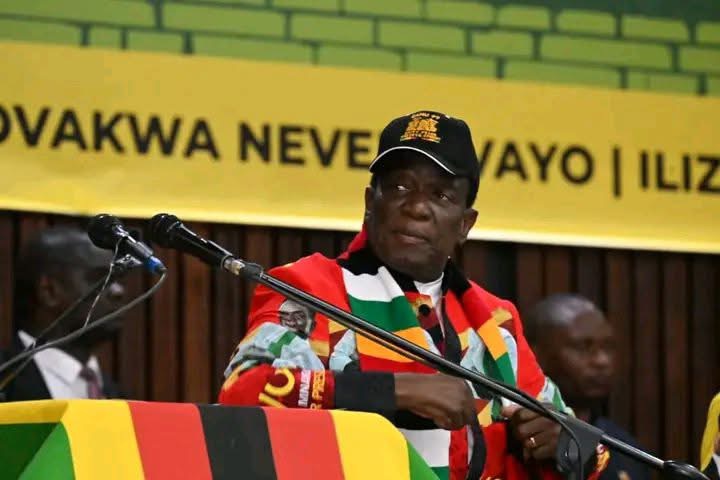
Harare – Cabinet changes have been announced by President Dr Emmerson Dambudzo Mnangagwa, with Professor Mthuli Ncube re-assigned as Minister of Finance and Senator Kudakwashe Tagwirei appointed Minister of Economic Development and Investment Promotion.
The changes, announced on today, Thursday, 8 October 2026, take immediate effect and mark a significant adjustment to Zimbabwe’s economic management structure.
President Mnangagwa has separated the Finance portfolio from Economic Development and Investment Promotion, creating distinct ministerial responsibilities for fiscal management, economic development and investment promotion.
Professor Mthuli Ncube will now serve as Minister of Finance with immediate effect, while Minister Kudakwashe Tagwirei will take charge of the Economic Development and Investment Promotion portfolio.
The appointments have been made in terms of Section 104, Subsection 1 of the Constitution of Zimbabwe.
The restructuring comes at an important stage in Zimbabwe’s economic development journey, with the country implementing the second National Development Strategy and pursuing the national ambition of achieving an upper middle income economy by 2030.
Professor Mthuli Ncube’s re-assignment gives the Ministry of Finance a dedicated focus on fiscal and Treasury matters after previously carrying the broader economic development and investment promotion responsibilities.
As Minister of Finance, Professor Mthuli Ncube will continue to occupy a central position in Zimbabwe’s economic policy framework, with responsibilities covering public finance management, budgeting, resource mobilisation and macroeconomic policy.
The separation of the portfolios means that economic development and investment promotion will now have a dedicated ministerial focus under Minister Kudakwashe Tagwirei.
For Zimbabwe, the move places investment mobilisation and economic development within a specific institutional framework at a time when President Mnangagwa’s Government is seeking to expand productive activity, attract investment and strengthen key sectors of the economy.
Minister Kudakwashe Tagwirei takes over the new portfolio with responsibility for Economic Development and Investment Promotion, placing investment attraction, economic expansion and the strengthening of productive sectors at the centre of his ministerial mandate.
The portfolio comes at a time when Zimbabwe continues to pursue opportunities across mining, agriculture, manufacturing, energy, infrastructure, tourism, technology and other productive sectors.
The country has identified investment as an important driver of economic transformation, with domestic and international capital required to expand production, develop infrastructure, create employment and strengthen value chains.
Minister Kudakwashe Tagwirei’s new responsibilities therefore come with a broad economic mandate that will require close coordination with other ministries, Government institutions, the private sector and investors.
The separation of Finance from Economic Development and Investment Promotion could allow each portfolio to concentrate more closely on its respective responsibilities.
The Ministry of Finance will remain central to fiscal management and macroeconomic policy, while the Ministry of Economic Development and Investment Promotion will focus more directly on economic expansion and investment mobilisation.
The two functions remain closely connected.
Investment decisions are influenced by fiscal policy, economic stability, infrastructure, taxation, access to finance, energy availability, regulatory certainty and the wider business environment.
The effectiveness of the new structure will therefore depend significantly on coordination between Professor Mthuli Ncube and Minister Kudakwashe Tagwirei.
The latest Zimbabwe Cabinet changes come as President Mnangagwa’s Government continues implementing National Development Strategy 2, which provides the development framework for the 2026 to 2030 period.
The strategy places emphasis on economic transformation, industrialisation, investment, infrastructure development, value addition, human capital development and improved productivity.
Zim Global Media previously examined the country’s development trajectory in its article, NDS2: Zimbabwe Charts a Bold Course Towards Vision 2030, which looked at the role of the second national development strategy in advancing Zimbabwe towards Vision 2030.
The latest restructuring of the economic portfolios comes as implementation of that strategy moves forward.
For President Mnangagwa’s Government, the challenge will now be translating the institutional changes into measurable economic outcomes.
For Professor Mthuli Ncube, attention will remain focused on the management of public finances and the broader financial framework supporting national development.
For Minister Kudakwashe Tagwirei, expectations will centre on investment mobilisation, economic development and the creation of conditions that encourage productive investment.
The new arrangement also comes at a time when Zimbabwe is seeking to strengthen its position as an investment destination.
The country has substantial natural resources and opportunities across several sectors, but turning those opportunities into sustainable economic growth requires capital, infrastructure, skills, technology and access to markets.
The Economic Development and Investment Promotion portfolio will therefore have an important role to play in facilitating the conversion of investment opportunities into actual economic activity.
That responsibility extends beyond attracting investors.
It also involves supporting productive enterprises, encouraging value addition, strengthening domestic industries and creating conditions in which businesses can expand.
President Mnangagwa’s broader development objectives are closely linked to employment creation.
As Zimbabwe works towards Vision 2030, the expansion of productive sectors will remain important for creating opportunities for young people and improving household incomes.
Investment in manufacturing, mining, agriculture, energy, infrastructure and technology can contribute to the creation of jobs while expanding the country’s productive capacity.
The latest changes therefore place economic development and investment promotion at the centre of an important national conversation about how Zimbabwe can accelerate growth.
Alongside the ministerial changes, President Mnangagwa has also appointed Dr Egepha Victoria Jokomo as Permanent Secretary for Skills Audit and Development.
Dr Egepha Victoria Jokomo will take up the position with effect from 1 November 2026. The appointment was made in terms of Section 205, Subsection 1 of the Constitution of Zimbabwe.
The appointment comes at a time when skills development is increasingly being linked to Zimbabwe’s industrialisation and economic transformation agenda.
A growing economy requires a workforce with the technical, professional and entrepreneurial capabilities needed to support modern industries.
Skills auditing can play an important role in identifying existing capabilities, establishing skills gaps and helping Government and training institutions align human capital development with the needs of the economy.
The appointment of Dr Egepha Victoria Jokomo also comes as Zimbabwe prepares to host Africa Skills Week 2026 in Harare from 12 to 16 October.
The continental event is expected to place attention on skills development, employment, industrialisation, innovation and the future of work.
Zim Global Media recently explored the importance of the skills agenda in its article, Zimbabwe Puts Skills At The Centre Of Africa’s Industrial Future, highlighting the growing connection between skills development and Africa’s industrial ambitions.
The appointment of Dr Egepha Victoria Jokomo adds another institutional dimension to that national conversation.
For Zimbabwe to achieve its economic ambitions, investment and skills development will need to advance together.
New investment projects require skilled workers.
Skilled workers require appropriate education and training.
Industries require infrastructure and financing.
Sustainable economic growth requires an environment where businesses can produce competitively and access both domestic and international markets.
The latest appointments therefore touch on several interconnected areas of Zimbabwe’s development agenda.
President Mnangagwa’s decision to separate Finance from Economic Development and Investment Promotion creates distinct ministerial responsibilities at a time when the country is seeking to accelerate implementation of its national development strategy.
Professor Mthuli Ncube will now concentrate on the Finance portfolio, while Minister Kudakwashe Tagwirei assumes responsibility for Economic Development and Investment Promotion.
Dr Egepha Victoria Jokomo will take responsibility for Skills Audit and Development from November.
The appointments have consequently brought finance, investment, economic development and skills development into renewed focus.
For businesses and investors, attention will now turn towards how the new structure affects economic policy and investment facilitation.
For ordinary Zimbabweans, the greater concern will be whether these changes ultimately contribute to increased production, more employment opportunities, stronger businesses and improved livelihoods.
President Mnangagwa’s Vision 2030 ambition requires sustained progress across multiple sectors.
Economic growth must be supported by investment.
Investment must generate production.
Production must create employment and value.
Skills must support the industries being developed.
Fiscal policy must provide a sustainable foundation for national programmes.
The separation of the portfolios creates greater specialisation while placing an equally important responsibility on the respective ministries to coordinate their work.
President Mnangagwa’s latest appointments will therefore be closely watched as Zimbabwe enters another phase of implementing its development agenda.
The immediate changes are clear.
Professor Mthuli Ncube is now Minister of Finance.
Minister Kudakwashe Tagwirei is now Minister of Economic Development and Investment Promotion.
Dr Egepha Victoria Jokomo will become Permanent Secretary for Skills Audit and Development from 1 November.
The bigger story will be what these changes deliver on the ground.
As Zimbabwe advances through NDS2 towards Vision 2030, the focus will increasingly shift from structures and policy announcements to implementation, investment, production, employment and measurable development outcomes.
The latest Zimbabwe Cabinet changes have consequently created a new configuration within the country’s economic management framework.
President Mnangagwa’s administration will now look to the new ministerial structure to support the next phase of Zimbabwe’s economic transformation, with Finance, investment, economic development and skills development playing interconnected roles in the country’s journey towards 2030.