
Arts & Leisure — As Zimbabwe prepares to host the 58th Annual Conference of the International Committee of Museums and Collections of Modern Art (CIMAM), anticipation is building around what promises to be one of the most intellectually vibrant and culturally significant gatherings in the global art calendar.
Beyond the historic symbolism of bringing the prestigious conference to African soil for the first time, attention is now turning to the substance of the programme itself. What exactly will delegates experience when they arrive in Harare, and how will the conference reshape conversations within the global museum community?
From high-level dialogue to immersive cultural engagement, the CIMAM 2026 programme is being positioned as both a professional forum and a transformative encounter with Zimbabwe’s artistic landscape.
At its core, the CIMAM Annual Conference has always been about ideas. Since its establishment in 1962, the platform has evolved into a critical meeting point for museum directors, curators and cultural leaders to interrogate the future of modern and contemporary art institutions.
The Harare edition is expected to continue that tradition, but with a distinct shift in perspective.
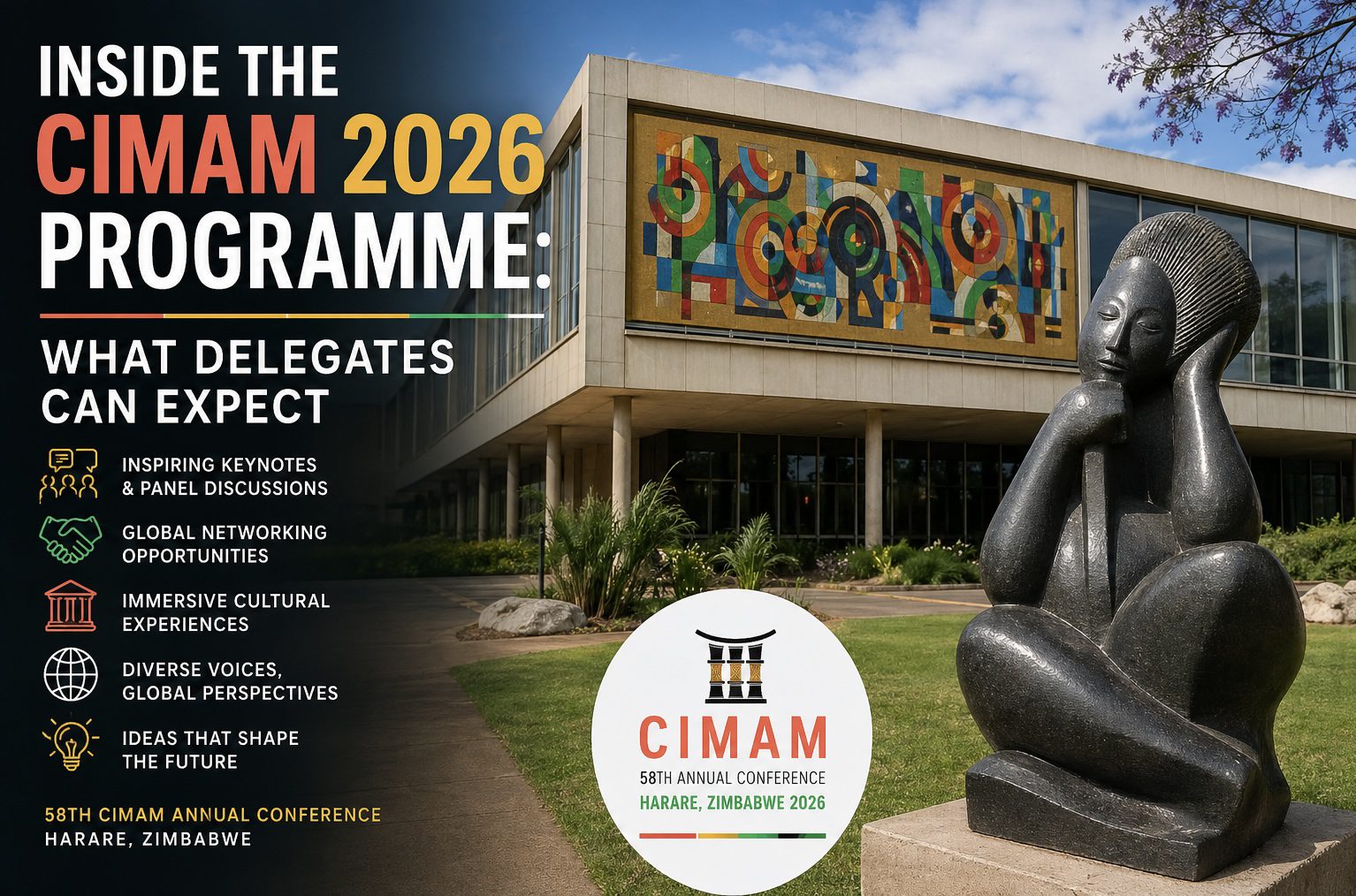
According to programme outlines, delegates can expect a series of keynote addresses, panel discussions and roundtable sessions focused on some of the most pressing issues facing museums today. These include questions around decolonisation, institutional ethics, sustainability, audience engagement and the evolving role of museums in society.
But this will not be a conference of abstract theory alone.
Organisers are placing strong emphasis on contextual learning, ensuring that discussions are grounded in lived African realities. This means that Zimbabwe’s own artistic, cultural and institutional experiences will not simply be showcased, but actively integrated into the global discourse.
“This is not about observing Africa from a distance,” said one programme contributor. “It is about engaging with Africa as a knowledge producer.”
A defining feature of the CIMAM conference model is its diversity of voices. The Harare programme is expected to bring together more than 250 delegates from over 50 countries, representing a wide spectrum of expertise and institutional backgrounds.
These participants include museum directors, chief curators, researchers, artists and policy influencers, each bringing their own perspectives to the table. The result is a dynamic environment where ideas are not only presented, but challenged, refined and expanded through dialogue.
Workshops and breakout sessions will provide more intimate spaces for exchange, allowing participants to engage deeply with specific themes and case studies. These sessions are often where some of the most meaningful conversations happen, as professionals share practical insights from their own institutions.
Another key element of the programme is networking.
While formal sessions provide structure, much of the value of CIMAM lies in the connections formed between delegates. Informal gatherings, private events and curated networking opportunities are designed to foster collaboration and long-term partnerships.
According to the conference support document, participants will have access to exclusive events, including high-level dinners and private receptions, where they can interact directly with CIMAM board members, keynote speakers and leading figures in the global art world.
These interactions often translate into future exhibitions, research collaborations and institutional exchanges, extending the impact of the conference far beyond its duration.
Yet what truly sets CIMAM 2026 apart is its integration of place.
Harare itself will become an extension of the programme.
Delegates will be invited to explore Zimbabwe’s cultural institutions, galleries and heritage sites, gaining firsthand insight into the country’s artistic ecosystem. The National Gallery of Zimbabwe will serve as the central hub, but the experience will extend beyond its walls.
Curated visits, site-specific exhibitions and cultural tours are expected to form a significant part of the programme, offering delegates a deeper understanding of local artistic practices.
This approach reflects a broader philosophy articulated by National Gallery Executive Director Raphael Chikukwa, who has emphasised the importance of bringing the world to Africa rather than exporting African art abroad.
For many delegates, this will be their first direct encounter with Zimbabwean art and culture.
That encounter is expected to be both educational and transformative.
Zimbabwe’s artistic heritage, particularly its globally renowned stone sculpture movement, provides a powerful entry point into conversations about identity, materiality and cultural continuity. At the same time, the country’s contemporary artists are pushing boundaries through new media, performance and conceptual practices.
By placing these narratives at the centre of the programme, CIMAM 2026 aims to challenge preconceived notions and expand global understanding of African art.
The conference will also highlight the role of African institutions in shaping new models of museum practice.
As outlined in the programme documentation, the event is intended to foster cross-continental exchange, encouraging collaboration between Zimbabwean and international institutions.
This exchange is expected to generate fresh approaches to curatorial work, audience engagement and institutional strategy, particularly in contexts where resources are limited but creativity is abundant.
Importantly, the programme is also designed with inclusivity in mind.
Through initiatives such as travel grants, CIMAM has been working to ensure that professionals from emerging economies can participate in the conference. This effort is particularly significant for the Harare edition, as it aligns with the broader goal of amplifying underrepresented voices within the global art conversation.
For Zimbabwean practitioners, the conference offers a rare opportunity to engage directly with international peers without the barriers of distance and cost.
For international delegates, it offers a chance to listen.
CIMAM President Suhanya Raffel has underscored the importance of this moment, noting that the conference represents an opportunity for the global museum community to learn from African colleagues and their approaches to contemporary challenges.
As the programme takes shape, one thing is becoming increasingly clear: CIMAM 2026 will not be a conventional conference.
It will be a meeting of minds, a convergence of cultures and a reimagining of how global art conversations are structured.
For delegates, the experience will extend beyond professional development. It will be an invitation to rethink assumptions, build meaningful connections and engage with a part of the world that has long been underrepresented in global cultural discourse.
And for Zimbabwe, it will be a moment to speak — not from the margins, but from the centre.
As the countdown continues, the programme stands as both a promise and a challenge: a promise of rich dialogue and discovery, and a challenge to all who attend to listen, learn and contribute to a more inclusive future for the world of art.