

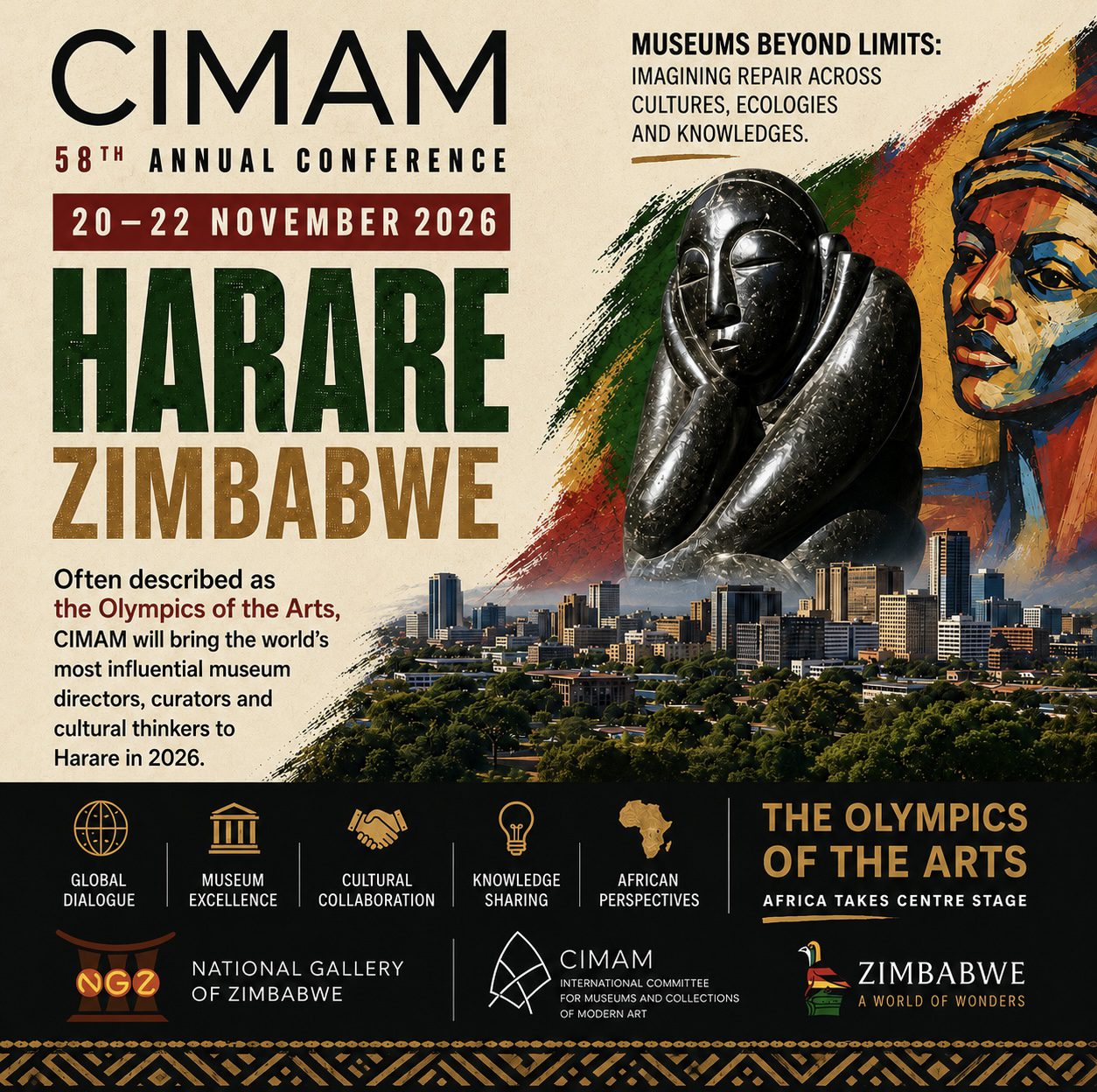
Arts & Leisure – The National Gallery of Zimbabwe is in a race against time as preparations intensify for the historic 58th Annual Conference of the International Committee for Museums and Collections of Modern Art (CIMAM), set to take place in Harare from the 20th to the 22nd of November 2026.
The prestigious gathering, which will bring together museum directors, curators, scholars and contemporary art professionals from across the globe, is expected to place Zimbabwe firmly at the centre of international cultural discourse for the first time in modern history.
For the National Gallery, the stakes could not be higher.
The conference marks the first occasion in CIMAM’s 64 year history that the annual event will be hosted on African soil, a development widely regarded as a major victory not only for Zimbabwe but for the entire African arts community.
Behind the excitement, however, lies an enormous task.
Construction teams, curators, event coordinators and government officials are working around the clock to ensure that Zimbabwe presents itself as a capable and world class host.
Preparations include infrastructure rehabilitation, exhibition planning, venue upgrades, accommodation arrangements and transport logistics for hundreds of delegates expected from different parts of the world.
Leading the local preparations are the Parent Ministry led by Sports, Recreation, Arts and Culture Minister Hon. Lt. General Rtd. Amb. AN. Sanyatwe, the National Gallery of Zimbabwe Board led by Board Chariman Retired Justice Maphios Cheda, the Gallery team led by Executive Director, Mr. Raphael Chikukwa, whose successful lobbying campaign helped secure the conference for Harare after years of engagement with CIMAM leadership.
Chikukwa has described the conference as a defining moment for Zimbabwe’s cultural diplomacy and an opportunity to reshape global perceptions of African museums and artistic institutions.
“For years, the National Gallery of Zimbabwe has taken Zimbabwean art to the world, and it is now time to bring the world to Zimbabwe,” Chikukwa said during the official announcement of the conference in Barcelona last year.
The conference is expected to focus heavily on African narratives, decolonisation of museum spaces, indigenous knowledge systems and the role of African institutions in shaping the future of contemporary art discourse.
According to organisers, the event will run from 20 to 22 November 2026 under the theme “Museums Beyond Limits: Imagining Repair Across Cultures, Ecologies and Knowledges.”
Government has already thrown its weight behind the event, recognising its importance to Zimbabwe’s tourism, cultural and diplomatic sectors. Reports indicate that authorities recently approved final preparations for the conference, with various ministries now coordinating efforts to ensure smooth delivery.
Officials say hosting CIMAM presents Zimbabwe with an opportunity similar to hosting an international sporting tournament or global trade summit. Hotels, transport operators, tour companies, restaurants and local artists are all expected to benefit economically from the influx of international visitors.
Tourism players believe the conference could significantly boost Zimbabwe’s image abroad at a time when the country is pushing to increase international arrivals and strengthen cultural tourism.
Harare’s hospitality sector is already beginning to prepare for the anticipated demand. Several hotels are reportedly undergoing renovations while tourism operators are designing cultural tour packages that will allow delegates to experience Zimbabwe’s heritage sites, including Great Zimbabwe, Victoria Falls and Matobo Hills.
At the National Gallery itself, preparations have become increasingly intense.
Sources close to the institution say gallery spaces are being redesigned to meet international conference standards, while curatorial teams are developing exhibitions that will showcase Zimbabwe’s rich artistic traditions alongside contemporary African expression.
There are also efforts to modernise exhibition technology, improve lighting systems and strengthen digital presentation infrastructure to meet expectations of international delegates accustomed to world class museum facilities.
Recruitment of additional administrative and volunteer personnel is also underway as the institution seeks to build sufficient capacity ahead of the conference. Recent vacancy notices by the National Gallery highlighted the need for project administrators to assist with the planning and execution of major cultural initiatives linked to CIMAM 2026.
Art sector observers say the pressure facing organisers is understandable given the global attention the conference is expected to attract.
CIMAM represents one of the most influential international networks for museum and contemporary art professionals. The organisation works closely with leading museums, collections and cultural institutions around the world.
For Zimbabwe, successfully hosting the conference could dramatically elevate the country’s standing within international arts circles.
Experts argue that African museums have often been treated as peripheral players within global cultural conversations dominated by Europe and North America. Hosting CIMAM in Harare therefore carries symbolic significance that extends beyond Zimbabwe’s borders.
In interviews following the announcement, Chikukwa said African institutions must move away from merely imitating Western museum models and instead assert their own cultural realities and historical experiences.
“We have been passengers in our own ship,” he said, arguing that the conference offers Africa an opportunity to define museum practice from its own context.
The National Gallery of Zimbabwe itself holds a unique place in African art history. Established in 1957, the institution played a critical role in elevating Zimbabwean sculpture and visual art onto the international stage. Over the decades, it has nurtured generations of artists and helped establish Zimbabwe as one of Africa’s major artistic centres.
The gallery’s international profile has grown considerably under Chikukwa’s leadership, particularly through Zimbabwe’s participation at the Venice Biennale and increased engagement with global art institutions.
Still, challenges remain.
Funding remains one of the biggest concerns as preparations gather momentum. Museum institutions across Africa often operate under constrained budgets, and organisers are expected to rely heavily on partnerships, sponsorships and government support to deliver a successful conference.
Some international partners have already stepped forward. Reports indicate that the Higherlife Foundation, among other supporters, has contributed toward strengthening the gallery’s global engagements and preparations for major international programmes.
Security, transport coordination and urban infrastructure also remain critical issues that authorities will need to address before delegates arrive in Harare next year.
Arts analysts say the conference will place Zimbabwe under intense international scrutiny, making efficient organisation essential.
Despite the pressure, optimism remains high within Zimbabwe’s cultural sector.
Artists, curators and museum professionals believe the event could open doors for long term partnerships, international collaborations and greater visibility for Zimbabwean creatives.
Young artists especially hope the conference will create opportunities for mentorship, exhibition exchanges and access to global markets.
There is also hope that the event will inspire greater appreciation for museums and galleries within Zimbabwe itself, particularly among younger generations.
As the countdown to November 2026 continues, activity at the National Gallery is expected to intensify further. What is unfolding in Harare is more than preparation for a conference. It is an attempt to redefine Africa’s place within global contemporary art conversations and to prove that Zimbabwe can successfully host one of the world’s most influential cultural gatherings.
For now, the National Gallery’s race against time continues, driven by a determination to ensure that when the world arrives in Harare, Zimbabwe will be ready.