

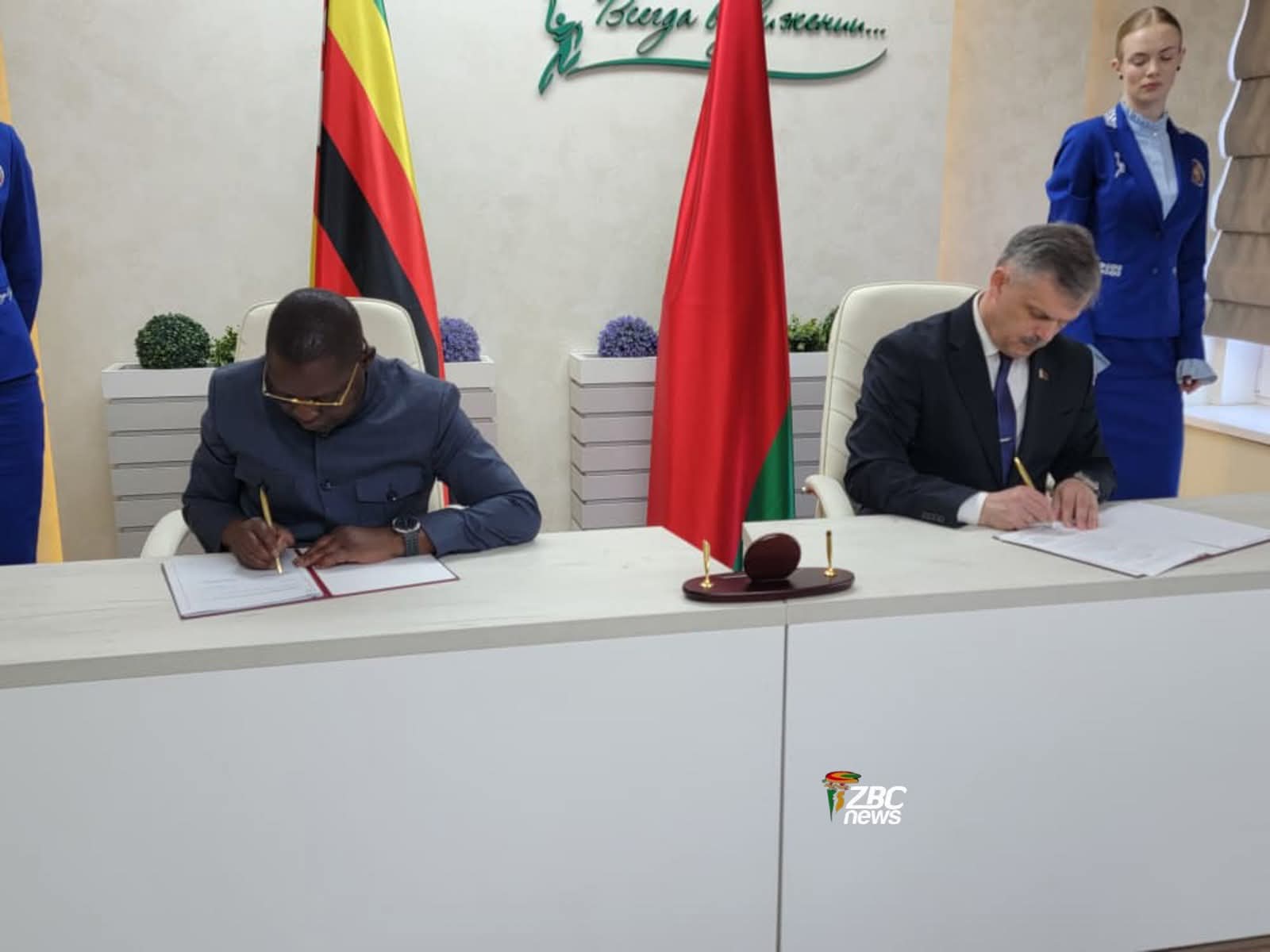
Minsk, Belarus – Zimbabwe has taken a major step towards strengthening its sporting landscape following the signing of a landmark Memorandum of Understanding between the Ministry of Sport, Recreation, Arts and Culture and the Republic of Belarus aimed at deepening cooperation in sports development and athlete training.
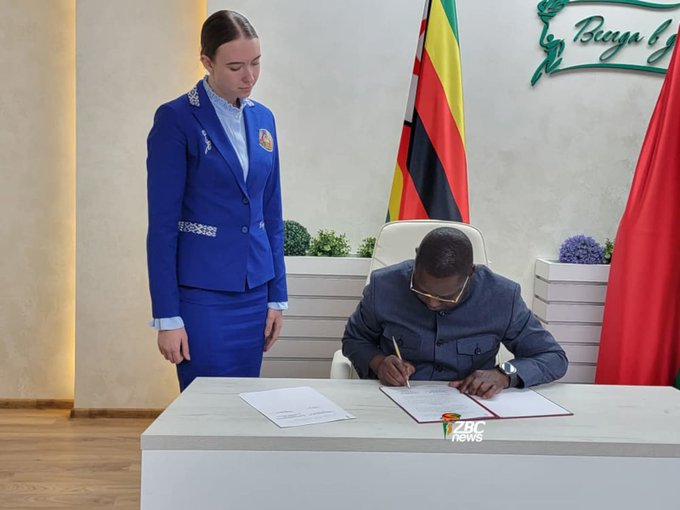
The agreement was signed in Minsk by Zimbabwe’s Minister of Sport, Recreation, Arts and Culture, Lt. Gen. (Rtd.) Anselem Sanyatwe, and his Belarusian counterpart Sergei Kovalchuk during an official visit that is expected to open new opportunities for Zimbabwean athletes, coaches and technical officials.
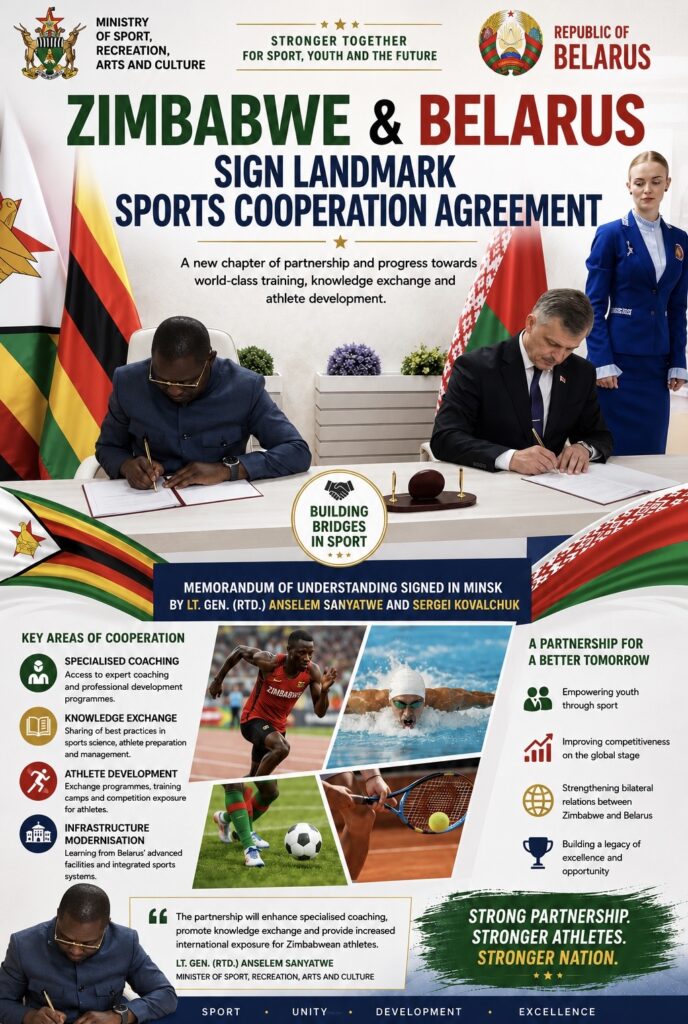
The partnership is being viewed as a strategic breakthrough for Zimbabwe’s sporting sector as the country seeks to improve competitiveness on the international stage while modernising training systems and expanding access to world class sporting infrastructure.
Under the agreement, the two countries will cooperate across several sporting disciplines including football, tennis, swimming and athletics. The collaboration is expected to focus on specialised coaching, technical exchange programmes, sports science and athlete development initiatives.
Officials from both countries described the agreement as a milestone that will strengthen bilateral relations while promoting the growth of sport as a tool for youth empowerment, national development and international engagement.
Speaking after the signing ceremony, Lt. Gen. (Rtd.) Sanyatwe said the partnership demonstrates Zimbabwe’s commitment to transforming its sports sector through international cooperation and strategic learning.
He said Zimbabwe stands to benefit immensely from Belarus’ advanced sporting systems, particularly in athlete preparation, coaching development and infrastructure planning.
“The partnership will enhance specialised coaching, promote knowledge exchange and provide increased international exposure for Zimbabwean athletes,” said Lt. Gen. (Rtd.) Sanyatwe.
He added that the agreement would create pathways for local athletes and sports administrators to access modern training facilities and professional expertise that can improve Zimbabwe’s competitiveness at continental and global competitions.
Zimbabwe has in recent years intensified efforts to revive and strengthen sport development structures amid growing calls for increased investment in youth talent identification and professional coaching systems.
The latest agreement comes at a time when Zimbabwean athletes continue to show promise in international competitions despite challenges related to infrastructure, funding and access to modern training equipment.
Sports analysts believe the partnership with Belarus could help bridge some of these gaps by facilitating exchange programmes and technical collaborations that expose Zimbabwean athletes and coaches to international best practices.
Belarus has built a reputation for investing heavily in sports science, athlete conditioning and high performance training centres, areas that Zimbabwe hopes to learn from as it seeks to improve performance standards across different sporting disciplines.
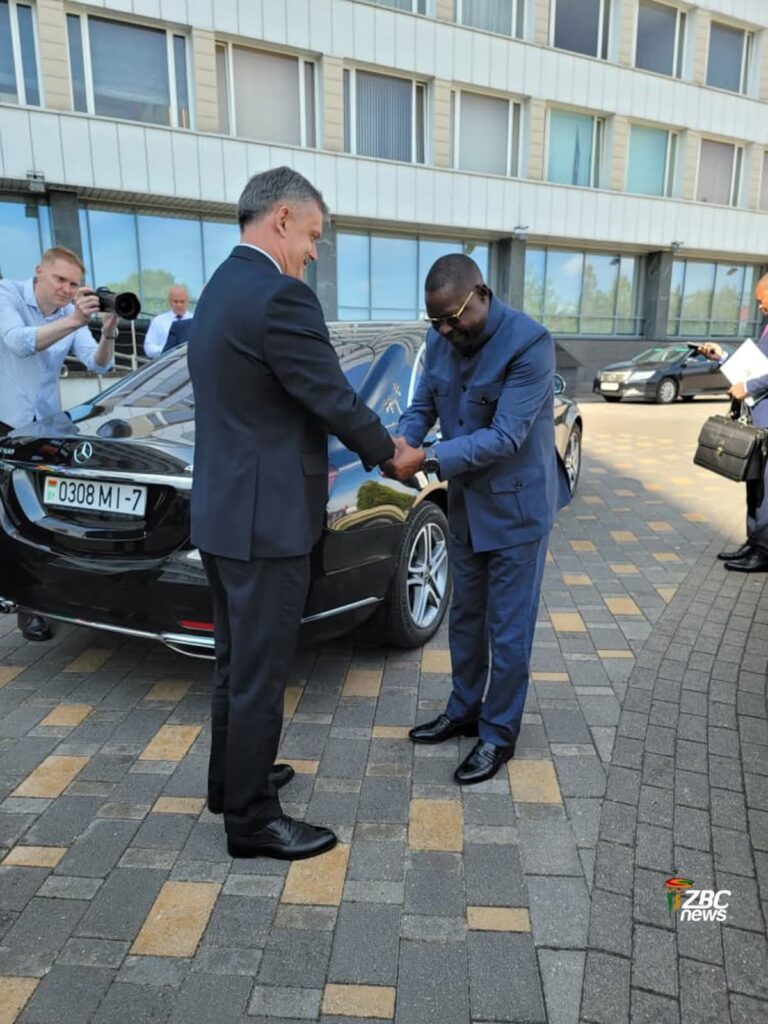
As part of his official programme in Belarus, Lt. Gen. (Rtd.) Sanyatwe toured the Belarusian State University of Physical Culture where he observed advanced training systems and sports infrastructure that have contributed to the country’s success in various international sporting events.
The university is regarded as one of the leading sports training institutions in Eastern Europe and specialises in sports science, athlete conditioning, coaching education and rehabilitation programmes.
Zimbabwean officials accompanying the minister reportedly held discussions with Belarusian experts on potential areas of collaboration including coach development, sports medicine, talent identification and infrastructure modernisation.
The visit also provided an opportunity for Zimbabwe to study Belarus’ integrated sports development model which links schools, universities, professional clubs and national associations in nurturing athletes from grassroots to elite level competition.
Observers say such systems could provide useful lessons for Zimbabwe, particularly as the country seeks to strengthen community sports structures and improve talent development pathways.
The agreement is also expected to facilitate athlete exchange programmes and participation in joint training camps and international tournaments, allowing Zimbabwean athletes to gain valuable experience competing in different environments.
For Zimbabwean coaches and technical officials, the partnership could open doors for specialised training and certification programmes that improve professional standards within local sporting institutions.
The collaboration further aligns with Government efforts to reposition sport as a key contributor to national development, employment creation and youth empowerment.
Sport has increasingly become recognised globally as an important economic and social sector capable of generating tourism, investment and community development opportunities.
In Zimbabwe, authorities have repeatedly stressed the need to harness sport as a vehicle for promoting national unity and creating opportunities for young people.
The Ministry of Sport, Recreation, Arts and Culture has in recent years prioritised infrastructure rehabilitation, grassroots development and increased international engagement as part of broader sector reforms.
The agreement with Belarus is therefore being viewed as part of a wider strategy to strengthen Zimbabwe’s sporting ecosystem and build sustainable systems capable of producing world class athletes.
Some sports stakeholders have welcomed the development, saying exposure to international expertise and modern facilities could significantly improve local standards.
They noted that Zimbabwe possesses abundant sporting talent but often struggles with limited resources and inadequate high performance training infrastructure.
Through partnerships such as the one signed in Minsk, experts believe Zimbabwe can accelerate efforts to modernise sport development and improve athlete preparation for regional and global competitions.
The deal also highlights the growing diplomatic and economic cooperation between Zimbabwe and Belarus, with the two countries continuing to strengthen ties across various sectors including agriculture, education, mining and technology.
Analysts say sports diplomacy has become an increasingly important tool for fostering international relations while creating people to people connections that extend beyond politics and trade.
As Zimbabwe seeks to position itself more competitively in international sport, the Belarus partnership is expected to play an important role in shaping the future of athlete development and technical excellence in the country.
For many young athletes across Zimbabwe, the agreement represents hope for better opportunities, improved training conditions and greater exposure to international sporting platforms.
With implementation now set to begin, attention will shift towards translating the agreement into practical programmes that deliver measurable benefits for athletes, coaches and sporting institutions across the country.