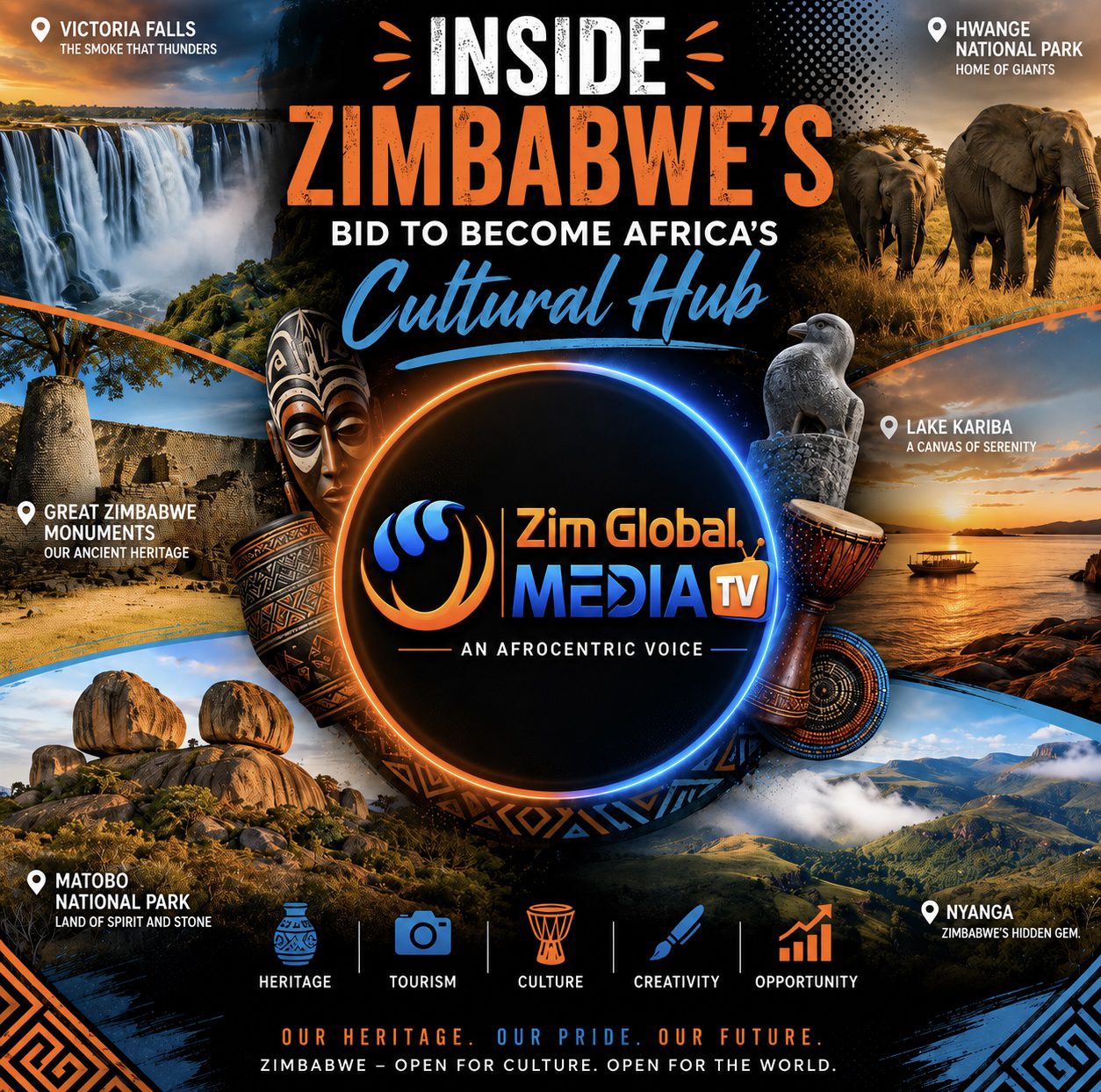
Arts & Lifestyle – Zimbabwe is steadily positioning itself as one of Africa’s emerging cultural powerhouses, driven by a renewed focus on the creative economy, heritage tourism, arts festivals, and digital storytelling. From the ancient stone walls of Great Zimbabwe to the vibrant sounds of mbira music echoing through Harare’s arts spaces, the country is increasingly embracing culture not merely as identity, but as economic strategy.
Across the continent, nations are recognizing the value of cultural diplomacy and creative industries as tools for economic growth, tourism development, and international influence. Zimbabwe now wants a seat at that table.
Government institutions, artists, private investors, and international partners are all contributing to an ambitious push to transform Zimbabwe into a regional centre for arts, heritage, music, film, literature, and fashion. The strategy aligns closely with Vision 2030 and the broader African Union Agenda 2063, both of which emphasize culture and innovation as pillars of development.
At the heart of the effort is the growing recognition that Zimbabwe possesses one of the richest cultural reservoirs in Africa. The country is home to globally celebrated stone sculpture traditions, indigenous musical instruments such as the mbira, centuries old oral storytelling traditions, and world renowned heritage destinations including the Great Zimbabwe monuments and Victoria Falls.
Cultural experts argue that these assets provide Zimbabwe with a unique opportunity to distinguish itself in an increasingly competitive tourism and creative economy landscape.
Recent years have seen a rise in cultural festivals, exhibitions, and creative economy forums aimed at showcasing local talent and attracting international collaboration. One of the most notable initiatives is the Creative Economy Week Zimbabwe 2026, supported by the British Council and various partners. The event brings together artists, entrepreneurs, investors, policymakers, and cultural leaders from Zimbabwe and abroad for exhibitions, masterclasses, networking events, and policy discussions.
Organizers say the platform is designed to strengthen Zimbabwe’s creative industries while building bridges between local creatives and global markets. Activities span music, theatre, literature, digital media, fashion, and entrepreneurship, reflecting the broadening scope of Zimbabwe’s cultural ambitions.
The country’s growing digital ecosystem is also helping amplify Zimbabwean voices beyond its borders. Social media platforms such as TikTok, YouTube, Facebook, and Instagram have enabled local artists and content creators to access global audiences without relying solely on traditional gatekeepers.
Musicians, filmmakers, visual artists, podcasters, and fashion designers are increasingly using digital platforms to distribute content, market brands, and monetize creativity. Zimbabwean creatives are now participating in global conversations around African identity, storytelling, and contemporary art.
Analysts say this digital transformation is critical because culture today is no longer confined to physical galleries, concert halls, or museums. It now exists within streaming platforms, online communities, podcasts, and virtual exhibitions. Zimbabwe’s younger generation of creatives has embraced this shift with remarkable energy.
At the same time, cultural tourism is emerging as a potentially lucrative economic sector. International tourism trends increasingly show that travelers are seeking immersive experiences rooted in local culture, food, music, and heritage rather than traditional sightseeing alone.
Zimbabwe hopes to capitalize on this shift by combining heritage tourism with contemporary cultural experiences.
In Harare, Bulawayo, Victoria Falls, and other cities, efforts are underway to strengthen arts spaces, cultural festivals, and creative hubs capable of attracting both tourists and investors. Festivals such as the Harare International Festival of the Arts have already established Zimbabwe as a respected destination within Africa’s arts scene. Since its launch in 1999, HIFA has hosted artists from across the globe and remains one of Southern Africa’s most recognized cultural festivals.
Zimbabwe is also studying successful cultural economies elsewhere on the continent. Countries such as Nigeria, South Africa, Senegal, and Eswatini have demonstrated how music festivals, film industries, fashion weeks, and heritage events can generate employment, attract tourism, and strengthen national branding. Events like the MTN Bushfire Festival in Eswatini have become continental attractions that combine entertainment with cultural exchange and tourism development.
For Zimbabwe, the goal is not simply to host events, but to build a sustainable cultural economy that supports jobs and entrepreneurship.
The National Arts Council of Zimbabwe has intensified efforts to formalize and support the arts sector through awards, training programs, festivals, and partnerships. The institution says empowering artists and preserving cultural heritage are essential to ensuring long term growth within the sector.
However, challenges remain significant.
Many creatives still struggle with limited funding, weak intellectual property protection, inadequate infrastructure, and inconsistent policy implementation. Access to affordable internet and digital tools also remains uneven, particularly in rural communities where many traditional art forms originate.
Financial institutions often remain reluctant to fund creative ventures due to perceptions that the sector is risky or informal. Yet experts argue that the creative economy has enormous untapped potential, especially among Zimbabwe’s youthful population.
There are also calls for stronger collaboration between government, private investors, universities, tourism operators, and international organizations to create a more integrated cultural ecosystem.
Despite these hurdles, optimism continues to grow.
Zimbabwe’s cultural identity remains one of its strongest assets. Across Africa and the diaspora, there is increasing demand for authentic African stories, music, fashion, and artistic expression. Zimbabwean creatives are tapping into this global appetite while blending traditional heritage with modern innovation.
For many observers, Zimbabwe’s bid to become Africa’s cultural hub is ultimately about more than entertainment or tourism. It is about reclaiming narrative power, preserving heritage, empowering youth, and transforming creativity into economic opportunity.
If current momentum continues, Zimbabwe could emerge not only as a destination for tourists, but as a continental centre where African culture, innovation, and storytelling converge.
And in a world increasingly shaped by cultural influence and digital visibility, that ambition may prove to be one of Zimbabwe’s most valuable investments yet.