CIMMAM 2026 – Museums Beyond Limits: Rethinking Culture in a Changing World
5 min read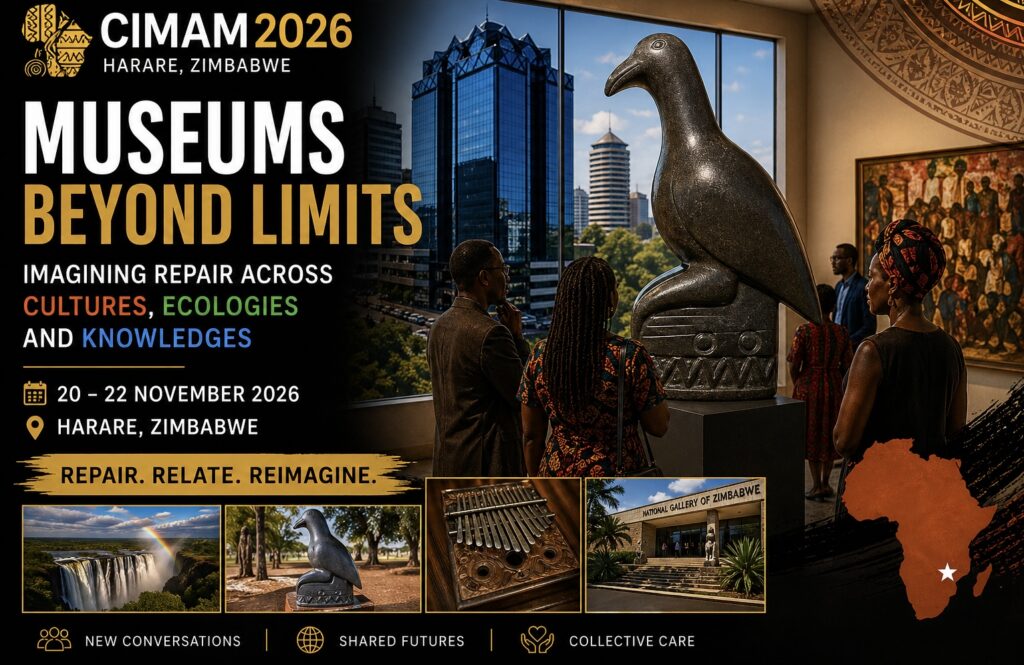
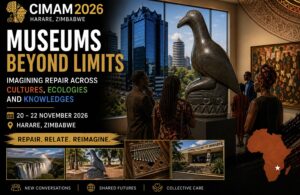
Arts & Lifestyle — At the heart of the upcoming CIMAM 2026 Conference in Harare lies a theme that is as bold as it is urgent: “Museums Beyond Limits: Imagining Repair Across Cultures, Ecologies and Knowledges.” It is a phrase that carries weight, not just within academic or curatorial circles, but across societies grappling with identity, memory, and the future of shared human experience.
This theme is not simply a conference headline crafted to attract attention. It reflects a profound shift in how museums are being redefined in a rapidly changing world. For generations, museums have largely been understood as custodians of history, institutions tasked with preserving objects, artworks, and narratives. Yet many of these narratives were constructed within colonial frameworks, often excluding or distorting the voices and experiences of the very communities from which these cultural materials originated.
Today, that model is being challenged with increasing urgency. Across the globe, there is growing recognition that museums must evolve beyond static repositories into dynamic spaces of dialogue, accountability, and transformation. They are being called upon to confront uncomfortable histories, to engage with communities in meaningful ways, and to reflect a broader spectrum of human experience.
At the centre of this evolving discourse is the concept of “repair.” It is a word that carries emotional and political depth, acknowledging that relationships between institutions and communities have been fractured over time. These fractures are not limited to cultural representation alone. They extend to the ways knowledge has been produced, categorised, and legitimised, often privileging certain perspectives while marginalising others.
Repair, in this context, is not a one-time act. It is an ongoing process that requires honesty, humility, and sustained commitment. It demands that museums listen more carefully, collaborate more openly, and rethink the structures that have historically defined their authority. It also calls for a deeper engagement with the natural world, recognising the interconnectedness between cultural heritage and ecological systems.
Zimbabwe’s hosting of the CIMAM 2026 Conference gives this theme a particularly powerful and lived context. The country’s history, marked by colonial dispossession and a determined struggle for cultural and political independence, offers a compelling backdrop for conversations around repair and transformation. Zimbabwe’s journey of reclaiming its narratives, restoring cultural pride, and reasserting its identity resonates strongly with the broader questions being raised within the global museum community.
Harare, as the host city, becomes more than just a venue. It becomes a site of dialogue, a place where global ideas intersect with local realities. The city’s cultural landscape, shaped by resilience, creativity, and innovation, provides a fitting environment for a conference that seeks to challenge conventional boundaries.
One of the key aspects of the CIMAM 2026 theme is its insistence on moving beyond limits. These limits are not only geographical, but also intellectual and institutional. Museums have long operated within defined frameworks, often tied to national narratives or disciplinary boundaries. The conference challenges these constraints, encouraging institutions to think more expansively and to engage with a wider range of perspectives and practices.
This shift raises fundamental questions that cannot be ignored. Who has the authority to define knowledge? Whose stories are preserved, and whose are left out? How can museums ensure that they are not only inclusive in principle but also in practice? These are not easy questions, and they do not lend themselves to simple answers. However, they are essential to any meaningful rethinking of the role of museums in contemporary society.
The conference aims to create a platform where these questions can be explored openly and constructively. By bringing together practitioners, scholars, and cultural workers from diverse backgrounds, CIMAM 2026 seeks to foster dialogue that is both critical and collaborative. The goal is not to impose a single vision of what museums should be, but to explore multiple possibilities grounded in different cultural, ecological, and epistemic contexts.
African perspectives are expected to play a central role in these discussions. For too long, the continent has been positioned as a subject of study rather than a source of knowledge and innovation. Hosting the conference in Zimbabwe offers an opportunity to shift that narrative, highlighting the richness and diversity of African cultural practices and intellectual traditions.
This is particularly significant in a global context where issues of representation and equity are increasingly coming to the forefront. Museums are being asked to reflect the societies they serve more accurately and more fairly. They are also being called upon to contribute to broader conversations around social justice, environmental sustainability, and cultural preservation.
Technology and innovation are also expected to feature prominently in the discussions. As digital tools continue to transform how information is shared and accessed, museums are exploring new ways to engage audiences and expand their reach. However, the challenge lies in ensuring that these technological advancements are used in ways that enhance inclusivity rather than deepen existing inequalities.
Another important dimension of the conference is its emphasis on relationality. This concept underscores the importance of relationships, between people, between institutions, and between humans and the natural world. It suggests that museums should not operate in isolation, but as part of a broader network of communities and ecosystems.
In this sense, the idea of “Museums Beyond Limits” is not about abandoning tradition, but about reimagining it. It is about finding ways to honour the past while remaining responsive to the present and open to the future. It is about recognising that culture is not static, but constantly evolving, shaped by interactions, exchanges, and transformations.
As the world grapples with uncertainty, from climate change to social upheaval, the role of cultural institutions becomes even more critical. Museums have the potential to serve as spaces of reflection and dialogue, helping societies to make sense of complex challenges and to envision alternative futures.
The CIMAM 2026 Conference in Harare arrives at a moment when such conversations are not only relevant, but necessary. It offers an opportunity to rethink long-held assumptions, to challenge existing structures, and to imagine new possibilities for how culture is preserved, interpreted, and shared.
Ultimately, the theme of “Museums Beyond Limits” invites a collective reimagining of what museums can and should be. It calls for courage, creativity, and collaboration. It asks institutions to move beyond comfort zones and to engage with the world in more meaningful and transformative ways.
As Zimbabwe prepares to host this important global gathering, there is a sense that the conversations that will take place in Harare will resonate far beyond the conference halls. They will contribute to a broader movement aimed at redefining the role of museums in the 21st century, ensuring that they remain relevant, inclusive, and responsive to the needs of a changing world.