

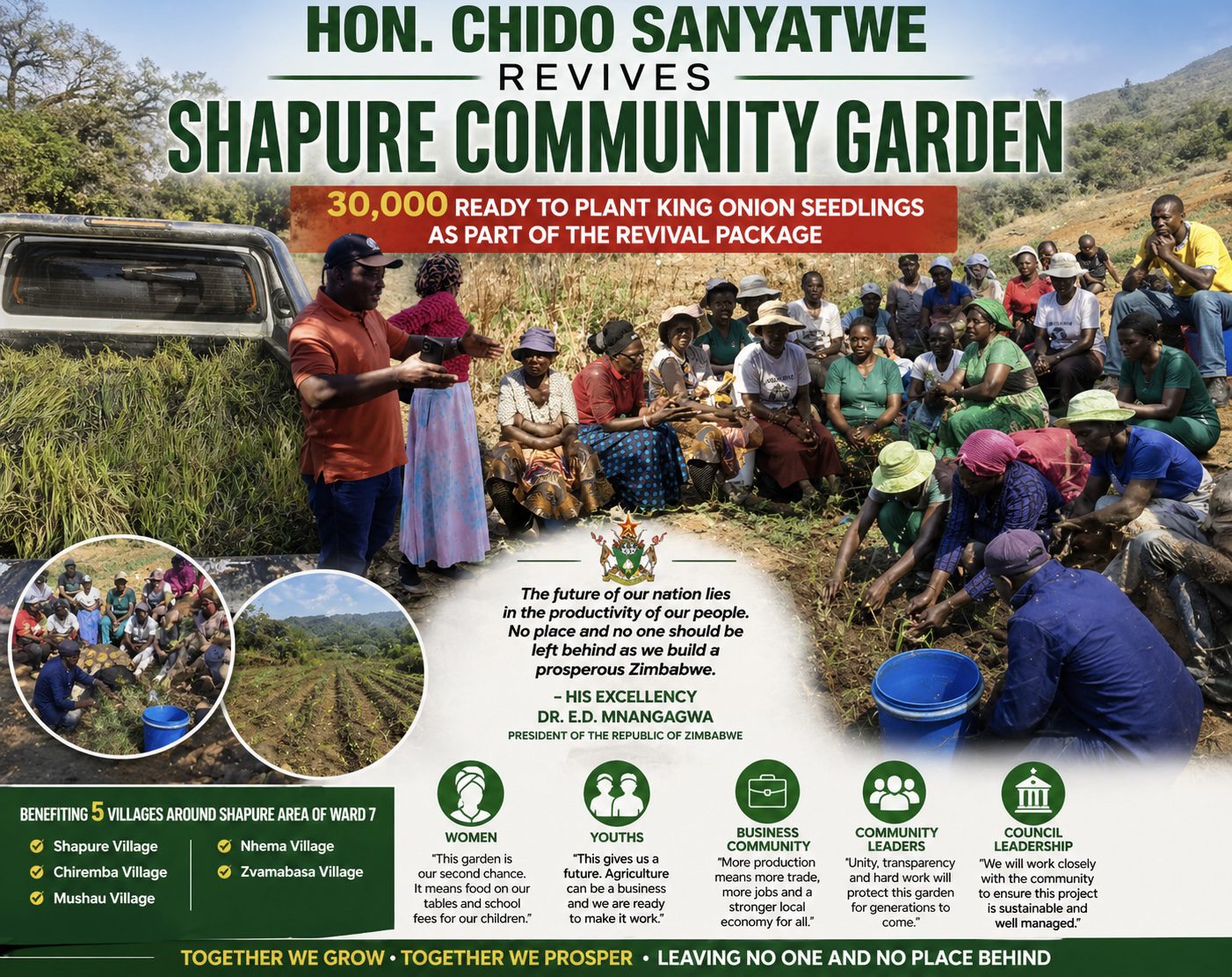
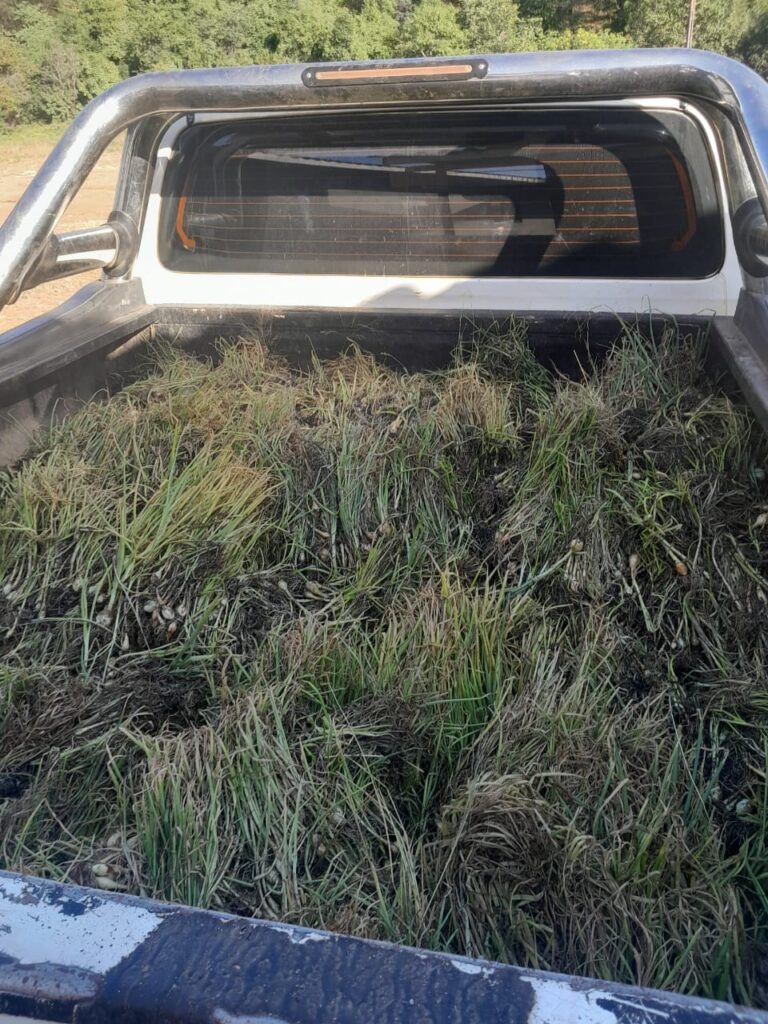
Shapure, Nyanga North — A long-dormant community asset has sprung back to life following a decisive intervention by Hon. Chido Sanyatwe, who has delivered 30,000 ready-to-plant King onion seedlings to the Shapure Community Garden as part of a broader revival package aimed at restoring livelihoods, food security, and local enterprise.
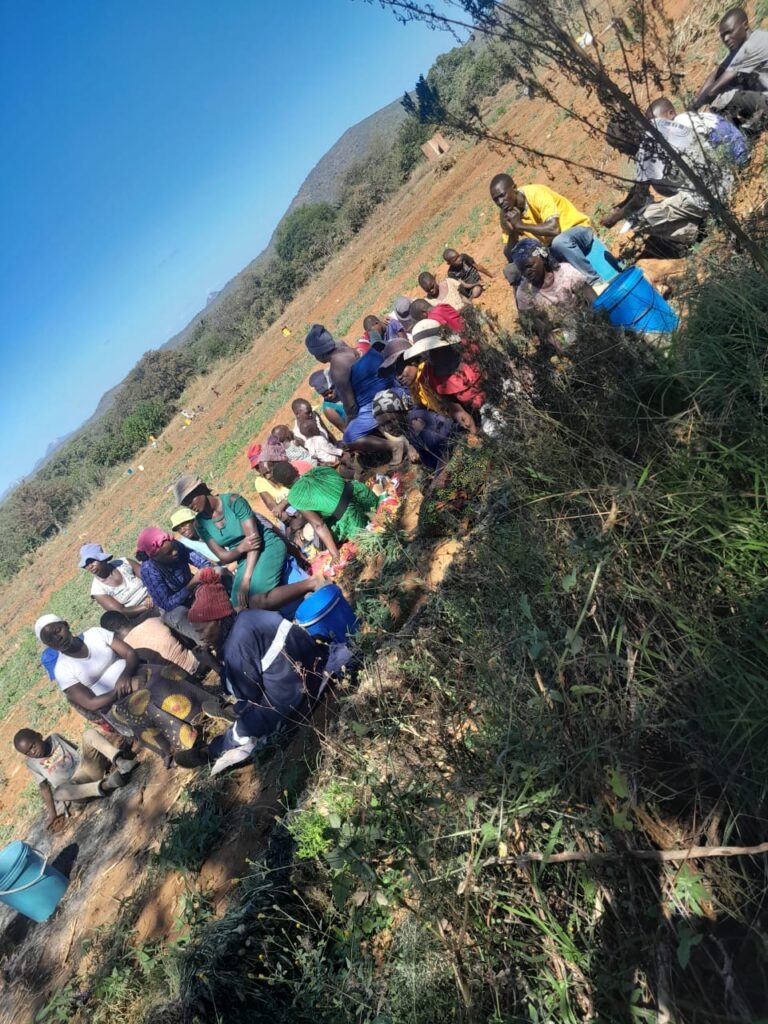
For more than a decade, the Shapure Community Garden lay idle, its irrigation channels dry and its once-vibrant plots overtaken by weeds. Today, however, the landscape tells a different story. Rows are being cleared, seedlings are being planted, and a renewed sense of purpose is taking root among residents drawn from five surrounding villages who depend on the garden for both subsistence and income.
Hon. Sanyatwe described the revival as more than just an agricultural intervention, framing it as a symbol of resilience and community-driven development.
“This garden is not just soil and water; it is dignity, it is opportunity, and it is the heartbeat of these communities,” she said.
“For over ten years, this project stood still. Today, we are not just restarting it, we are reimagining it as a center of productivity, empowerment, and shared prosperity.”
She emphasized that the provision of 30,000 King onion seedlings was a strategic choice, given the crop’s strong market demand and relatively short growing cycle.
“These seedlings are a starting point,” she added. “But what matters most is the commitment of the people. Government will continue to support initiatives that uplift communities, but sustainable success must come from collective ownership.”
Ward 7 Councilor, Cllr. Mpofu, hailed the intervention as a turning point for the area, noting that the garden’s collapse had previously left many households vulnerable.
“For years, this garden was a missed opportunity,” said Cllr. Mpofu. “Families struggled, youths migrated in search of work, and women lost a critical source of income. Today marks a new chapter. We are grateful for this timely support, which restores hope and practical means of survival.”
He added that the council would work closely with community members to ensure proper management structures are in place to avoid a repeat of past challenges.
Women, who form the backbone of agricultural activity in the area, expressed deep appreciation for the revival effort. One local farmer described the development as life-changing.
“This garden used to feed our children and send them to school,” she said. “When it stopped working, everything became difficult. Now we feel like we have been given a second chance.”
Another woman echoed the sentiment, highlighting the empowerment aspect of the project.
“This is not just about onions,” she said. “It is about independence. It is about being able to stand on our own and provide for our families with dignity.”
Youth representatives also welcomed the initiative, seeing it as a viable alternative to unemployment and rural-urban migration.
“We have energy and ideas, but we often lack opportunities,” said one youth leader. “This garden gives us something to build on. Agriculture can be a business, not just a way of surviving.”
He added that young people in the area were already organizing themselves into cooperative groups to maximize production and explore value addition opportunities.
Members of the local business community noted that the revival of the garden would have ripple effects beyond agriculture, stimulating economic activity across the ward.
“When farmers produce more, everyone benefits,” said a local trader. “Transporters get work, markets become more active, and small businesses grow. This is how local economies are built.”
Community leaders stressed the importance of unity and accountability in ensuring the long-term success of the project.
“We have learned from the past,” said one village head. “This time, we must protect this garden. It belongs to all of us, and its success depends on discipline, transparency, and cooperation.”
They also pledged to support training initiatives and knowledge-sharing among farmers to improve productivity and sustainability.
The revival of the Shapure Community Garden aligns closely with the development philosophy of the Second Republic under His Excellency, Emmerson Dambudzo Mnangagwa, whose mantra emphasizes inclusive growth, rural industrialization, and leaving no community behind.
In line with this vision, President Mnangagwa has consistently underscored the importance of empowering communities through practical, results-oriented programs.
“The future of our nation lies in the productivity of our people,” the President has said in previous addresses. “No place and no one should be left behind as we build a prosperous Zimbabwe.”
This guiding principle is reflected in initiatives such as the Shapure garden revival, which directly targets grassroots development and seeks to unlock local potential.
Hon. Sanyatwe reiterated this connection, noting that the project is part of a broader national agenda.
“We are guided by a clear vision from the President,” she said. “Development must be felt at the household level. When communities like Shapure thrive, the nation as a whole moves forward.”
Agricultural experts involved in the project indicated that the choice of onions as the initial crop would allow for quick returns, enabling farmers to reinvest in other crops and infrastructure.
“There is strong demand for onions both locally and in nearby markets,” said one extension officer. “If managed well, this garden can become a reliable source of income within a single season.”
Plans are also underway to rehabilitate irrigation systems and introduce modern farming techniques to improve yields and resilience against climate variability.
As the first seedlings are planted, the atmosphere in Shapure is one of cautious optimism. The scars of past setbacks remain, but they are now accompanied by a renewed determination to succeed.
For many residents, the garden represents more than just a farming project. It is a symbol of what can be achieved when leadership, community effort, and national vision converge.
“This is our opportunity,” said one elderly community member, watching as young farmers worked the soil. “We have been given the tools. Now it is up to us to make it work.”
With 30,000 seedlings in the ground and a community united behind a common goal, the revival of the Shapure Community Garden stands as a powerful example of grassroots transformation in action. If sustained, it promises not only to restore livelihoods but to redefine the future of Ward 7—one harvest at a time.